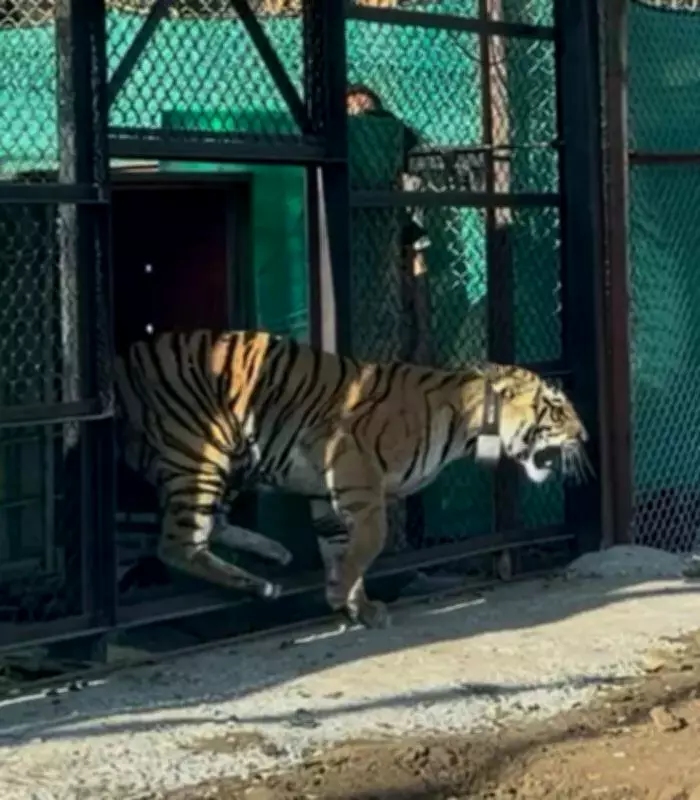
Second Tigress Successfully Translocated to Rajasthan's Mukundra Hills Tiger Reserve
In a significant boost to wildlife conservation efforts, a three-and-a-half-year-old tigress from the Bandhavgarh Tiger Reserve in Madhya Pradesh was successfully translocated and released into a "soft enclosure" at the Mukundra Hills Tiger Reserve (MHTR) in Rajasthan on Saturday. This marks the second tigress brought to Rajasthan from Madhya Pradesh under the interstate tiger translocation programme, aimed at strengthening tiger populations and enhancing genetic diversity.
Journey and Release Details
After a nearly 20-hour journey, the convoy of vehicles carrying the tigress arrived at Mukundra Hills on Saturday morning. Sugna Ram Jat, the field director of MHTR in Kota, provided details on the release, stating, "The tigress was soft released at 8:30 am into a one-hectare enclosure located in the Jhamra Valley area of the reserve." A joint team of officials and experts from both Bandhavgarh and Mukundra Hills will conduct round-the-clock monitoring to assess her behaviour, health, and adaptation, following standard operating procedures to ensure a smooth transition.
Impact on Tiger Population and Ecological Balance
With this translocation, the number of big cats in MHTR has now increased to seven, comprising:

- Four females
- Two males
- One cub
Lok Sabha Speaker and Kota-Bundi MP Om Birla highlighted the importance of this step, saying, "This translocation is crucial for strengthening the tiger population and improving genetic diversity in Rajasthan. It will help reinforce the ecological balance of the forest, promote tourism, and create employment opportunities for local communities." The move is part of broader conservation strategies to support tiger habitats and biodiversity.
Capture and Preparation Process
The tigress was tranquilised on February 27 by a dedicated team that included:
- Field trackers
- An elephant squad
- Wildlife veterinarians
- Field biologists
This careful preparation ensured the safety and well-being of the animal during the translocation process, underscoring the collaborative efforts between state authorities and wildlife experts to achieve conservation goals.