Sri Ganganagar Waste Plant Protest Reaches Critical Juncture
The public movement opposing the proposed Solid Waste Management Processing Plant near the main branch of the Gang Canal (GG Canal) in Netewala Panchayat, Sri Ganganagar, has intensified, reaching a decisive phase. A significant gathering of villagers assembled at the Municipal Council, staging a robust protest to voice their concerns.
Air Force Veteran Sunil Sihaag at the Forefront
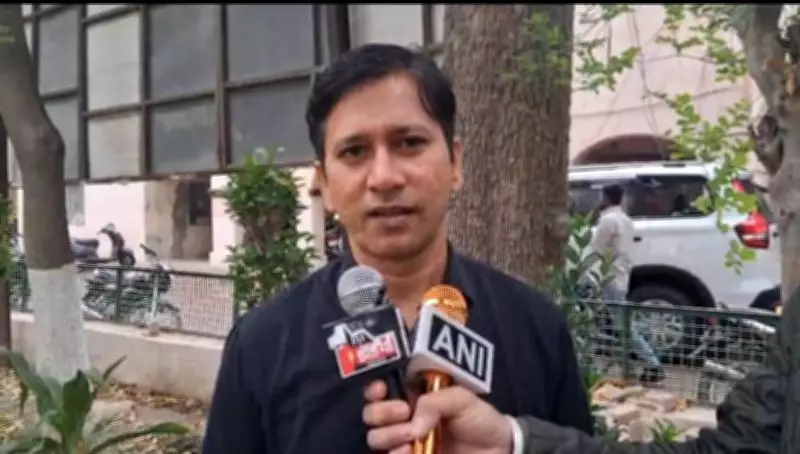
Air Force veteran and environmental activist Sunil Sihaag has been instrumental in this movement, actively presenting issues related to environmental regulations, legal frameworks, and public health to the district administration. He emphasized that the proposed site, located perilously close to the canal, poses severe risks to water sources, agricultural lands, and community health.
During the protest, police temporarily closed the main gate of the Municipal Council, but villagers entered peacefully and continued their demonstration. MLA Jaideep Bihani and ADM Subhash Chaudhary arrived at the scene to address the situation.

Delegation Proposes Alternative Solutions
A delegation from Netewala, led by retired educationist Richhpal Singh Dugesar, engaged in discussions with officials. The group included Sunil Sihaag, Panchayat Samiti Director Vinod Takhar, and other community leaders such as Gopi Ram Jhatwal, Tansukh Sewta, Dalip Godara, Subhash Devarath, Krishna Mayal, Vinod Sapoonia, Sushil Takhar, Bharatveer Sharma, former Sarpanch Surendra, and Poornaram Sheoran.
In the talks, the delegation suggested that the Panchayat would arrange and purchase alternative land in the RIICO area for the waste plant. MLA Jaideep Bihani assured that he would present this proposal to the Chief Minister along with the delegation, and until then, no work would proceed at the proposed site.
Richhpal Singh Dugesar stated, "The final official announcement regarding the suspension of the plant will come only after discussions with the Chief Minister and CMO. However, for now, after administrative intervention, there is agreement not to proceed with the plant at the proposed site, which has given a positive direction to the movement."
Decade-Long Activism Gains Momentum
Sunil Sihaag, founder of the Gora Foundation Trust, has been actively involved in this movement for the past ten years. His campaign, "Save the Canal, Save Villagers' Lives, Remove the Waste Plant," has played a crucial role in uniting the community.
Recalling the movement's origins, Sunil Sihaag said, "In 2016–17, 6–7 college students from the village first raised concerns about the proposed waste plant near the canal, but their warnings were not taken seriously at that time. After retiring from the Air Force and returning to the village, I met these students. Under the guidance of my mentor Richhpal Singh Dugesar, we started a signature campaign. We went door-to-door with pamphlets to spread awareness about canal pollution and environmental damage. By collecting signatures from every household at the ward level, the campaign created awareness among villagers. Today, the movement has reached a stage where 44 villages along the canal are supporting us, and the credit goes to those students."
Legal and Environmental Arguments Strengthen the Cause
Sunil Sihaag, along with villagers and under Dugesar's guidance, has consistently submitted detailed representations based on environmental laws and National Green Tribunal (NGT) decisions, providing institutional and legal strength to the issue.
These representations highlighted that the proposed site is located just about 7 meters from the GG Canal, whereas Solid Waste Management Rules, 2016 mandate a safe distance from water bodies. CPCB and CPHEEO guidelines also recommend adequate buffer zones and preference for non-agricultural land, while the proposed site is highly fertile agricultural land where such buffer zones cannot be developed.
The region has a high groundwater level (20–25 feet), along with waterlogging and salinity issues due to canal seepage, raising serious concerns about groundwater contamination and soil pollution. As per CPCB's site sensitivity index, the area falls under a highly sensitive category.
The representation also referenced key Supreme Court judgments, including:

- Vellore Citizens Welfare Forum vs Union of India (1996), establishing the Precautionary Principle.
- MC Mehta vs Kamal Nath (1997), establishing the Public Trust Doctrine.
- Paryavaran Suraksha Samiti vs Union of India (2017), regarding personal accountability of government officials.
Relevant provisions of the Water (Prevention & Control of Pollution) Act, 1974 and Environment Protection Act, 1986 were also emphasized.
Villagers further cited the Budha Nala (Ludhiana) pollution case, where the NGT has taken suo motu cognizance, highlighting the sensitivity of downstream water systems like the GG Canal. Concerns were also raised about protecting the nearby 100-year-old Raja Ganga Singh Rest House, an important historical heritage site.
This sustained effort has galvanized community support and brought the issue to the forefront of local governance, marking a significant milestone in environmental activism in the region.