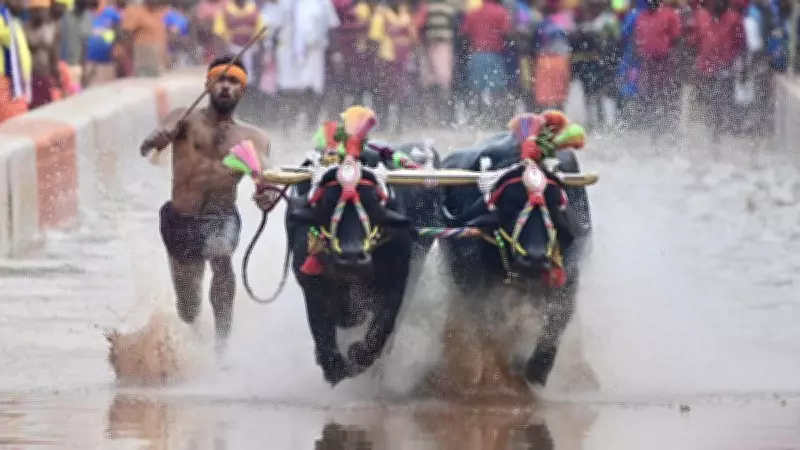
Amid a severe drought in Karnataka, experts have called for an immediate halt to Kambala, the traditional buffalo race, to conserve precious water resources. According to estimates, each Kambala event consumes approximately 10 lakh liters of water, primarily for slushing the tracks. With water in dams being reserved exclusively for drinking purposes and 1010 borewells in the region reporting depleted yields, the demand has gained urgency.
Water Crisis Intensifies in Mysuru Region
The Mysuru district, known for its cultural events, is facing one of its worst water shortages in recent years. The water level in major reservoirs has dropped significantly, forcing authorities to prioritize drinking water over other uses. A senior official from the Mysuru Zilla Panchayat, speaking on condition of anonymity, stated, "Every drop counts now. We cannot afford to waste water on entertainment when people are struggling for drinking water."
Data from the Groundwater Directorate indicates that out of 1,200 borewells surveyed in the region, 1010 have shown reduced yields, with many drying up completely. The situation is expected to worsen if the monsoon remains deficient.

Kambala's Water Usage Under Scrutiny
Kambala, a traditional sport involving buffalo races on flooded paddy fields, requires large quantities of water to prepare the track. Each event typically uses 10 lakh liters, enough to meet the daily needs of 10,000 people. Environmental activists have long criticized the practice for its water footprint, but the current drought has amplified concerns.
"It is not just about the water used in the race. The water is often sourced from nearby lakes and borewells, which are already stressed," said Dr. M. R. Ravi, a hydrologist at the University of Mysore. "Stopping Kambala during drought is a no-brainer."
Government Response and Alternatives
The Karnataka government has not yet issued a ban, but officials are reviewing the situation. The Mysuru Deputy Commissioner, in a recent meeting, urged Kambala organizers to consider alternatives like dry runs or postponing events until the monsoon arrives. However, organizers argue that the tradition is integral to local culture and cannot be easily modified.
"We understand the water shortage, but Kambala is a centuries-old tradition. We are open to using less water, but a complete ban is unfair," said a representative of the Kambala Association.
Experts, however, insist that the priority must be human survival. "Cultural practices must evolve with circumstances. In a drought, saving 10 lakh liters of water per event can make a significant difference," added Dr. Ravi.
Impact on Local Communities
The drought has already led to water rationing in several parts of Mysuru. Tankers are supplying water to villages, and farmers are struggling to irrigate their crops. The call to stop Kambala has received mixed reactions. While some residents support the move, others view it as an attack on tradition.
"We need water to drink and cook. If Kambala uses that much water, it should be stopped until the rains come," said Lakshmamma, a resident of a drought-hit village near Mysuru.
As the debate continues, the focus remains on finding a balance between cultural heritage and the pressing need for water conservation.