

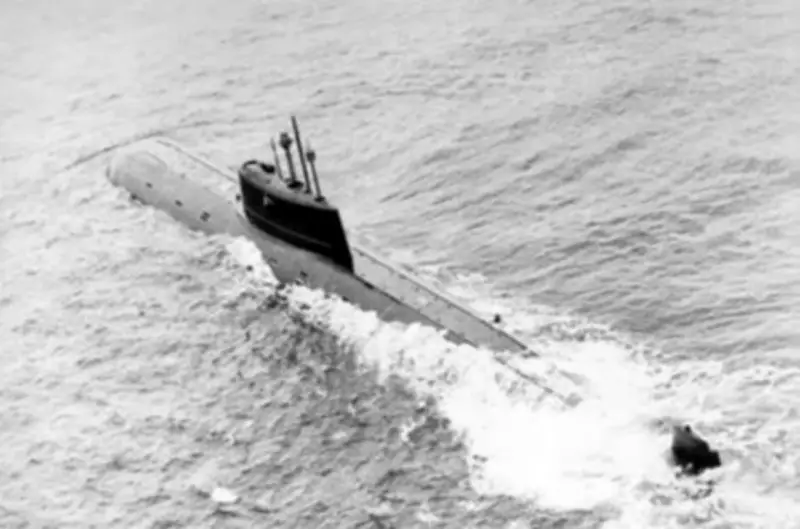
Sunken Soviet Nuclear Submarine Leaks Radiation in Norwegian Sea
A Cold War-era nuclear submarine resting nearly 5,500 feet beneath the surface of the Norwegian Sea might initially appear to be the precursor to an environmental disaster. The confirmed presence of radioactive waste seeping from its wreckage only reinforces this alarming perception. However, scientists monitoring the site exhibit a surprising degree of calm and composure, a stance rooted in decades of meticulous observation and measurement. While the raw data may seem concerning at first glance, the reality is far less dramatic than popular imagination might suggest.
The Wreck of the K-278 Komsomolets
The submarine in question is the Soviet vessel K-278 Komsomolets, which met its fate in 1989 following a devastating onboard fire. It now resides at a depth of approximately 1,700 meters (5,500 feet) on the seabed of the Norwegian Sea. This site has been the subject of multiple scientific expeditions, utilizing remotely operated vehicles to assess the submarine's condition over the years.
Recent investigations have definitively confirmed that radioactive materials, including caesium-137, are indeed escaping from specific points on the wreck, such as a ventilation duct. Samples collected directly from these leakage sources show radiation levels significantly elevated above normal seawater background levels. Crucially, this finding is not new; it aligns consistently with data gathered in previous studies, indicating a stable, long-term condition rather than a sudden crisis.

Context is Key: Understanding the Radiation Levels
The essential factor in assessing the risk is context. The highest radiation concentrations are strictly localized to the immediate points of leakage. Research demonstrates that even a short distance away from these specific spots, radiation levels drop precipitously to much lower readings.
As researcher Hilde Elise Heldal noted during the investigation, "we weren’t surprised to find high levels here," underscoring that such localized spikes are expected and understood within the scientific framework of the site. Furthermore, monitoring has detected no measurable increase in radioactive substances within the broader surrounding seawater column, a critical indicator of containment.
Why Experts Assert the Situation is "Not Alarming"
Despite the confirmed leakage, radiation authorities in Norway and independent experts consistently maintain there is no cause for alarm for human populations or marine ecosystems. This confidence is based on several robust factors:
- Vast Ocean Dilution: The immense volume of the ocean acts as a natural dilutant, rapidly dispersing and weakening any radioactive particles that escape.
- Highly Localized Leak: The release is not widespread; the vast majority of radioactive material remains concentrated in the immediate vicinity of the wreck itself.
- Controlled Radiation Levels: Even the highest recorded readings at the source remain within manageable limits that do not pose a significant threat given the depth and isolation.
- Decades of Surveillance: The site has been under continuous scientific surveillance for over thirty years, with no observable environmental damage attributed to the submarine's presence.
Built-In Safety and Ongoing Environmental Research
Nuclear submarines like the Komsomolets were engineered with multiple, redundant protective barriers. Their reactors are sealed within robust containment structures, which are themselves housed inside the submarine's pressure hull, designed to prevent radiation escape.
The scientific community is not dismissing the issue but is treating it as a valuable, long-term environmental research project. Continuous monitoring ensures that any potential changes in the leakage rate or environmental impact are detected immediately, allowing for a swift and appropriate response if ever needed.

In summary, while the image of a leaking nuclear submarine on the ocean floor evokes catastrophic scenarios, the scientific reality is measured and controlled. The radiation is largely contained, the associated risks are evaluated as low, and the situation remains under the vigilant watch of international researchers, transforming a potential crisis into a well-understood subject of oceanographic study.





