

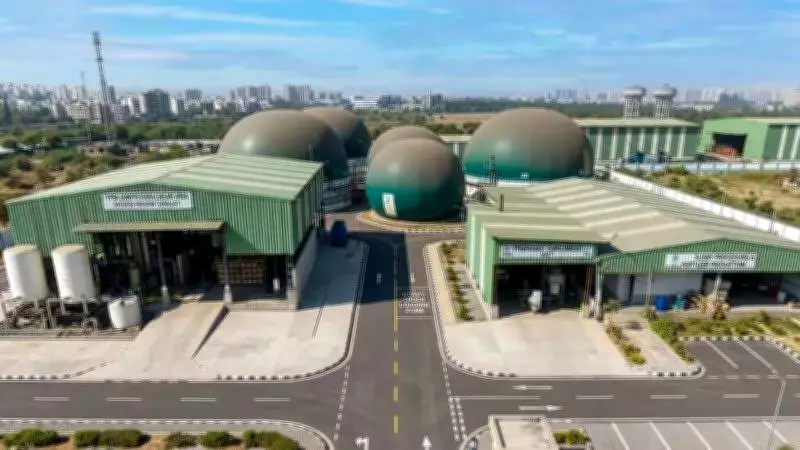
Surat's Waste-to-Energy Breakthrough: City Now Produces Compressed Biogas Amid Global Fuel Crisis
In a significant development for sustainable energy, Surat has begun producing compressed biogas (CBG) from municipal organic waste. This initiative comes at a critical time when global fuel supply chains are disrupted by geopolitical conflicts, affecting industries and households worldwide.
Production and Capacity Details
The Surat Municipal Corporation's plant is currently generating two tonnes of CBG daily from approximately 50 tonnes of waste. With production crossing this important threshold, the locally generated fuel is now being supplied to commercial gas distribution companies.
The project represents a successful public-private partnership between the Surat Municipal Corporation and Biofics, an infrastructure developer specializing in converting organic waste into CBG and organic fertilizer. At full design capacity, the facility is expected to process 120 tonnes of waste per day and produce up to five tonnes of CBG daily.

Economic and Practical Impact
A Biofics official explained the economic and practical implications: "The price of gas ranges between Rs 69 and Rs 90 per kilogram depending upon its quality. At full capacity, the output is equivalent to the daily fuel needs of around 130 CNG buses or the cooking energy needs of approximately 6,000-7,000 households."
P H Umrigar, medical officer of health at SMC, highlighted the project's timeline and significance: "The project development started around a year ago and for the past six months it has started generating gas. It is an important project through which we are generating energy from waste."
Waste Collection and Processing
The organic waste is sourced from approximately 500 bulk generators across the city, including:
- Hotels and restaurants
- Residential societies and complexes
- Commercial buildings and offices
- Vegetable markets and food processing units
- Institutional kitchens and catering services
The waste is collected directly from these generation points and transported to the plant for processing, ensuring efficient handling and minimal environmental impact.
Sustainable Vision and Additional Benefits
Jayesh Patil, marketing head of Biofics, emphasized the broader vision: "Waste should not go to landfills, but it should power economies. With the right infrastructure, cities can convert daily waste into a stable and reliable domestic energy source."
The project yields multiple environmental benefits beyond CBG production. The processing also creates slurry that is converted into organic fertilizer for sustainable farming practices, creating a circular economy model.
Indigenous Technology and National Alignment
Patil added an important technological dimension: "The plant and its core systems are indigenously designed and largely manufactured in India, aligning with the Make in India initiative and reducing dependence on imported technologies."
This local manufacturing approach not only supports national industrial goals but also ensures the technology is tailored to India's specific waste management and energy needs.
Surat's initiative demonstrates how urban centers can transform waste management challenges into energy solutions, particularly valuable during periods of global fuel instability. The project serves as a model for other Indian cities seeking to develop sustainable, locally-controlled energy sources while addressing waste management concerns.






