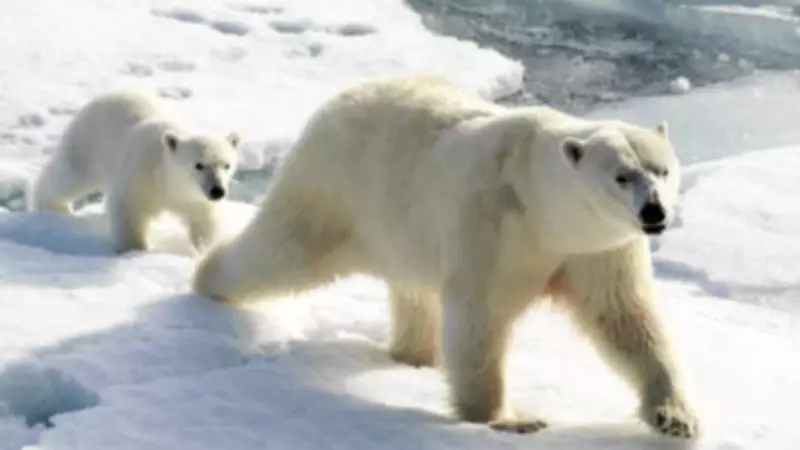
Polar Bears in Svalbard Experience Weight Gain Despite Vanishing Sea Ice
In a surprising twist of climate change impacts, polar bears in Norway's Svalbard archipelago—the fastest warming location on Earth—have been gaining weight and increasing in size over the past two decades. However, scientists emphasize this apparent benefit is likely temporary and masks a looming crisis as sea ice continues its dramatic retreat.
Arctic Warming Accelerates at Alarming Rate
The northern Barents Sea, spanning between Svalbard and Russia's Novaya Zemlya in the Arctic Ocean, has been heating at a rate seven times faster than the global average. This accelerated warming has profound consequences for the region's sea ice, which now persists two months less during winter and spring compared to just twenty years ago.
This environmental shift forces polar bears to undertake exhausting swims of 200 to 300 kilometers between their traditional hunting grounds on the ice and snow dens on islands where they give birth. Despite these challenges, research reveals that the average size and weight of Svalbard's polar bears have actually increased since the year 2000.

Research Methodology Reveals Changing Body Conditions
Starting in 1995, Jon Aars at the Norwegian Polar Institute and his colleagues conducted extensive field studies, tranquilizing 770 bears with dart guns to measure their length and estimate weight through chest girth measurements. Trend analysis demonstrated that body condition initially decreased until 2000, then showed a consistent increase through the end of observations in 2019.
"We should consider this as positive news for Svalbard," states Aars, noting that while polar bear populations are declining in parts of Alaska, Canada, and Greenland, the Barents Sea population appears stable or possibly even growing. Polar bears are divided into 20 distinct populations across the far north, with the Svalbard group showing unexpected resilience.
Adapting Hunting Strategies in a Changing Environment
Scientists believe the shrinking ice area may be making ringed seals—polar bears' primary prey during spring when seals give birth to pups on sea ice—easier to locate and hunt. This allows bears to build crucial fat stores for the increasingly long ice-free months.
Additionally, approximately 250 bears that remain on the islands when ice recedes have adapted their hunting behaviors. These "local bears" are now targeting more harbor seals, which are spreading to Svalbard as waters warm. They have also been observed ransacking duck and geese colonies for eggs and chasing reindeer from growing populations.
Scientists Warn of Impending Threshold
Despite current weight gains, researchers express serious concern about long-term prospects. "It will be extremely difficult to maintain a viable polar bear population if sea ice disappears completely," warns Jouke Prop at the University of Groningen in the Netherlands.
Aars echoes this caution, stating, "There will inevitably be a threshold beyond which polar bears in Svalbard will suffer negative consequences from continued sea ice loss." The temporary benefits of easier hunting access and alternative food sources cannot compensate indefinitely for the fundamental habitat changes underway.
The situation in Svalbard serves as both a remarkable case study in animal adaptation and a stark warning about the limits of resilience in the face of rapid environmental transformation. As the archipelago continues to warm at unprecedented rates, the future of its iconic polar bears remains uncertain, with scientists monitoring closely for signs of the predicted turning point.