

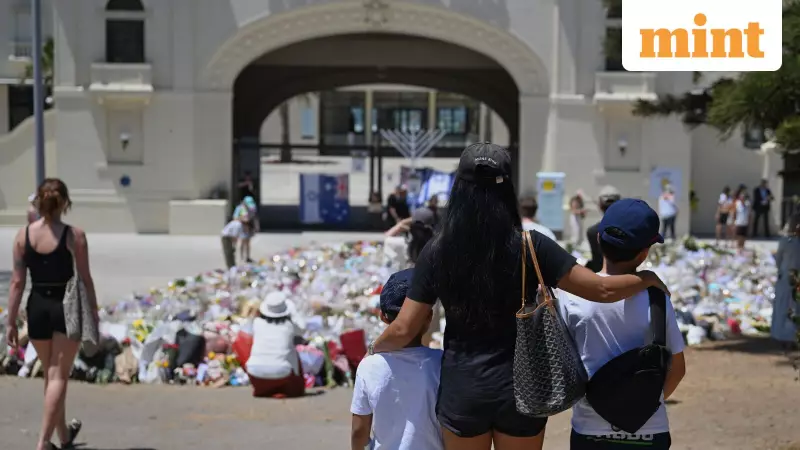
The world watched in horror as a Hanukkah celebration at Sydney's iconic Bondi Beach turned into a scene of terror on Sunday, December 14, 2025. Two shooters attacked the gathering, killing 15 people and wounding several dozen in Australia's worst mass shooting in nearly three decades. Yet, amidst the tragedy, stories of incredible courage emerged, as ordinary bystanders ran towards the danger in a desperate attempt to save lives.
The Faces of Courage at Bondi
In the chaotic aftermath, global attention was captured by images of Ahmed Al Ahmed, a Syrian immigrant and Sydney tobacco shop owner, tackling one of the gunmen. His intervention is believed to have prevented even greater loss of life. Ahmed, who immigrated to Australia two decades ago, was shot during the struggle and hospitalised. "He didn't think about anything else but to go and stop that person," said Tamer Kahil of the Australians for Syria Association, who visited him.
Other heroes were identified as more footage surfaced. Boris Gurman, a retired mechanic, rushed one attacker and grabbed his weapon. Reuven Morrison was seen running at a gunman and throwing objects—later identified by Prime Minister Anthony Albanese as bricks. Tragically, both Gurman and Morrison were killed in the attack. Prime Minister Albanese lauded them as "Australian heroes."

Beyond Panic: The Psychology of Heroism
The actions at Bondi challenge Hollywood stereotypes of public panic during crises. Social scientists note that in emergencies, ordinary people often act with remarkable selflessness. Professor Stephen Reicher of the University of St. Andrews stated that cinematic depictions of chaos are "almost entirely inaccurate."
Research supports this. A 2013 review of 84 active shooter incidents in the U.S. found that in 16 cases, members of the public stopped the attackers. Professor John Drury from the University of Sussex explains that emergencies create a "sense of common fate," causing a psychological shift from 'me' to 'we.' This collective identity can drive brave acts, as seen in past events like the London Underground knife attack and the Christchurch mosque shootings.
Aftermath and National Response
The attack has prompted a significant government response. On Thursday, December 18, PM Albanese announced plans to strengthen laws against hate speech and introduce new powers to cancel visas for those spreading hate, as part of a crackdown on antisemitism. Authorities stated the two shooters—father and son Sajid and Naveed Akram—were inspired by Islamic State (ISIS).
The heroism displayed has also impacted intercommunal relations. Ahmed Al Ahmed's actions as a Muslim immigrant were described as a "salve" to wounds. "He saved the Australian Muslims from a miserable time for the next 10 years," said Kahil, noting it turned the narrative on Islamophobia "upside down."
Lifeguards from the famous beach, though untrained for such scenarios, also rushed to help, evacuating children and aiding the wounded. Police officers Scott Dyson and Jack Hibbert were wounded confronting the attackers. Hibbert, only four months into the job, was shot in the head and shoulder, losing vision in one eye.
The alleged shooters' fate was sealed during the incident. Sajid Akram was shot and killed by police. His 24-year-old son, Naveed Akram, faces 59 charges, including 15 counts of murder and committing a terrorist act.
The stories from Bondi Beach are a sombre reminder of human vulnerability but also a powerful testament to the capacity for courage. As Professor Reicher reflected, these acts "reflect the very best of human behavior" and show that such bravery is not an exception, but a potential within many when faced with the unthinkable.






