Taliban Pledges Response to Kabul Hospital Attack, Accuses Pakistan of 'Barbarism'
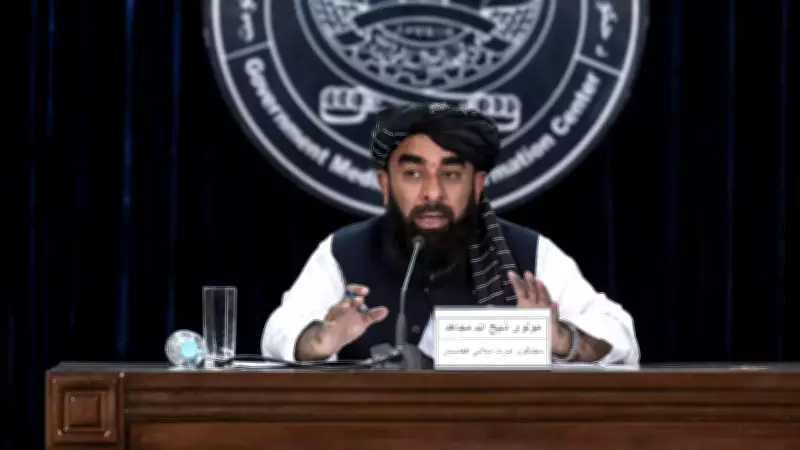
In a forceful declaration from Kabul, Taliban chief spokesperson Zabihullah Mujahid has vowed that the devastating strike on Afghanistan's Omar Addiction Treatment Hospital "will not go unanswered", asserting that a retaliatory response will follow. The remarks, made to TOI on Tuesday, come amid sharply escalating tensions between Afghanistan and Pakistan following what the Taliban describes as a Pakistani airstrike on a civilian medical facility.
Graphic Aftermath and Mounting Casualties
Videos circulating online in the aftermath of the incident depict a scene of utter devastation, with large flames engulfing the hospital structure and thick plumes of black smoke billowing into the night sky. Significant portions of the building appear to have suffered severe structural damage from the attack.
Mujahid provided a grim assessment of the human cost, stating the death toll has reached "400-plus" individuals, with approximately 250 injured victims transferred to various hospitals across Kabul for emergency medical treatment. The spokesperson emphasized that while the Taliban government is currently focused on rescue operations and victim identification, decisive action will be forthcoming.

"Right now, we are busy with rescue, identifying the dead and searching for the injured. It is a matter of deep sorrow for us. But this crime and inhumane brutality will not go unanswered," Mujahid declared during the telephone interview from the Afghan capital.
Taliban Rejects Pakistan's Denial, Labels Attack 'Deliberate'
The Taliban spokesperson forcefully dismissed Islamabad's denial of targeting civilians, accusing Pakistan of attempting to manipulate the narrative through propaganda. Pakistan has maintained that its military strikes were directed at "terrorist infrastructure" rather than civilian facilities.
"As a result of Pakistan's aggression last night, the hospital in Kabul—specifically a rehabilitation centre for people recovering from addiction—was attacked. The entire facility was set on fire. The hospital, and everything inside was consumed by it," Mujahid stated, framing the incident as a deliberate assault on vulnerable civilians.
He insisted there was absolutely no military presence at the location, describing it exclusively as a civilian medical facility dedicated to treating adult male patients undergoing long-term rehabilitation from addiction. "This is an inhuman act. We strongly condemn it. There was no military presence at this location—it was a civilian medical facility treating vulnerable people," he reiterated.
Escalating Rhetoric and Regional Implications
Mujahid's language grew increasingly confrontational as he accused Pakistan of employing tactics reminiscent of other conflict zones. "This is like Israel in Afghanistan—they attack, commit oppression to ignite regional fires and achieve evil goals through terrorism," the spokesperson charged, vowing to expose what he termed Pakistan's "brutality" to international human rights organizations.
The Taliban spokesperson warned that such actions risk destabilizing the entire region, alleging that "Pakistan's aim and purpose is to ignite conflict and to use terrorism to advance their sinister objectives." He called upon the global community to take notice, stating, "We want this incident to be raised globally. The international community and human rights organisations must take note of Pakistan's brutality."
In a particularly pointed conclusion delivered in Urdu, Mujahid repeated his threat of retaliation: "This barbarism will be appropriately responded to, Inshallah (God willing)."
Broader Context of Escalating Hostilities
These inflammatory remarks occur against a backdrop of rapidly deteriorating relations between Pakistan and Afghanistan. Weeks of cross-border strikes, drone attacks, and retaliatory operations along the contentious Durand Line have pushed both nations toward the brink of open conflict.

Islamabad has repeatedly accused the Taliban government in Kabul of providing sanctuary to Tehreek-e-Taliban Pakistan (TTP) militants—an allegation the Afghan leadership consistently denies. The hospital strike represents a grave escalation in this ongoing confrontation and is being regarded as one of the deadliest single incidents in Afghanistan's recent history, potentially marking a dangerous new chapter in regional instability.
The international community now watches with growing concern as diplomatic channels appear increasingly strained, with the Taliban's vow of retaliation signaling that the cycle of violence may intensify rather than subside in the coming days and weeks.