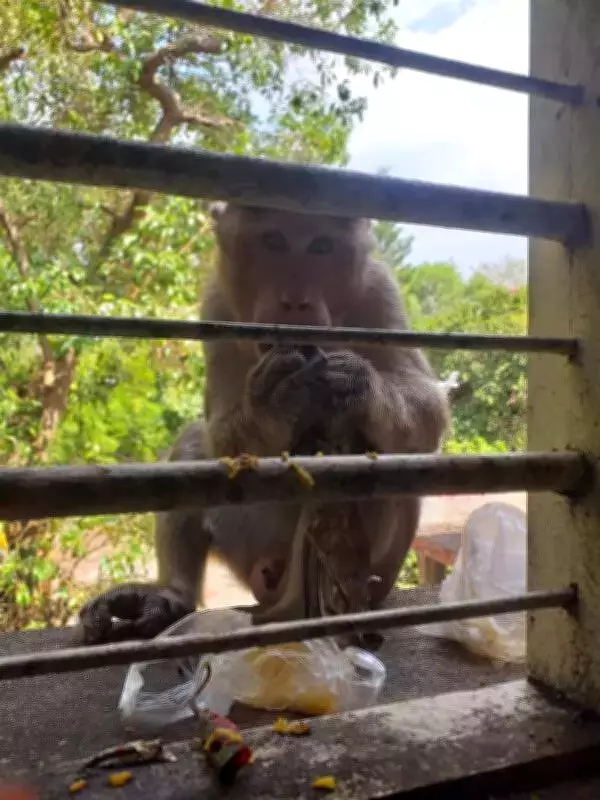
Tenkasi Forest Division Launches Major Crackdown on Monkey Feeding in Courtallam
In a decisive move to restore ecological balance and mitigate escalating human-wildlife conflicts, the Tenkasi forest division has initiated a comprehensive crackdown on the feeding of monkeys in the renowned tourist hotspot of Courtallam. Under the banners of 'zero food waste in Courtallam' and 'no feeding monkeys,' authorities are issuing stern warnings that what is often perceived as human kindness is increasingly becoming a lethal trap for the primates.
Health and Behavioral Crisis Among Monkey Populations
For years, the picturesque waterfalls of Courtallam have witnessed a dramatic surge in monkey populations congregating on roadsides rather than in their natural arboreal habitats. This shift is attributed to the animals losing their innate foraging instincts in favor of processed human snacks. Monkeys, which are naturally arboreal creatures that spend the majority of their lives in trees, have undergone a troubling transition from a diet rich in fruits and leaves to one dominated by junk food.
Forest officials have reported that this dietary change has precipitated a severe health crisis among the local macaque population. DFO R Rajmohan informed TOI that the consumption of leftovers and oily snacks has led to a rise in obesity, skin diseases, and metabolic disorders. Beyond physical health, the behavioral alterations are equally concerning. The expectation of readily available food has resulted in increased aggression, with monkeys frequently attacking tourists to snatch bags and other items.

Ecological Disruption and Legal Ramifications
This dependency on roadside feeding has not only harmed the monkeys but also caused a spike in accidental deaths and roadkill incidents, thereby disrupting the forest's delicate ecological equilibrium. Rajmohan emphasized that monkeys are classified as Schedule I protected species under the Wildlife Protection Act. Consequently, feeding, teasing, or disturbing them is not merely a nuisance but a punishable offence.
He stressed that public cooperation is essential to resolving this conflict, noting that monitoring efforts have been intensified. Individuals found littering food waste or feeding animals will face heavy fines and legal action under wildlife laws, with penalties of up to ₹25,000. The department has issued strict advisories for all tourists, shopkeepers, and residents, mandating that all food waste be disposed of exclusively in designated bins and prohibiting littering in water bodies or on roadsides.
Comprehensive Measures and Community Involvement
Furthermore, schools, hotels, and government offices in the vicinity are required to maintain high standards of cleanliness to discourage primates from loitering around human settlements. Rajmohan added, "We have already begun installing warning signboards at high-traffic zones, waterfalls, hotels, schools, and colleges." He highlighted that in old Courtallam, monkeys are living more happily as littering has been reduced and the public has been sensitized against feeding the animals.
Rajmohan explained, "Our foods aren't suitable for monkeys; they are selective eaters. Our thoughts that monkeys rely on the food fed by us should be changed; this misconception could eventually kill them. We started a study in December; preliminary findings showed some animals with skin diseases and worms. Samples have been sent to the lab, and upon receiving the report, respective actions will be initiated."