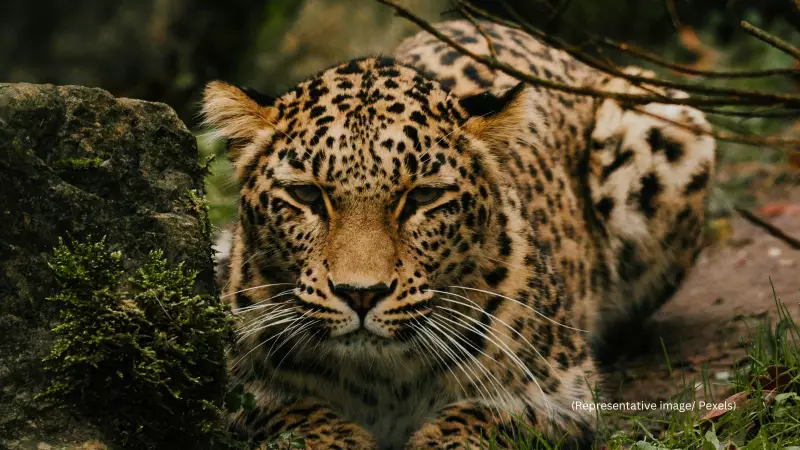
The escalating human-leopard conflict in Pune district has claimed another young life, prompting the Forest Department to seek urgent permission to eliminate the predator. An eight-year-old boy became the third child to be killed in such attacks in the Junnar forest division within a span of two months.
Latest Tragedy Sparks Urgent Action
On Monday morning, around 11:30 am, an eight-year-old boy named Rohit Babu Kapare was killed by a leopard in Mangrul Pargaon village in Junnar taluka. The child belonged to a family of farm labourers. Following the attack, multiple teams from the Forest Department were immediately deployed to the location and surrounding areas. Officials have set up camera traps and trap cages in an attempt to locate the animal.
Deputy Conservator of Forest, Prashant Khade, stated that the department has formally sought permission from the concerned authorities to eliminate the leopard responsible for this attack. "Attempts will be made to tranquilise and capture the leopard. If these attempts fail, the leopard will be eliminated as a last resort," Khade explained. He further highlighted the ongoing efforts, noting that over two dozen leopards have been captured from this area in recent weeks.

A Pattern of Violence and Public Outrage
This incident is part of a disturbing pattern of fatal attacks in the region. Between October 12 and November 1, three people lost their lives in leopard attacks in the villages of Pimparkhed and Jambut in Shirur taluka. The victims were five-year-old Shivanya Bombe (October 12), 70-year-old Bhagubai Jadhav (October 22), and 13-year-old Rohan Bombe (November 1).
These consecutive tragedies have triggered massive public outrage and protests. Villagers have repeatedly blocked major roads and highways, including the Belhe–Jejuri Road and the Pune Nashik Highway at Manchar, to demand action. The anger reached a peak on November 2, following Rohan Bombe's death, when an angry mob set fire to a Forest Department patrol vehicle and a local base camp building, causing significant damage.
The site of Monday's attack in Mangrul Pargaon is alarmingly close—just six kilometres away—from Pimparkhed village, which witnessed two of the earlier child fatalities.
Government Response and Escalating Crisis
The state government is treating the situation with increasing seriousness. After the November 1 incident, Pune Forest Conservator Ashish Thakre obtained immediate permission to capture or shoot the suspected man-eater, which was subsequently shot dead on November 5.
In a high-level meeting on November 18, Chief Minister Devendra Fadnavis reviewed the escalating crisis and directed officials to prepare a proposal to declare the human-leopard conflict a state disaster. He also sought a proposal to shift the leopard from Schedule I to Schedule II of the Wildlife Protection Act, which could potentially alter the protocols for dealing with problematic animals. Furthermore, the CM directed the setting up of two additional leopard rescue centres in Pune district.
The scale of the problem is stark. Last year, eight human deaths were reported due to human-leopard conflict, and this year, five more have been added to that grim tally. In response to last year's incidents, a Red Alert was issued for 13 villages in a five-square-kilometre area in Junnar taluka, with residents advised not to step out before 9 am and after 5 pm.
Recognising the persistent threat, the Pune District Collector in June this year officially notified over 230 villages across four talukas—Junnar, Ambegaon, Shirur, and Khed—as disaster-prone due to repeated incidents of lethal human-leopard conflicts.
In a separate but related incident, a four-year-old boy was killed in a leopard attack in Sangamner taluka of Ahilyanagar district on Saturday evening, underscoring that the conflict is affecting a wider region.