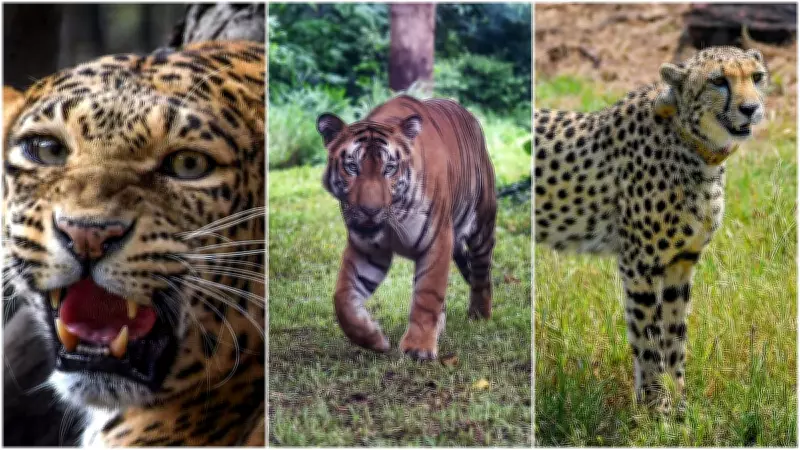
Tiger, Cheetah, and Leopard Spotted Together in Ranthambore's Extremely Rare Wildlife Moment
In an unprecedented and thrilling wildlife event, three of India's most iconic apex predators—a tiger, a cheetah, and a leopard—were spotted together in Ranthambore National Park. This extremely rare moment occurred within an estimated range of one to two kilometres at the same time, capturing the attention of tourists and conservationists alike. The sighting, reported on April 21, 2026, has generated significant excitement due to its rarity and the unique opportunity to observe these majestic animals in close proximity.
Details of the Rare Sighting in Ranthambore National Park
The simultaneous presence of a tiger, cheetah, and leopard in Ranthambore is considered an extraordinary occurrence, as these species typically inhabit different territories and have distinct behavioral patterns. According to reports, the three predators were observed within a narrow geographical area, estimated to be between one and two kilometres apart. This proximity is highly unusual, given that tigers are often solitary and dominant in their habitats, while cheetahs and leopards may avoid direct competition. The event has provided valuable insights into the dynamics of predator coexistence in India's protected areas.
Impact on Tourism and Conservation Efforts
The rare sighting has thrilled tourists visiting Ranthambore National Park, offering a once-in-a-lifetime wildlife viewing experience. It has also drawn attention from conservationists, who are analyzing the implications for wildlife management and habitat preservation. Such events highlight the success of conservation initiatives in maintaining biodiversity and protecting endangered species. Experts note that this occurrence underscores the importance of continued efforts to safeguard natural habitats and monitor predator populations to ensure their survival in the wild.

Key Points from the Sighting:
- The tiger, cheetah, and leopard were seen together in an extremely rare moment.
- They were within an estimated range of one to two kilometres at the same time.
- The event took place in Ranthambore National Park on April 21, 2026.
- It has excited tourists and attracted conservationists' interest.
- This highlights the park's rich biodiversity and conservation success.
This remarkable event serves as a testament to the thriving ecosystem in Ranthambore and the ongoing efforts to protect India's wildlife heritage. As conservation strategies evolve, such sightings may become more frequent, offering hope for the future of these magnificent predators.