The Tunguska Catastrophe: A Cosmic Mystery That Shook the World
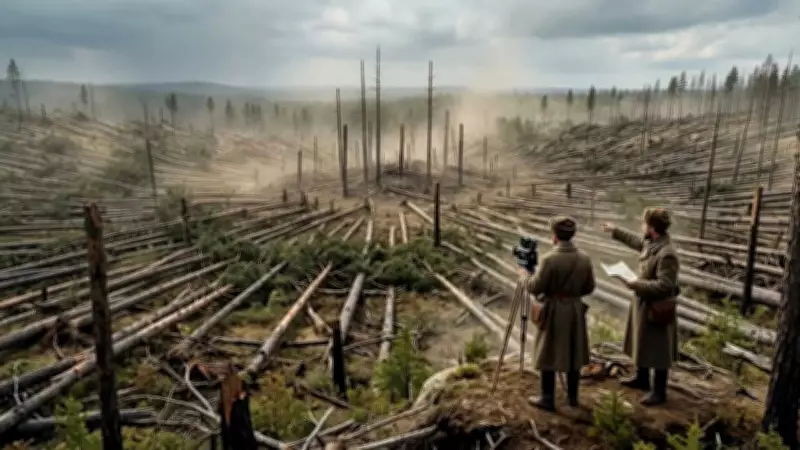
In the early morning hours of June 30, 1908, a tremendous explosion rocked the remote Tunguska region of Siberia, creating what remains the largest cosmic explosion ever experienced by humanity. This catastrophic event flattened approximately 2,150 square kilometers of forest with a blast wave comparable to a massive nuclear detonation, yet left no visible impact crater, creating a scientific enigma that has challenged our understanding of planetary impacts for over a century.
A Fireball Like the Sun
Witnesses described the event as a fireball streaking across the sky with intense brightness, resembling the sun itself. The explosion released energy equivalent to between 3 and 50 megatons of TNT, making it nearly a thousand times more powerful than the atomic bomb dropped on Hiroshima. Remarkably, all this energy deposited directly into the atmosphere at a height of 5-10 kilometers, explaining the absence of a traditional impact crater while contributing to the lasting mystery that continues to intrigue scientists worldwide.
The Mechanics of an Atmospheric Detonation
According to research published in scientific journals including Origins and Advanced Physics, the Tunguska event represents a classic example of an airburst explosion. The object responsible—likely a stony asteroid or comet fragment approximately 50-60 meters wide—was traveling toward Earth at an estimated speed of 27 kilometers per second (about 100,000 kilometers per hour). As it entered Earth's atmosphere, the extreme pressure and friction caused the object to disintegrate explosively 5-10 kilometers above the ground.

This atmospheric disintegration explains why early expeditions, including those led by Leonid Kulik in the 1920s, failed to find an impact crater. The object evaporated before reaching the surface, but the resulting heat and shockwaves caused devastating damage to the surrounding Siberian taiga. The thermal radiation scorched everything in a circular area around the epicenter, while the shockwave created a distinctive circumferential pattern of damaged vegetation.
Global Repercussions and Scientific Evidence
The impact of the Tunguska explosion extended far beyond its immediate Siberian surroundings. In the days following the event, debris and aerosols filled the upper atmosphere, creating unusual atmospheric phenomena across Europe and Asia. Observers reported "bright nights" where the sky appeared dark red with sufficient illumination to read outdoors at midnight. Scientific analysis indicates these effects resulted from high-altitude dust and ice crystals reflecting sunlight—a distinctive environmental signature of large cosmic airburst events.
Further evidence supporting the cosmic origin comes from sediment samples collected from the region. Researchers have discovered microscopic magnetic spheres containing nickel and iridium—two elements rarely found in terrestrial materials but common in extraterrestrial objects. These chemical fingerprints provide crucial confirmation that the Tunguska event resulted from an incoming cosmic body rather than any terrestrial phenomenon.
A Lasting Scientific Legacy
The Tunguska event's enormous energy release created seismic waves recorded across Eurasia and generated atmospheric pressure waves detected as far away as the United Kingdom and United States. According to the Institute for Creation Research and other scientific organizations, the destructive force is often compared to nuclear explosions due to its sheer power and atmospheric effects.
This historic event continues to inform modern planetary defense strategies and our understanding of near-Earth objects. The absence of a crater, combined with the massive destruction and unique atmospheric effects, makes the Tunguska explosion a benchmark case for studying airburst phenomena and assessing potential future threats from similar cosmic encounters.