

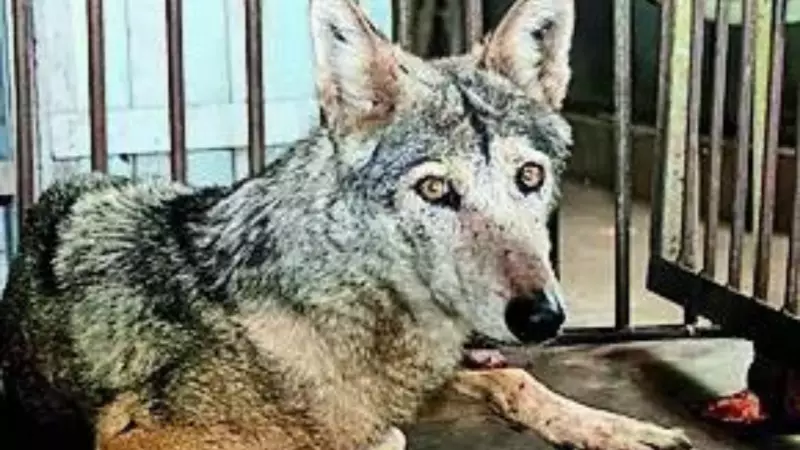
Fear has spread through villages in Uttar Pradesh's Kaisarganj forest region after two young girls were injured in separate wolf attacks on Friday morning. This alarming incident marks a dangerous new phase in the area's human-wildlife conflict, as predators previously known for targeting livestock are now entering homes and attacking children.
Details of the Terrifying Incidents
The first attack occurred in Mallahanpurwa village, which falls under the Godahiya No. 3 Gram Panchayat. Five-year-old Anushka Nishad, daughter of Baliram, was asleep inside her house when a wolf silently entered. The animal attempted to drag the child away before her screams alerted her family and neighbours. Startled by the commotion, the wolf dropped Anushka a short distance away and fled into the darkness. The young girl sustained deep bite wounds on her body.
In a second, similar incident in Baburi village under Godahiya No. 1 Gram Panchayat, another five-year-old girl, the daughter of Kamlesh Kumar Yadav, was attacked. She was playing outside her home when a wolf pounced on her and tried to pull her into nearby fields. Quick-thinking villagers raised an alarm, forcing the animal to release the child. It then escaped towards a sugarcane field. This injured girl was rushed by ambulance to the CHC Kaisarganj for treatment.

Community Response and Rescue Efforts
Local youth social worker Guddu Singh played a crucial role in the immediate aftermath. He reached the spot soon after the first attack and transported Anushka to the community health centre in his own vehicle. His prompt action ensured both girls received urgent medical care without delay.
The twin attacks have significantly heightened tension across the region, where repeated wolf sightings had already caused anxiety among rural communities. Residents are now living in a state of heightened alert, worried about the safety of their children.
Forest Department's Action and Official Statement
The Uttar Pradesh Forest Department has launched an intensive search operation in response to the crisis. District Forest Officer (DFO) Ram Singh Yadav confirmed to the Times of India that the attacks were carried out by wolves. He stated that specialised teams have been deployed and drone surveillance is being used to trace the animals.
DFO Yadav issued an urgent advisory to villagers, urging them to remain vigilant. He specifically advised people to avoid leaving children unattended and to report any wolf sightings to forest officials immediately. The department is actively assessing the reasons behind this behavioural shift, investigating whether habitat disturbance or a scarcity of natural prey is driving wolves closer to human settlements.
As efforts intensify to prevent further incidents, these attacks serve as a stark reminder of the growing challenges in managing human-wildlife conflict in forest-adjacent areas of India.






