

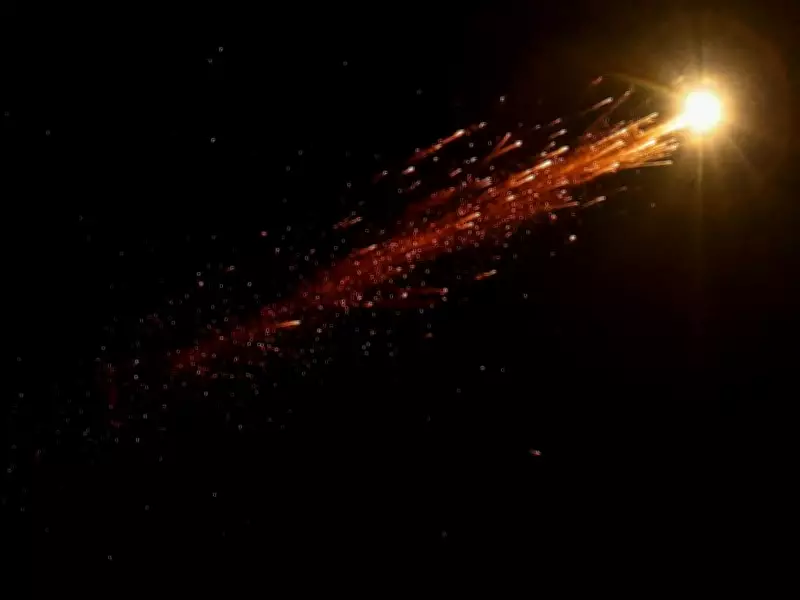
UAE Air Defenses Successfully Counter Iranian Aerial Assault
The United Arab Emirates' Ministry of Defence has officially confirmed that the nation's military capabilities are actively engaged in robust defensive operations following a new wave of aerial attacks launched on Sunday morning. According to a detailed statement released by the Ministry, the country's sophisticated air defence systems are "currently responding to incoming missile and drone threats from Iran." This announcement underscores the ongoing security challenges facing the Gulf nation.
Significant Interception Statistics Revealed
This latest defensive engagement follows a comprehensive disclosure made by the UAE Ministry of Defence on Saturday, which provided staggering figures regarding the scale of aerial threats neutralized since the conflict in West Asia began. The Ministry revealed that UAE air defence systems have successfully intercepted a total of 341 ballistic missiles, 15 cruise missiles, and 1,748 unmanned aerial vehicles (UAVs), all originating from Iran.
In a specific update shared on social media platform X, the Ministry detailed that on March 21, 2026, air defences specifically engaged and countered three ballistic missiles and eight UAVs launched from Iranian territory. The official statement read: "The UAE air defence systems on 21th March 2026 engaged 3 ballistic missiles and 8 UAVs launched from Iran. Since the onset of the blatant Iranian aggression, UAE air defences have engaged 341 ballistic missiles, 15 cruise missiles and 1,748 UAVs."

Human Cost of Sustained Attacks
The Ministry confirmed, with grave concern, that these sustained and aggressive attacks have resulted in tragic casualties among both military personnel and civilians. Two valiant members of the UAE armed forces were killed while performing their national duty. Furthermore, six civilian fatalities were reported, involving foreign nationals from Pakistan, Nepal, Bangladesh, and Palestine.
The human toll extends significantly, with a total of 160 individuals sustaining injuries ranging from minor to severe. The official statement added: "These attacks have resulted in the martyrdom of 2 members of the armed forces while performing their national duty, as well as 6 fatalities of Pakistani, Nepali, Bangladeshi and Palestinian nationalities. A total of 160 people were also injured, with injuries ranging from minor to moderate and severe."
According to the Ministry's report, the injured include nationals from a diverse array of countries, highlighting the international impact of the conflict. The list includes individuals from the UAE, India, Egypt, the Philippines, Sri Lanka, Pakistan, Iran, Bangladesh, Sudan, Ethiopia, Azerbaijan, Yemen, Uganda, Eritrea, Lebanon, Afghanistan, Bahrain, Comoros, Turkiye, Iraq, Nepal, Nigeria, Oman, Jordan, Palestine, Ghana, Indonesia, Sweden, and Tunisia.
Firm Commitment to National Security
Reaffirming its unwavering commitment to safeguarding the nation, the UAE Ministry of Defence stated emphatically that it remains fully prepared and vigilant to counter any and all threats. It has vowed to respond with firmness and resolve to any attempts aimed at undermining the country's sovereignty, security, and overall stability.
Background of Escalating Regional Tensions
These critical developments occur against a backdrop of sharply escalating regional tensions that ignited on 28 February following the killing of Iran's 86-year-old former Supreme Leader, Ayatollah Ali Khamenei, in joint military strikes conducted by the United States and Israel. In retaliation for this event, Iran has systematically targeted Israeli and US assets across several Gulf nations and within Israel itself.
This retaliatory campaign has caused significant disruption to vital waterways and has adversely affected international energy markets. As a direct and consequential result of the ongoing conflict, Iran has effectively closed the Strait of Hormuz, a critical maritime transit route responsible for a substantial portion of the global energy supply. Following the death of Ali Khamenei, his son, Mojtaba Khamenei, was appointed as the new Supreme Leader of the Islamic Republic of Iran.






