Unnao Sailor's Harrowing Experience in West Asia Conflict Zone
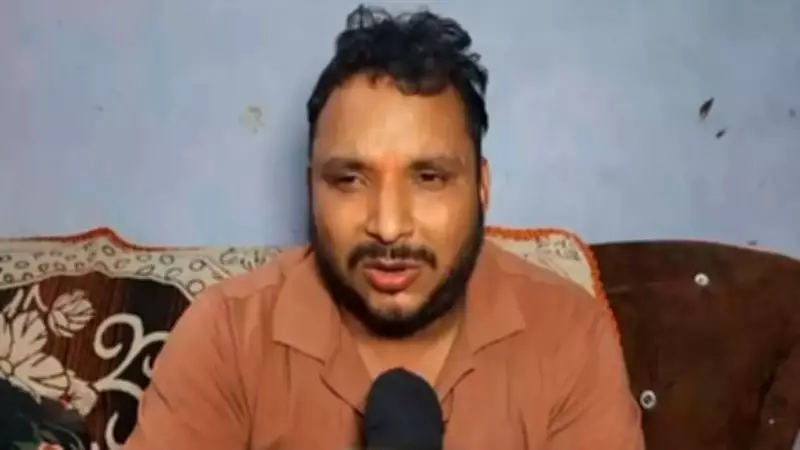
Shivendra Kumar Chaurasia, a merchant navy sailor hailing from Unnao, has come forward with a chilling account of being trapped in the crossfire of the ongoing West Asia conflict. In a detailed interview, Chaurasia described repeated explosions, pervasive fear at sea, and profound uncertainty during his recent return journey from the volatile region.
A Career at Sea Interrupted by Conflict
Chaurasia revealed that he has been working on commercial ships since 2014, with his most recent assignment beginning in December—coinciding with the escalation of regional tensions. "I have been working on ships since 2014," Chaurasia stated. "We had joined recently in December and went back to the ship. There was never such a problem in my life; I got stuck for the first time."
The sailor explained that his vessel was a bulk carrier transporting materials like limestone, zinc, and iron ore between countries. "It depends on the country, carrying goods from one country to another," he said when asked about his route. "Our ship was a bulk carrier, so obviously, we load limestone or zinc or iron ore, whatever comes in bulk, and carry it from one country to another."

The Onset of Terror at Sea
The nightmare began on February 28 when explosions started occurring near their vessel. The situation escalated dramatically on March 3 when a major blast occurred dangerously close to their ship, triggering immediate panic among the crew members.
"On February 28, the explosions started. But the first explosion happened near our ship on March 3rd. That's when we got scared," Chaurasia recalled. "We talked to the company. The company also said we'll take you to a safe place."
The captain initiated emergency protocols, communicating with both the shipping company and maritime authorities. "The captain said if any such problem arises, we will lift the anchor from here and take our ship to a safe place," Chaurasia explained. "Now, whatever happened between the captain and the company, after that, the captain said okay, now we'll mail DG Shipping and provide a small video. So we, the captain himself, made the video, and we recorded ourselves and gave it to DG Shipping for safety."
Living Through Constant Danger
The psychological toll was immense as explosions continued relentlessly. "Explosions were happening in such a way that initially, it was difficult to even sleep," Chaurasia described. "I mean, there was this constant panic about when we would get out of here."
Crew members found themselves in a state of extreme anxiety, constantly monitoring news updates in hopes of a ceasefire. "And we were watching the news every day. And our company was very good; they had provided us with internet. We checked the news daily on Google, hoping the war would end or there'd be a ceasefire," he added.
Chaurasia expressed particular concern for fellow sailors in worse conditions. "The conditions where we were, I think they were very bad. And there are other brothers of ours stuck on ships there, where there is no internet and no food. I pray, sir, that the war ends and those people also get out safely."
Witnessing Maritime Catastrophe
The most traumatic moments came when Chaurasia witnessed multiple ships sinking before his eyes. "I saw at least four ships sinking. One ship sank right in front of my eyes," he recounted with evident distress.
He described a particularly harrowing incident: "The Iranian Navy attacked a warship, and they were taking it away. A tugboat came to take it, and they hit that, too. So, two ships sank right in front of my eyes."
The constant bombardment left lasting psychological effects. "As for how many explosions happened, there is no count. Even today, my head feels very light from hearing the explosions," Chaurasia revealed.
The Fragility of Ceasefires and Human Connection
Chaurasia expressed skepticism about temporary peace arrangements in the conflict zone. "I cannot speak about this war because sometimes there is a ceasefire, and then it starts again. If there was a ceasefire in the afternoon, there was an explosion in the evening."

Throughout the ordeal, maintaining contact with family provided crucial emotional support. "Being with the family, this is the best thing about my company. And I pray for the company to provide us with Wi-Fi continuously, so that we can stay in touch with the family," he emphasized.
The collective fear among the crew was palpable. "Everyone was afraid of this, just wanting to escape from that situation. At that time, it was just that someone should help us," Chaurasia concluded, summarizing the desperation felt by all onboard.