Uttar Pradesh Combats River Plastic with Innovative Floating Barriers
In a groundbreaking initiative to tackle the escalating crisis of plastic pollution in water bodies, the Uttar Pradesh government has launched a novel project in Pratapgarh. The state is installing floating trash barriers in drains and water channels connected to the Sai River, employing an ingenious method that fights plastic waste with plastic itself.
Prototype Barrier Shows Promise
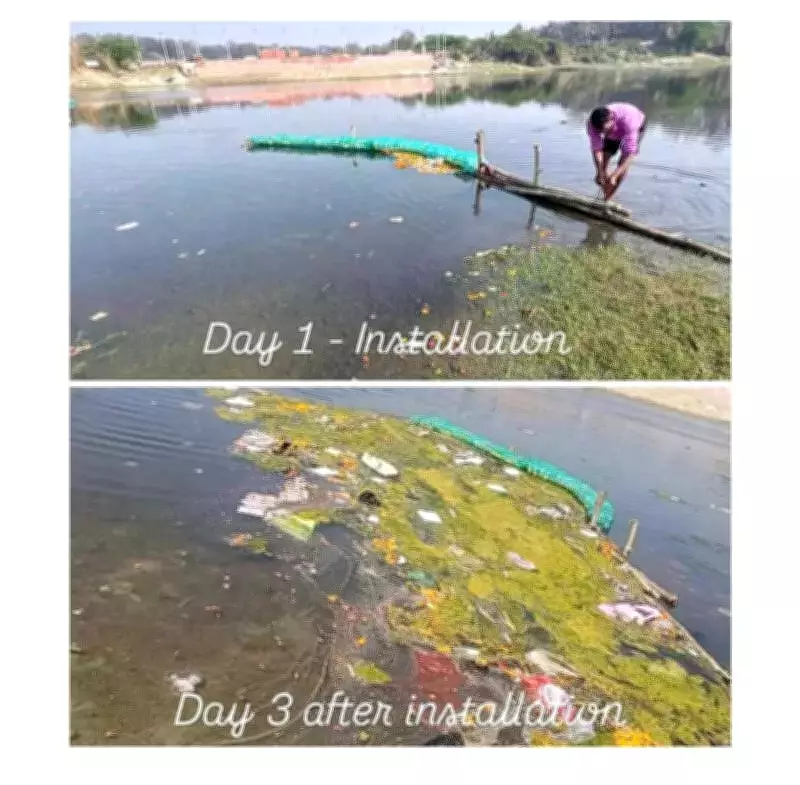
Ashutosh Gupta, the divisional forest officer for Pratapgarh, revealed that a prototype barrier, constructed from bamboo and recycled plastic bottles, has already been deployed in the river. This low-cost, eco-friendly solution effectively collects floating waste while safeguarding the aquatic ecosystem. "It is a significant step forward for river conservation," Gupta emphasized, noting that similar treatments may be extended to other rivers in the region.
Five-Step Process for Barrier Implementation
The floating waste barrier initiative follows a streamlined five-step process:

- Bottle Collection: Plastic bottles are gathered from various sources for reuse.
- Bottle Assembly: The collected bottles are packed securely into mesh nets.
- Floating Module Ready: Bottle bundles are prepared to ensure optimal buoyancy.
- Barrier Installation: Barriers are fixed in the river using bamboo structures.
- Waste Captured: Floating debris gets trapped for systematic removal.
This method allows water to flow freely while intercepting trash, making it an efficient tool for pollution control.
Targeting High-Risk Areas and Ensuring Maintenance
The social forestry and wildlife division has identified spots with high plastic flow as priority locations for barrier installation. Gupta explained that teams from local municipal bodies and gram panchayats are responsible for regularly clearing the accumulated waste from these barriers and ensuring its safe disposal, maintaining the system's effectiveness.
Addressing Pollution at Holy Sites
Officials highlighted that plastic pollution has severely impacted rivers near temples and holy sites, where devotees often leave behind trash such as water bottles and worship materials. The Sai River, which flows by Maa Belha Devi Dham in Pratapgarh, has been particularly affected by this issue, prompting urgent intervention.
Reviving Seven Endangered Rivers
In the Prayagraj division, efforts are underway to revive seven rivers that are on the verge of extinction. Divisional commissioner Saumya Agarwal stated that ongoing conservation work focuses on the Lapri, Karnavati, and Varuna rivers in Prayagraj district; the Susar Khaderi and Pandu rivers in Fatehpur; and the Sai and Chamraura rivers in Pratapgarh.
Major Restoration Project for Susar Khaderi River
The most extensive initiative centers on the Susar Khaderi River, which historically flowed across three districts. In its second phase of revival, the 58-kilometre river, originating from Akhnai Lake in Farsi village (Fatehpur) and passing through 125 villages across Kaushambi and Prayagraj before merging with the Yamuna River, is being restored. Restoration work is currently being executed at a cost of Rs 2.56 crore, aiming to breathe new life into this vital waterway.
This comprehensive approach not only addresses immediate plastic pollution but also contributes to the broader goal of river conservation and ecological sustainability in Uttar Pradesh.