For aspirants preparing for the Civil Services Examination 2026, consistent answer writing practice is key to success. UPSC Essentials presents its weekly initiative focused on Mains answer writing, covering vital static and dynamic topics from the General Studies syllabus. This week's questions for GS Paper 1 tackle two pressing environmental issues: the aggravating air quality in North Indian cities and the alarming transformation of Africa's tropical forests from carbon sinks to carbon sources.
Question 1: The Anatomy of North India's Persistent Air Pollution
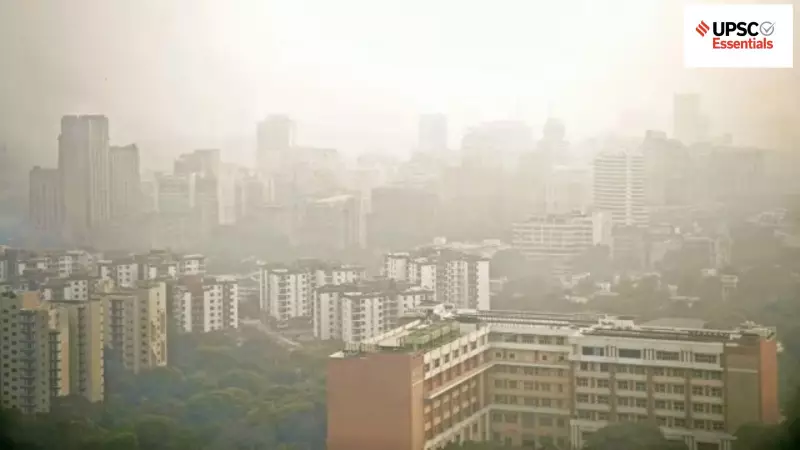
A recent decade-long analysis spanning from 2015 to November 2025 presents a grim picture. No major Indian city recorded consistently safe air quality levels during this period. The national capital, Delhi, emerged as the most polluted, with its annual mean AQI peaking above 250 in 2016. Although levels have dipped since 2019, the 2025 AQI of 180 remains far from safe. Following Delhi, cities like Lucknow, Varanasi, Ahmedabad, and Pune also endured prolonged spells of hazardous air.
The study, titled 'Air Quality Assessment of Major Indian Cities (2015–2025)' by the research group Climate Trends, highlighted a clear geographical divide. Northern cities consistently suffered more severe and persistent pollution compared to their counterparts in the south and west, such as Chennai, Mumbai, Bengaluru, Chandigarh, and Visakhapatnam.

Why the North Bears the Heaviest Burden
The extreme pollution in the Indo-Gangetic Plain (IGP) is not a coincidence but a consequence of a perfect storm of geographical and meteorological factors.
Firstly, physiography plays a decisive role. Cities like Delhi, Lucknow, and Varanasi are landlocked within the vast IGP, bounded by the Himalayan wall to the north. This topography acts as a giant basin, trapping pollutants and preventing their natural dispersion. Within cities, dense urban infrastructure creates 'surface roughness,' which further slows wind speeds and limits the horizontal mixing of air.
Secondly, the phenomenon of winter inversion dramatically worsens conditions. During the winter months (December-February), the planetary boundary layer—the lowest part of the atmosphere—becomes thinner. Cool, dense air settles near the ground and gets trapped under a layer of warmer air above, forming an atmospheric 'lid.' This inversion severely restricts vertical mixing, compressing pollutants into a shallow layer close to the surface.
Thirdly, regional pollution transport adds a massive external load. The problem is compounded by transboundary aerosol movements. Post-monsoon stubble burning in Punjab, Haryana, and Uttar Pradesh generates vast smoke plumes that drift across the region. Emissions from dense industrial clusters, brick kilns, and continuous waste burning from local sources mix with this transported pollution, creating a regional haze that blankets the entire plain.
While the summer monsoon brings rain and strong westerly winds that help cleanse the air, the winter combination of inversion, low winds, and external pollution sources creates a public health emergency, significantly reducing life expectancy in the region.
Question 2: Africa's Forests - From Climate Ally to Carbon Source
In a significant and worrying shift for global climate efforts, Africa's tropical forests have transitioned from being major carbon sinks to net carbon sources. This transformation means these critical ecosystems are now adding more carbon dioxide to the atmosphere than they are absorbing, exacerbating global warming. Published in the journal Scientific Reports, the study 'Loss of tropical moist broadleaf forest has turned Africa’s forests from a carbon sink into a source' reveals that all three of the world's great rainforest regions—the Amazon, Southeast Asia, and Africa—are now carbon sources.
Geographical and Ecological Drivers of the Shift
Historically, Africa's forests and wooded savannas were instrumental in the global carbon cycle, absorbing over one billion tonnes of CO2 annually through photosynthesis. However, satellite-derived biomass data from 2007 to 2017 tells a different story.

The research indicates that while Africa's ecosystems were a net carbon sink between 2007 and 2010, extensive forest loss has reversed this trend. Between 2010 and 2017, African forests lost a staggering 106 billion kilograms of biomass per year—equivalent to the weight of about 106 million cars. The tropical moist broadleaf forests of the Democratic Republic of the Congo, Madagascar, and West Africa were the hardest hit.
The primary drivers are human activities. Agricultural expansion, fuelwood collection, and shifting cultivation lead to direct forest cover loss. Infrastructure development and mining activities have accelerated vegetation loss. Furthermore, global warming itself reduces ecosystem resilience, making forests more susceptible to degradation and wildfires, which release stored carbon directly into the atmosphere.
With the global average temperature already 1.2°C above pre-industrial levels, this loss of a critical carbon sink makes climate targets even more challenging to achieve. As study co-author Dr. Pedro Rodríguez-Veiga noted, if Africa's forests become a long-term carbon source, global climate goals will be much harder to reach. The findings underscore the urgent need for robust international mechanisms like the Tropical Forest Forever Facility (TFFF), launched at COP30, which aims to fund forest conservation in developing nations.
For UPSC aspirants, these questions offer a chance to synthesize knowledge of physical geography, environmental ecology, and contemporary challenges. A compelling answer would weave together the specific factors—from the Himalayas' role as a barrier to the socio-economic pressures on African forests—demonstrating a holistic understanding vital for the Civil Services Examination.