

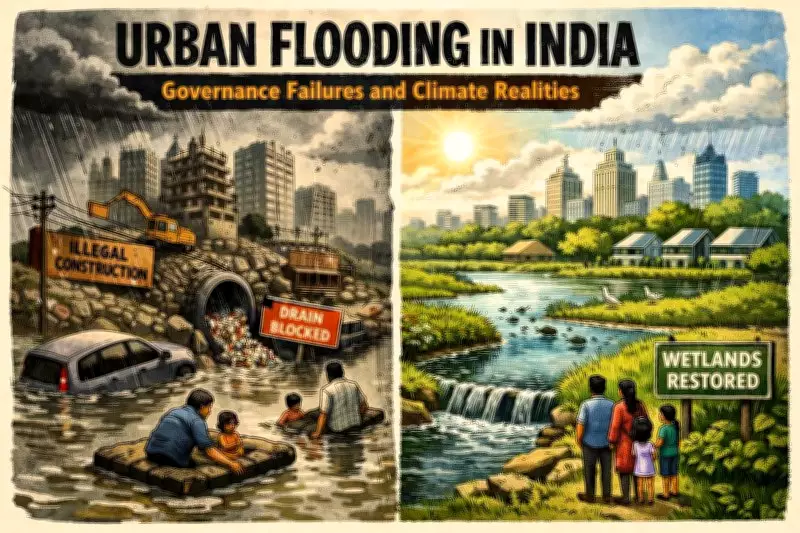
Urban Flooding in India: A Crisis of Governance and Climate
Urban flooding in India has become a recurrent and devastating phenomenon, exposing deep-seated governance failures and the harsh realities of climate change. Cities like Mumbai, Chennai, and Bengaluru are increasingly vulnerable to severe waterlogging during monsoons, disrupting lives, damaging infrastructure, and causing significant economic losses. This article delves into the root causes, the role of governance, and the urgent need for adaptive strategies to mitigate this growing threat.
Governance Failures: The Core of the Problem
The primary driver of urban flooding in India is poor governance and inadequate urban planning. Rapid, unregulated urbanization has led to the encroachment of natural drainage systems, such as wetlands and rivers, reducing their capacity to absorb and channel rainwater. Municipal authorities often fail to enforce building codes and zoning regulations, allowing construction in flood-prone areas. Additionally, the maintenance of stormwater drains is neglected, with many systems clogged by waste and silt, exacerbating flooding during heavy rains.
Key governance issues include:

- Lack of integrated water management policies that consider both surface and groundwater.
- Insufficient investment in resilient infrastructure, such as permeable pavements and green roofs.
- Poor coordination between different government agencies, leading to fragmented responses during floods.
- Inadequate disaster preparedness and early warning systems, leaving citizens unprepared for emergencies.
Climate Realities: Intensifying the Threat
Climate change is amplifying the frequency and intensity of extreme weather events, including heavy rainfall, which directly contributes to urban flooding in India. Rising global temperatures have altered monsoon patterns, leading to more erratic and intense downpours that overwhelm existing drainage systems. Coastal cities face additional risks from sea-level rise, which can exacerbate flooding during high tides and storms.
Studies indicate that climate-induced factors are making urban areas more susceptible to flooding, necessitating urgent adaptation measures. For instance, the 2021 floods in Mumbai were linked to unusually high rainfall attributed to climate change, highlighting the need for cities to build climate resilience into their planning frameworks.
Case Studies: Mumbai and Chennai
Mumbai, India's financial capital, frequently experiences severe flooding during the monsoon season. The city's outdated drainage system, designed for a much smaller population, cannot cope with current rainfall levels. Encroachments on the Mithi River and other water bodies have reduced natural drainage, while poor waste management leads to blockages in drains.
Chennai faced catastrophic floods in 2015 and 2021, largely due to the loss of wetlands and water bodies to urban development. The city's rapid expansion has paved over natural sponges that once absorbed rainwater, turning heavy rains into disastrous floods. Governance lapses, such as delayed desilting of canals and inadequate flood control measures, have worsened the situation.
Solutions and Way Forward
Addressing urban flooding in India requires a multi-pronged approach that combines governance reforms, infrastructure upgrades, and climate adaptation strategies. Key solutions include:

- Enhancing Governance: Implement strict land-use regulations, restore natural drainage systems, and improve inter-agency coordination for flood management.
- Investing in Infrastructure: Upgrade stormwater drains, promote green infrastructure like rain gardens, and adopt smart technologies for real-time flood monitoring.
- Climate Adaptation: Integrate climate resilience into urban planning, develop early warning systems, and promote community-based disaster risk reduction.
- Public Awareness: Educate citizens on flood risks and encourage participation in conservation efforts, such as maintaining local water bodies.
In conclusion, urban flooding in India is a complex issue driven by governance failures and climate realities. By adopting proactive measures and fostering collaboration between government, communities, and experts, cities can build resilience and protect their residents from future floods. The time for action is now, as the impacts of climate change continue to escalate.





