

US Airstrikes Target Iran's Critical Oil Hub, Escalating Regional Tensions
Recent US military strikes on Kharg Island, the central nerve center of Iran's oil export operations, have dramatically intensified geopolitical tensions across West Asia. This aggressive action has sparked immediate concerns about potential disruptions to global energy supplies, with oil markets watching nervously as the situation develops.
Strategic Importance of Kharg Island in Global Energy Markets
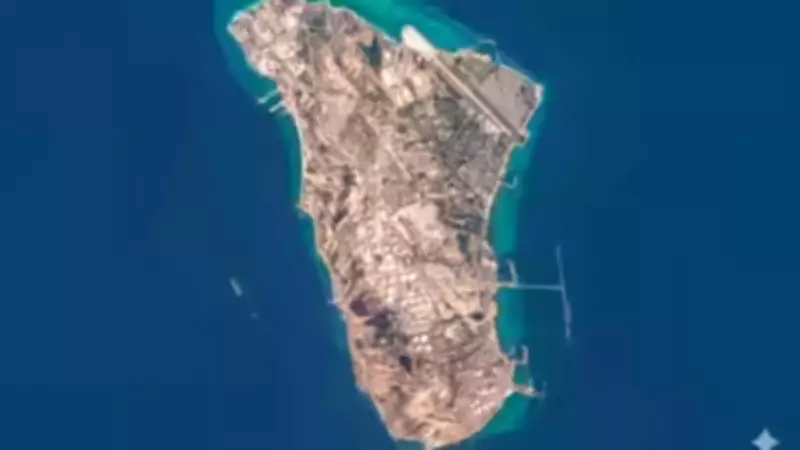
Kharg Island represents far more than just another piece of Iranian territory. Located approximately 25 kilometers off Iran's southern coast in the northern Persian Gulf, this small coral island functions as the country's primary oil export hub. An astonishing 90% of Iran's crude exports flow through its sophisticated terminals, making it one of the most strategically vital energy infrastructure locations in the entire region.
The island's oil export terminal was originally developed during the 1960s through a partnership with the American oil company Amoco. Following the transformative 1979 Iranian revolution, Iran expropriated the company's assets and assumed complete control over the facilities. Amoco later merged with British Petroleum, though the Amoco retail fuel brand continues to operate within the United States market today.

Iran's Extensive Oil Infrastructure Network
Over multiple decades, Iran has constructed an elaborate pipeline network that connects major inland oil fields directly to Kharg Island. This infrastructure has transformed the island into the principal collection, storage, and loading hub for Iranian crude before it reaches international buyers worldwide. Kharg's advanced facilities also receive substantial crude volumes from major offshore oilfields including Aboozar, Forouzan, and Dorood through sophisticated subsea pipelines.
The crude oil is stored in massive tank farms before being loaded onto supertankers destined primarily for Asian markets. Energy analysts emphasize that much of Iran's coastline lacks sufficient depth for these enormous vessels, making Kharg Island uniquely positioned for large-scale crude exports. This concentration of export infrastructure has long positioned Kharg as both Iran's most valuable energy asset and its most vulnerable strategic chokepoint.
Potential Global Market Impact of Disruption
Sumit Ritolia, lead research analyst at global data and analytics provider Kpler, provided critical context about Kharg Island's capacity. "Kharg Island possesses storage capacity of approximately 30 million barrels and serves as the primary export outlet for Iranian crude," Ritolia explained. "Between 90-95% of Iran's seaborne crude exports typically originate from this single island, meaning roughly 1.5-1.6 million barrels per day pass through its terminals. These exports represent a critical source of foreign currency for Iran and remain a central pillar of government revenues and economic stability despite years of international sanctions."
Ritolia further noted that Iran has attempted to develop alternative export routes such as the Jask terminal located outside the Strait of Hormuz. However, these alternative facilities remain significantly smaller in scale and cannot realistically replace Kharg's massive export capacity. Any sustained disruption resulting from military escalation could immediately threaten the majority of Iran's export capabilities.
Current Export Levels and Future Risks
Prashant Vashisht, senior vice president at ratings agency ICRA, highlighted that Iran has maintained crude exports between 1.1-1.5 million barrels per day even after the conflict's initiation. "Any direct attack targeting Kharg Island could substantially affect crude supply volumes," Vashisht cautioned, emphasizing the delicate balance in global energy markets.
While Iranian officials have claimed that oil operations on the island continue despite the recent attacks, they have simultaneously issued warnings about potential retaliation targeting US assets and critical shipping routes across the Gulf region. This escalating situation creates significant uncertainty for global energy security and economic stability as nations monitor developments closely.






