US Quietly Expands Military Presence in Middle East as Iran Conflict Deepens
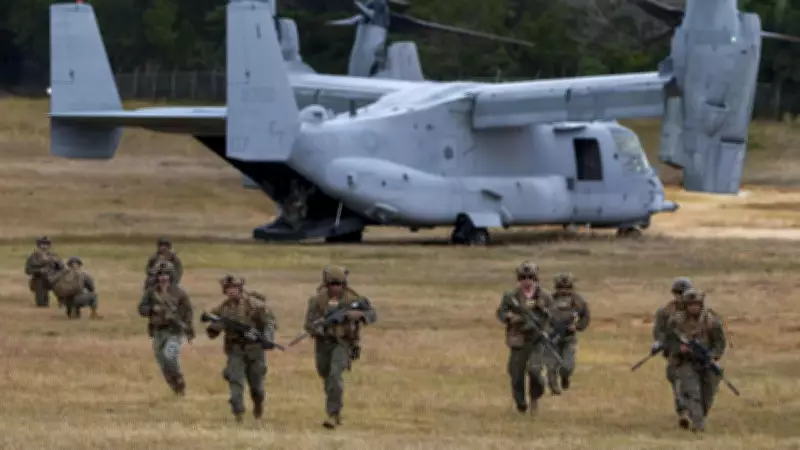
A month into the conflict with Iran, which was initiated under the design of former President Donald Trump, Washington is discreetly increasing its military footprint across the Middle East. This strategic move involves sending several hundred additional troops to bolster a growing force that already includes Marines and Army paratroopers. According to US military officials who spoke to The New York Times on Sunday, these deployments are intended to provide President Trump with a broader array of options as tensions with Tehran continue to intensify.
Specialized Forces Await Defined Missions Amid Fluid Conflict
For the time being, the newly arrived commandos—comprising elite units such as Army Rangers and Navy SEALs—remain without clearly defined missions. Officials, speaking on condition of anonymity, have indicated that their roles are still being shaped, highlighting the fluid and evolving nature of the ongoing conflict. This uncertainty underscores the dynamic challenges faced by US forces as they navigate a rapidly changing geopolitical landscape.
High-Stakes Plans Under Consideration
With a significant US military build-up in the Gulf region, Trump is reportedly eyeing a daring and high-risk mission: the extraction of nearly 1,000 pounds of enriched uranium from Iran. US officials informed The Wall Street Journal that this plan, which is still under consideration, would be fraught with complexity and danger. It could potentially involve American forces operating inside Iranian territory for extended periods, possibly days or longer, in an effort to secure one of Tehran's most sensitive nuclear assets.

Potential Scenarios for Ground Forces
The specialized ground forces now deployed could be tasked with a variety of critical missions. Key scenarios under consideration include:
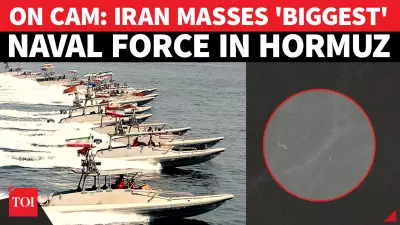
- Securing the Strait of Hormuz: This vital chokepoint for global oil flows has been effectively shut down by Iran, and reopening it is a priority under discussion.
- Seizing Kharg Island: Tehran's crucial oil hub in the northern Persian Gulf, which accounts for approximately 90% of Iran's oil exports, is a potential target.
- Targeting Enriched Uranium Stockpiles: Operations aimed at the Isfahan nuclear site, where Iran stores enriched uranium, are also being evaluated.
Troop Build-Up Reflects Broader Military Posture Shift
These new deployments join a steady build-up of US forces in the region. Recently, 2,500 Marines and an equal number of sailors have arrived, pushing total US troop levels past 50,000—an increase of around 10,000 from the usual numbers. This reinforcement signals a broader shift in military posture as Trump weighs his next strategic moves in the conflict.
Unanswered Questions and Operational Flexibility
Despite the surge, key questions remain unresolved. The precise role of the 31st Marine Expeditionary Unit, now in theatre, is still unclear. Officials note that one focus of discussions is how to reopen the Strait of Hormuz, through which roughly one-fifth of the world's oil supply typically passes. Currently, the waterway remains largely constricted due to Iranian retaliatory attacks linked to the US-Israeli campaign.
The US military presence in the Middle East is already extensive, spanning bases and naval deployments across countries such as Saudi Arabia, Bahrain, Iraq, Syria, Jordan, Qatar, the United Arab Emirates, and Kuwait. However, the current elevated troop numbers tell only part of the story. Notably absent is the USS Gerald R. Ford, along with its 4,500 personnel. The carrier, plagued by technical issues including a fire onboard, exited the region on March 23, sailing via Crete before reaching Croatia, with its next destination still uncertain.

Additional Layers of Military Capability
In parallel, the Pentagon has dispatched approximately 2,000 troops from the 82nd Airborne Division, adding another layer of operational flexibility. Their exact location is undisclosed, but officials confirm they are positioned within striking distance of Iran. Like the commandos, these forces could be directed toward objectives such as Kharg Island—which has already been hit by more than 90 US airstrikes this month—or integrated into broader ground operations.
Analysts Caution Against Invasion Speculation
Military analysts, however, caution against interpreting the troop build-up as a prelude to a full-scale invasion. A force of 50,000, many of whom are deployed at sea, falls well short of what would be required for a sustained ground campaign. For comparison, Israel mobilized over 300,000 troops for its Gaza offensive in October 2023, and the US-led invasion of Iraq in 2003 began with nearly 250,000 personnel.
Iran, with a population of roughly 93 million and vast, varied terrain, presents a far more formidable challenge. Holding territory, let alone conquering it, would demand significantly greater resources. For now, the US posture appears to be less about occupation and more about keeping options open in a widening and complex conflict.