

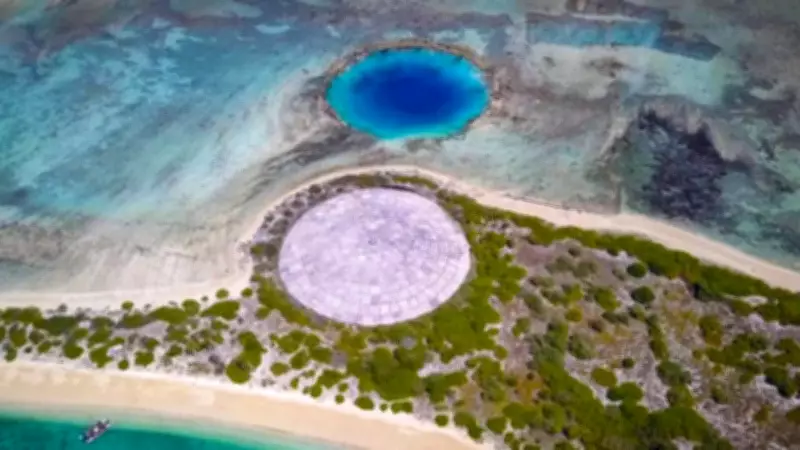
US Government Report Sounds Alarm on Runit Dome Nuclear Waste Crisis
The structural integrity of the Runit Dome in the Marshall Islands, often described as a massive 115-meter-wide concrete "coffin," is now critically endangered according to a stark warning from the United States Government Accountability Office (GAO). This ominous dome was constructed over an unlined crater left by a 1958 nuclear explosion, containing a staggering volume of over 120,000 tonnes of radioactive debris. A significant portion of this toxic material consists of soil contaminated with plutonium-239, one of the most hazardous radioactive isotopes known to science.
Rising Seas and Unforeseen Forces Compromise Concrete Structure
Escalating sea levels and intensifying storm patterns in the Central Pacific region have directly compromised the 18-inch-thick concrete cap of the dome. These environmental forces, including both rising and falling tidal actions, were never anticipated during the original construction phase and were completely excluded from the permanent storage design considerations. The porous coral substrate underlying the crater allows the radioactive waste to literally "float" up and down with the tidal rhythms, while simultaneously permitting seawater to permeate the debris pile continuously.
The 'Ticking Time Bomb' Environmental Disaster
The persistent leakage of seawater through the degrading concrete cover, combined with large, visibly expanding surface cracks, has transformed the site into what experts are calling a "ticking time bomb" environmental catastrophe with origins tracing back to the Cold War era. One of the most perilous aspects of the Runit Dome situation is not merely the external cracking, but the complete absence of any bottom lining inside the structure. According to the detailed GAO report, the Defence Nuclear Agency (DNA), supported by the U.S. Army Corps of Engineers, utilized the existing "Cactus" blast crater for radioactive soil disposal during the late 1970s construction, deliberately omitting a concrete base to reduce project costs.

Radioactive Waste in Constant Contact with Groundwater
This critical design flaw means the radioactive waste remains in perpetual contact with groundwater, rising and falling in sync with ocean tides. This hydraulic action creates what scientists commonly refer to as "pumping," a process that expels radioactive isotopes directly into the surrounding Enewetak lagoon on a daily basis. Runit Island itself stands a mere 25 feet above current sea levels, as documented in the U.S. Department of Energy's 2024 Climate Report. The relentless rise in sea levels is now pushing radioactive groundwater higher into the porous geological area, generating increased internal pressures and causing additional "base" cracking across the structure's surface.
Typhoon Threat and Global Environmental Implications
These expanding cracks permit rainwater to infiltrate the structure, carrying plutonium-239 into the ground and contaminating the water table through pre-existing channels across the area. The GAO report indicates with grave concern that a major typhoon surge could trigger a catastrophic washout, dispersing the internal radioactive contents throughout the Enewetak lagoon as sediment and fine particles are flushed through channels into the marine environment. Today, the cracking of Runit Dome presents a visible testament to structural failure and serves as a haunting template of decaying nuclear history.
Design Life Expired, Immediate Action Required
Both the Government Accountability Office and Department of Energy reports have conclusively established that the dome's "temporary" 50-year design lifespan has now been fully exceeded. Without urgent international intervention to reinforce the unlined crater, the continually rising Pacific tide waters will persist in "pumping" plutonium and other radioactive materials into the environment. Protecting the Marshall Islands from a catastrophic radioactive washout has evolved into a pressing matter of global environmental justice, demanding immediate climate action and international cooperation to address this escalating crisis before it reaches a point of irreversible environmental damage.






