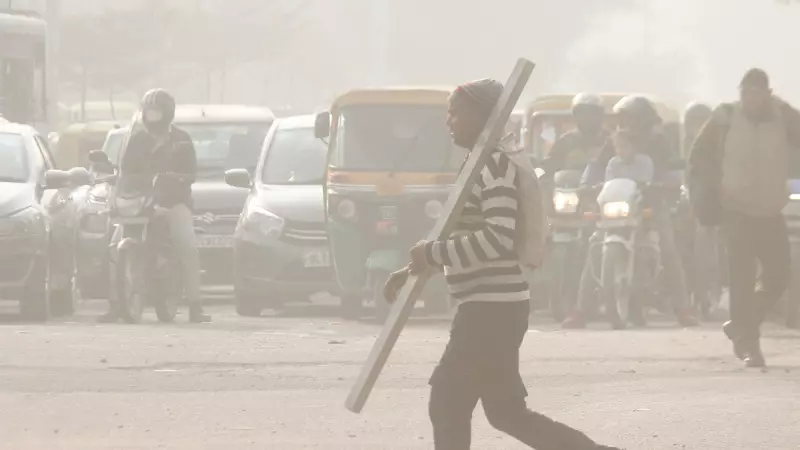
A fresh analysis by the Centre for Science and Environment (CSE) has sounded the alarm over a significant increase in toxic pollutants emanating from vehicle exhausts during the early winter period in Delhi and the National Capital Region (NCR). The study, released on Monday, December 2, 2025, maps trends from October to November this year, highlighting a worrying surge in nitrogen dioxide (NO₂) and carbon monoxide (CO) levels.
Local Sources Trump Farm Fires in Pollution Cocktail
The report underscores a critical finding: air quality remained persistently poor even with a substantially lesser contribution from farm fires. The impact of stubble burning was below 5% on most days, ranged between 5 to 15% on a few days, and peaked at 22% only on November 12-13. This clearly indicates the dominant and high impact of year-round local sources of pollution, with vehicular emissions being a prime culprit.
The CSE has previously established a strong link between traffic congestion and spiking NO₂ levels, particularly during peak hours on weekdays when vehicle speeds plummet. The health implications are severe, as multiple global and national studies connect exposure to traffic pollutants with increased sickness and mortality rates among drivers, commuters, and residents near major roads, often triggering or worsening respiratory diseases.

Emerging Hotspots and the NCR's Single Air-Shed
The study has identified several locations as persistent pollution hotspots for four consecutive years. These include Vivek Vihar, Ashok Vihar, Nehru Nagar, Alipur, Siri Fort, Dwarka Sector 8, and Patparganj. The CSE urges the Delhi government to expand action beyond the 13 officially identified hotspots, similar to the measures taken in 2018.
Another key revelation is that smaller towns in the NCR are no longer escape zones from toxic air. The region now behaves as a single, unified air-shed. During high-intensity pollution episodes, cities like Bahadurgarh recorded worse smog conditions than Delhi. From November 9 to 18, Bahadurgarh endured a relentless 10-day smog episode, with an average intensity of 343 µg/m³—nearly 1.2 times higher than Delhi's average.
Call for Structural Changes and Legacy Waste Action
The pattern is well-established: local sources are the primary drivers of dangerous PM2.5 concentrations. Last year, the CSE found that even when stubble burning contributed a mere 0.7% between October 10 and 20, particulate levels stayed high without a single "good" air day. Experts warn that Delhi's baseline emissions remain elevated year-round, only intensifying during episodic events.
In its recommendations, the CSE advocates for deep structural reforms, primarily in the transport sector. These include:
- Meeting vehicle electrification targets with strict deadlines.
- Accelerating the scrappage of older, polluting vehicles.
- Radically scaling up integrated public transport with reliable last-mile connectivity and safe walking-cycling infrastructure.
- Restraining personal vehicle use through measures like parking caps, pricing, and a congestion tax.
Other crucial recommendations focus on helping industries switch to affordable cleaner fuels with stringent emission norms, reducing taxes on natural gas, electrifying industrial processes, and prioritizing the remediation of legacy waste sites.
In a related development, the Commission for Air Quality Management (CAQM) noted a significant decline in farm fires as the paddy harvesting season concludes. Punjab recorded 5,114 fires this season, a 53% reduction from 2024, while Haryana logged 662 incidents, also a 53% drop from the previous year. The commission stated these figures represent the most significant decline since it began monitoring state-specific crop residue management measures.