

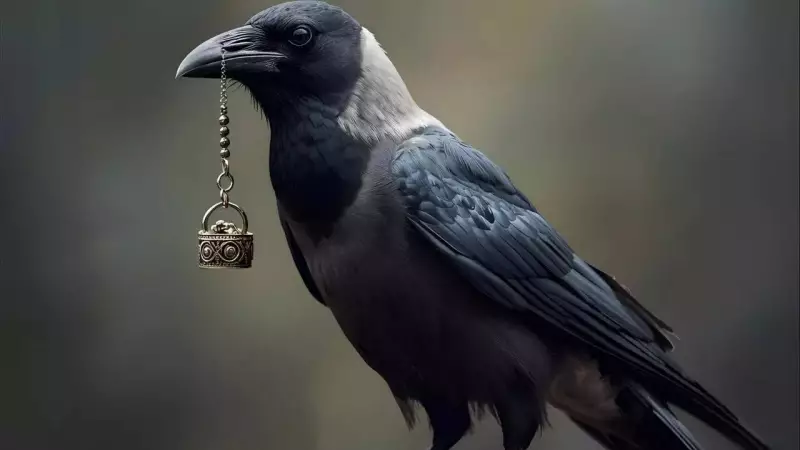
Across India and the world, people have reported a curious phenomenon: after receiving food or showing kindness, crows sometimes leave behind small, strange objects. These unexpected tokens, ranging from shiny pebbles and bottle caps to bits of metal or even rings, often feel like a mysterious gesture of gratitude, creating a deep emotional connection for those who experience it.
The Intelligent Mind Behind the "Gift"
While the behaviour seems almost magical, scientists have uncovered the fascinating cognitive processes driving it. Crows are among the most intelligent birds on the planet. Their remarkable abilities include recognising human faces, forming long-term memories, solving complex problems, and learning social exchange behaviours.
A pivotal peer-reviewed study in the journal Proceedings of the National Academy of Sciences demonstrated this powerfully. It showed that American crows could remember individual human faces linked with either danger or kindness for several years. In the experiments, crows that were captured by researchers wearing specific masks later recognised and scolded people wearing the same mask, even after long periods had passed.

Is It a Learned Exchange or Accidental?
Crows belong to the corvid family, renowned for exceptional intelligence and tool use. Researchers suggest the objects left for humans are likely not random. Observations show people who feed crows routinely later find small items placed neatly near the feeding spot. These are often shiny or novel objects that crows naturally enjoy collecting.
Some scientists propose the behaviour might start accidentally. A crow, curious by nature, may approach a feeding spot while holding an object and drop it unintentionally. If this action is followed by a reward—like more food or a friendly interaction—the crow learns a pattern that resembles an exchange. This learning points towards a form of behavioural reciprocity.
How to Responsibly Interact with Crows
If you wish to build a positive relationship with these intelligent birds in your Indian neighbourhood, follow these guidelines:
- Feed them consistently at the same place and time.
- Offer safe foods like unsalted nuts, grains, or seeds.
- Avoid processed leftovers and harmful plastics.
- Stay calm, patient, and never try to touch or trap them.
Even if you never receive a physical "gift," feeding crows responsibly encourages peaceful coexistence with urban wildlife and heightens awareness of the natural world around us.
In conclusion, crows leave items like pebbles and bottle caps due to their remarkable intelligence, long-term memory, and ability to form social associations. Science may not confirm if crows feel human-like gratitude, but research strongly supports that they recognise and respond to kindness. Whether intentional exchange or learned behaviour, this phenomenon reveals the extraordinary depth of animal cognition and how small, consistent interactions can forge unexpected bonds between species.






