There is no sporting event in the world that enjoys such a feverish build-up to the main event as the FIFA World Cup. However, the 2026 edition, the first to feature 48 teams, has struggled to adhere to that trend. For many fans, excitement has given way to anger, frustration, and despair. Long before a ball has been kicked, many already believe the biggest World Cup in history will also be the worst.
Negative Atmosphere from the Start
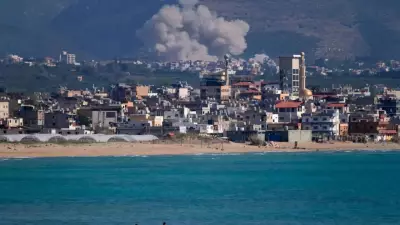
The negativity is not misplaced. Exorbitant ticket prices, strict travel bans, visa delays, and skyrocketing public transport costs do not help build a festive atmosphere. Nor does war, particularly one sparked by one of the three host nations. More than three months after the United States and Israel launched an attack on Iran, the ripple effects continue to be felt by the tournament. A World Cup taking place against the backdrop of a military conflict is not new. The tournament was put on hold after 1938 for 12 years due to World War II. The infamous 'Football War' between El Salvador and Honduras in 1969 cast a shadow over the 1970 World Cup, as did the Falklands War just before the 1982 World Cup in Spain. However, this is the first time a host nation is at war with a participating country.
Iran's Participation Under Threat
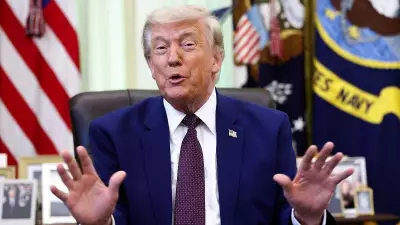
Doubts over Iran's participation were raised by US President Donald Trump, who wrote on social media in March: 'The Iran national soccer team is welcome to the World Cup, but I really don’t believe it is appropriate that they be there, for their own life and safety.' The Iranian team responded, calling the US a host lacking the ability to provide security. What followed has been a PR disaster for FIFA.

Visa Ordeal for Iranian Team
Iranian players and officials faced a battle to obtain US visas. After weeks of uncertainty, visas were granted last Friday—10 days before their opening game against New Zealand on June 15. However, Iran's football federation revealed several key members were refused visas. As the team arrived in Tijuana, Iran's ambassador in Mexico stated that 15 members were not granted visas. A US state department official said: 'We will not allow the Iranian team to abuse this system to sneak terrorists into the US under false pretences.' Unsurprisingly, Iran switched their training base from Arizona to Mexico. The players' visas allow them to enter and exit US soil only on match days.
Other Teams and Individuals Affected
Iraq's striker Aymen Hussein was detained for seven hours at Chicago airport. The team's official photographer was sent back, as was Somali referee Omar Abdulkadir Artan, Africa's best male referee in 2025. These incidents highlight strict immigration policies under the Trump administration, with travel bans on citizens of 12 countries, including Somalia. Journalists and fans have also suffered. A BBC report states that fans from over a quarter of participating countries face travel bans or high visa rejection rates. The president of the International Sports Press Association (AIPS), Gianni Merlo, urged FIFA to intervene, calling the visa situation 'unacceptable'. New York mayor Zohran Mamdani, a lifelong football fan, said: 'This is anathema to what this tournament is supposed to be about.'
Questions for FIFA
Hard questions have been asked of FIFA, including allegations of double standards over its differing approaches to Russia's war with Ukraine and the US-Israel attack on Iran. Some have asked if the US's reluctance to host Iran differs from Indonesia's opposition to Israel's participation in the U-20 World Cup three years ago, which led to FIFA stripping Indonesia of hosting rights. TOI emailed FIFA's media team a week ago but received no response.
Potential Dramatic Twist
Even as the war shows no sign of receding, fate may deliver a spicy twist. Should Iran and the US each finish second in their groups, they could clash in the round of 32 on July 3, a day before the US celebrates its 250th anniversary of independence. The beautiful game, played in arguably the ugliest of times.