Retired Indian Army Colonel Warns Middle East War Could Drag On Indefinitely
As the United States and Israel signal that their military campaign against Iran could last weeks, a retired Indian Army officer has publicly challenged predictions of a swift victory, warning that the conflict may extend far longer than many expect.
Colonel Bhaskar Sarkar, VSM (Retd), has directly disagreed with claims by US President Donald Trump, Israeli Prime Minister Benjamin Netanyahu, and several defence analysts that the current Middle East war will conclude quickly. "It is amusing to see President Trump, Benjamin Netanyahu and many defence experts both Indian and Western predict a quick end to the current Middle East War. I would beg to differ," he wrote in a detailed analysis.
Iranian Regime's Resilience Despite Leadership Losses
Colonel Sarkar pointed out that Israel's initial strikes inflicted significant damage on Iran's leadership but failed to collapse the regime. "Israel killed 40 Iranian Leaders in the first minute of strike. But the Iranian Regime has not collapsed. It has hit back quite effectively," he noted. His remarks come as US and Israeli forces continue airstrikes across Iran, while Tehran and its regional allies retaliate with missile and drone attacks targeting Israel and US-linked assets in Gulf states.

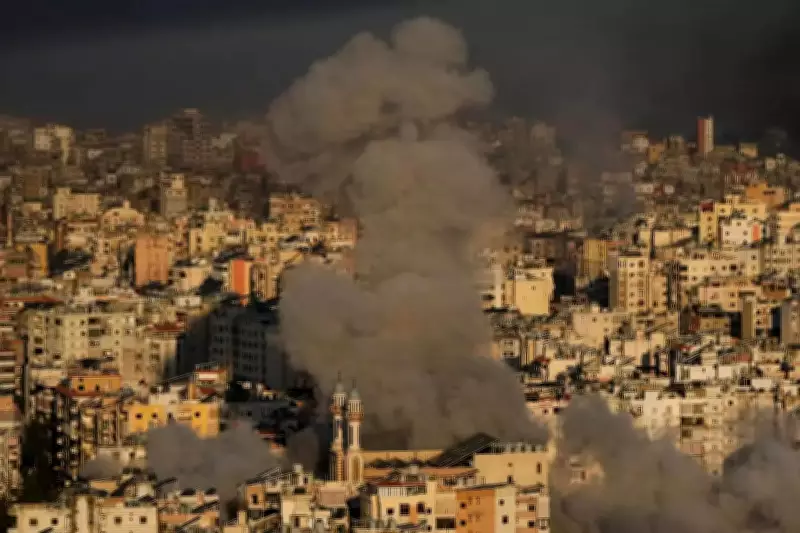
The retired officer argued that Iran's demonstrated ability to respond militarily indicates the conflict is unlikely to conclude rapidly. The hostilities began with coordinated US and Israeli airstrikes targeting Iranian military infrastructure, command centres, and leadership compounds. In response, Iran launched ballistic missiles and drones across the region, escalating the situation dramatically.
Historical Parallels and Structural Challenges
Drawing comparisons with Israel's ongoing campaign in Gaza, Sarkar questioned the assumption that Iran could be subdued within weeks. "Israel could not finish Hamas in two years, how can they, even with US support, finish Iran in a few weeks," he stated bluntly.
He also reflected on US military history over the past eight decades, noting that "In the 80 odd years since 1946, the US has fought many wars but won only one against Saddam Hussain." Sarkar emphasized that "One cannot compare Iraq's army with Iran's." He highlighted the ideological dimension, explaining that "Shias will not surrender. They will rather die," referencing historical and religious motivations that could harden resistance within Iran.
Geopolitical Support and Military Limitations
Sarkar further argued that Iran is unlikely to be isolated in a prolonged conflict, drawing parallels with the war in Ukraine. "Russia could not defeat Ukraine because it was resupplied with weapons and funds by NATO. Iran will be resupplied with weapons by Russia, China and North Korea who would be happy to see the US run out of money and weapon systems," he predicted.
One of Sarkar's central arguments concerns the limits of air campaigns. "No war has ever been won from the air. You need boots on ground. You need soldiers ready to die. The US, and its Arab Allies have none. Israel does not have enough," he asserted. So far, US and Israeli operations have relied heavily on air and missile strikes, though President Trump has indicated that ground forces are not ruled out.
Contrasting Timelines and Regional Implications
Trump initially suggested the campaign could conclude within days before revising estimates to weeks, stating at the White House that the US had projected "four to five weeks" but could continue longer if necessary. Sarkar offered a starkly different outlook: "Trump started by saying he will end war in 4 to 5 days. He has revised it to 4 to 5 weeks. I say the War will end only when the US and Israel will run out of ammunition and popular support for an unjust war."
He specifically warned that "UAE will suffer the most at the hands of Iran because they have been providing support for covert anti-Iran operations by CIA and Mossad. So, get ready for a long war." Energy markets have already reacted sharply to the conflict, with disruptions at the Strait of Hormuz pushing up crude prices and fuelling fears of prolonged instability.

India's Diplomatic Position Questioned
Colonel Sarkar also criticised what he perceives as India's muted response to the killing of Iran's leadership during ongoing negotiations. "I feel sad that India has not condemned the assassination of the Iranian President by a missile strike while negotiations were on. Would it be all right if Pakistan or China assassinated our beloved PM without declaring war or hostilities? Is killing or kidnapping presidents the new normal in international politics?" he questioned.
New Delhi has not formally commented on his remarks. India has traditionally maintained strategic relations with both Western nations and Iran, balancing energy interests with diplomatic ties in a complex geopolitical landscape.
Uncertain Outcome in a Volatile Region
While US and Israeli officials describe their campaign as targeted and time-bound, critics like Colonel Sarkar warn that historical precedents suggest otherwise. With airstrikes continuing, retaliatory attacks intensifying, and global powers watching closely, the duration and outcome of the conflict remain profoundly uncertain.
As rockets continue to fly across the region and global markets respond to each development, the question of how long the present Middle East war will last remains unanswered. Predictions of a quick end are being contested by those who see deeper structural, ideological, and geopolitical forces at play that could prolong hostilities for months or even years.