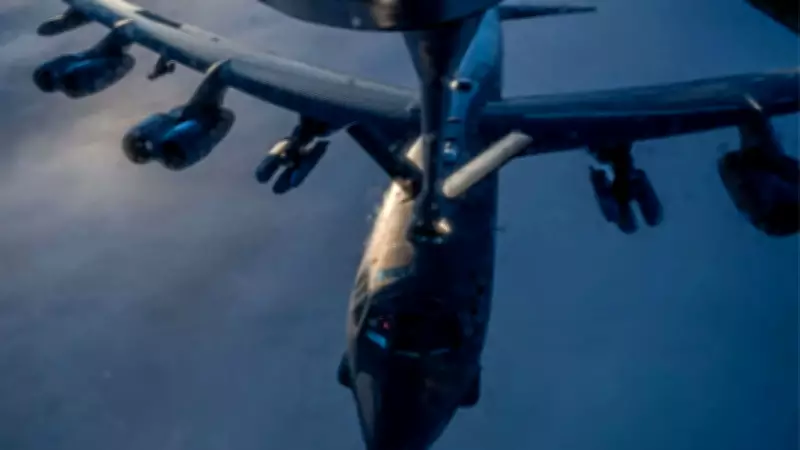
75-Year-Old B-52 Bomber Takes to the Skies Over Iran in Latest Combat Deployment
In a remarkable demonstration of military longevity, the United States Air Force's B-52 bomber, a slow, lumbering eight-engined aircraft that first flew shortly after World War II, is once again flying combat missions. This time, the veteran bomber is targeting Iran, firing missiles and dropping bombs in a conflict that underscores its enduring relevance.
From Cold War Deterrent to Modern Combat Veteran
Originally designed as a doomsday bomber to carry nuclear weapons deep behind the Iron Curtain during the Cold War, the B-52 was also engineered to deliver up to 32,000 kilograms of conventional bombs. Its production spanned from 1952 to 1962, and it first saw combat in the Vietnam War (1965-1975), where it conducted carpet bombing missions across North Vietnam.
The bomber's combat history is extensive, including roles in both Iraq wars, Afghanistan, and former Yugoslavia. Now, at 75 years old, the heavily updated and modified aircraft is bombing targets in Iran, proving that even a platform many defense analysts might deem obsolete can adapt to modern warfare.

Continuous Upgrades and Critical Missions
One of the B-52's most significant missions was Operation Chrome Dome, from 1961 to 1968, during which nuclear-armed bombers flew continuous deterrence patrols near the borders of the former Soviet Union. Over the decades, the US Air Force has consistently upgraded the bomber with cutting-edge technology to maintain its massive bomb-carrying capacity for future conflicts.
The latest modification, involving the installation of a new radar, was completed in December of last year. These upgrades enable the B-52 to carry a wide array of weapons, from traditional dumb bombs to advanced smart munitions like the Joint Direct Attack Munition (JDAM), Joint Air-to-Surface Standoff Missile (JASSM), and Air-Launched Cruise Missile (ALCM), along with nuclear capabilities.
Proven Adaptability Across Theaters
The B-52 has survived numerous hot and cold conflicts, proving its versatility in diverse environments—from the rainforests of Vietnam to the deserts of West Asia. Its missions have ranged from strategic bombing to deterrence patrols during the Cold War. Over Iran, this veteran combat aircraft continues to demonstrate its ability to overcome challenges and remain effective.
Looking ahead, the B-52 is scheduled for further modifications and is expected to retire in the 2050s, marking a full century of service since its first flight in 1952. This timeline highlights not only its durability but also the ongoing investment in its capabilities to meet evolving military needs.