

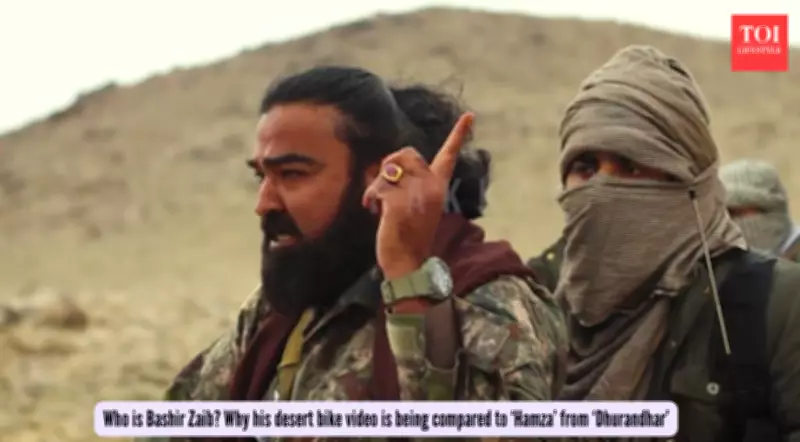
The Rise of Bashir Zaib: Engineering Student to Militant Commander
The Baloch Liberation Army (BLA) has intensified its campaign against Pakistani security forces under new leadership, with Bashir Zaib emerging as the most prominent figure directing these operations. This strategic shift marks a significant development in one of Pakistan's most persistent insurgencies, as the group targets both military installations and Chinese infrastructure projects associated with the China-Pakistan Economic Corridor (CPEC).
From Academic Pursuits to Armed Struggle
Bashir Zaib's journey represents an unconventional path to militant leadership. Hailing from the remote Nushki district in Balochistan, Zaib initially pursued mechanical engineering at Quetta Polytechnic College before obtaining a master's degree in Balochi literature. His early activism centered around student politics, where he chaired the Baloch Students Organisation–Azad (BSO-Azad), advocating for political rights and regional autonomy through non-violent means.
The transition to armed militancy occurred around 2012, triggered by what reports describe as systematic injustices against activists, including arbitrary arrests, political restrictions, and a repressive environment that stifled peaceful dissent. Zaib gradually ascended through the BLA's ranks, demonstrating organizational skills and strategic thinking that caught the attention of senior leadership.

Assumption of Command and Leadership Profile
Following the death of Aslam Baloch in 2018, BLA's senior leadership appointed Bashir Zaib as commander-in-chief, according to analyses by the Jamestown Foundation. Described as a "middle-class, calm, and well-spoken man in his forties" from the Muhammad Hasni tribe, Zaib's educational background in Quetta distinguishes him from typical rebel commanders. His leadership style combines intellectual depth with militant pragmatism, reflecting his dual background in engineering and Balochi literature.
The Viral Desert Video and Cinematic Comparisons
Zaib's public profile surged dramatically following the circulation of a viral video showing him riding a motorcycle through rocky desert terrain, flanked by fighters amid swirling dust clouds. Social media platforms buzzed with comparisons to the character Hamza from the film Dhurandhar, noting the "unhurried, composed posture" against the dramatic desert backdrop. The visual similarity proved so striking that users remixed clips with dramatic music, transforming militant imagery into unexpected pop culture content.
This cinematic parallel highlights how modern insurgencies leverage visual media for symbolic communication, with Zaib's desert ride becoming an iconic representation of Baloch resistance narratives.
Strategic Evolution Under Zaib's Command
Since assuming leadership, Bashir Zaib has overseen a tactical evolution within the BLA, which is designated as a terrorist organization by Pakistan, the United States, United Kingdom, European Union, and other entities. The group has expanded its operational scope to include:
- Coordinated attacks across multiple districts simultaneously
- Increased targeting of Chinese projects and personnel associated with CPEC
- Innovative use of female suicide operatives in combat roles
- Sophisticated propaganda campaigns through social media channels
Operation Herof 2.0: The "Black Storm" Campaign
The BLA's current military initiative, Operation Herof Phase 2, represents the group's most ambitious campaign to date. The term "Herof" derives from Balochi literary tradition, meaning "black storm" and frequently appearing in the poetry of veteran poet Karim Dashti. This linguistic choice reflects Zaib's literary background and the movement's cultural grounding.
Operation Herof 1.0, launched in August 2024, demonstrated unprecedented reach with attacks across twelve districts, including areas previously considered relatively stable like Lasbela and Musakhel. The campaign introduced several tactical innovations, most notably the deployment of the group's first female suicide bomber.

Operation Herof 2.0 has intensified these efforts, with the BLA claiming coordinated attacks resulting in significant enemy casualties while acknowledging their own losses from specialized units like the Majeed Brigade. This phase represents a strategic escalation that has challenged Pakistani security forces across broader geographical areas than previous BLA operations.
The Broader Context of Baloch Insurgency
Under Bashir Zaib's leadership, the BLA continues to pursue its stated objective of an independent Balochistan, employing increasingly sophisticated tactics against what it perceives as occupation forces. The group's ability to operate across vast territories while maintaining operational security demonstrates organizational capabilities that have evolved significantly since Zaib's assumption of command.
As the conflict enters this new phase, the combination of Zaib's intellectual background, media-savvy leadership, and strategic innovations presents fresh challenges for counterinsurgency efforts in the region. The BLA's transformation from a localized militant group to a more organized insurgency reflects broader shifts in Baloch nationalist movements and their methods of resistance.





