

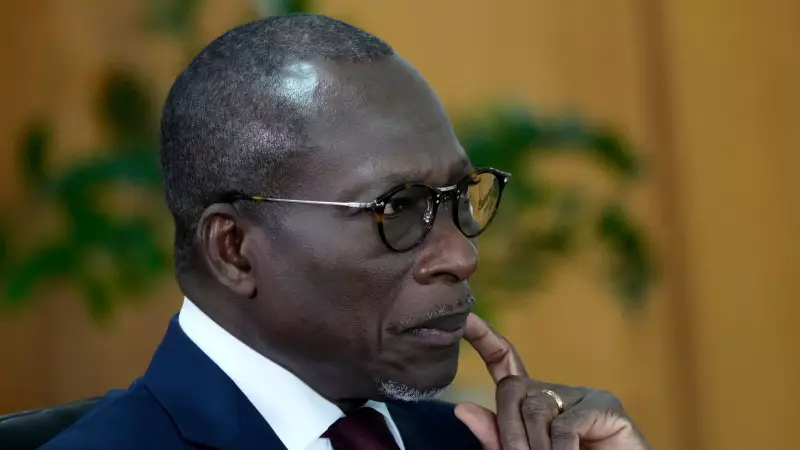
Benin's President, Patrice Talon, has publicly declared that the situation in the West African nation is now firmly under control following a serious but unsuccessful attempt to overthrow his government. The president's statement comes after a period of intense security operations aimed at neutralizing the plotters.
Details of the Foiled Coup Plot
According to official reports, the coup attempt unfolded in the early hours of the morning. The plotters, whose identities and numbers are still being investigated, targeted key locations in the city of Cotonou. The primary objectives are believed to have included the presidential residence and the premises of the National Assembly, indicating a coordinated strike at the heart of Benin's democratic institutions.
President Talon, who was reportedly in the country at the time, addressed the nation to provide reassurance. He confirmed that the country's security and defense forces successfully repelled the attackers. "The attempted coup has been foiled," Talon stated firmly, praising the swift response of loyalist troops. While details on casualties remain unclear, the president emphasized that the immediate threat had been eliminated and order restored.

Regional Context and Swift Response
This event places Benin within a troubling pattern of political instability affecting several countries in West Africa. The region has witnessed a number of successful and attempted military takeovers in recent years, creating a climate of uncertainty. Benin itself has been considered a relative bastion of stability and multi-party democracy in the region, making this incident particularly alarming for regional observers.
The government's response was notably rapid. Security forces were immediately deployed across strategic points in Cotonou, and a strong military presence was visible in the city center. Authorities moved quickly to round up suspects believed to be involved in the conspiracy. The government has promised a thorough investigation to uncover the full scope of the plot and identify all its architects and participants.
Implications for Stability and Governance
President Talon's declaration that the situation is "under control" is aimed at preventing panic and demonstrating governmental authority. However, the attempt itself raises significant questions about internal security and political tensions within Benin. Analysts will be watching closely to see if this event leads to a broader crackdown on opposition or dissent under the guise of national security.
The international community, including regional bodies like the Economic Community of West African States (ECOWAS), is likely to monitor developments closely. ECOWAS has taken a firm stance against unconstitutional changes of government in recent years. The successful foiling of this coup may be presented by the Talon administration as evidence of the resilience of Benin's institutions, but it also underscores the persistent challenges to democratic governance in the region.
For now, life in Cotonou appears to have returned to normalcy following the morning's disruptions. The government maintains that its forces are in full command, and President Talon continues to assert his leadership. Nevertheless, this failed coup attempt serves as a stark reminder that even established democracies are not immune to the threat of violent power grabs, a reality that continues to shape the political landscape of West Africa.






