Australian authorities have made a chilling revelation about the man responsible for a deadly rampage at a Sydney shopping centre last weekend. The attacker, who killed six people and injured over a dozen others, was inspired by the extremist ideology of the Islamic State (IS) group, police confirmed on Tuesday.
Inspiration from ISIS and a History of Mental Illness
The assailant, identified as 40-year-old Queensland man Joel Cauchi, carried out the violent attack at the Westfield Bondi Junction mall on Saturday, April 13. While the investigation is ongoing, the New South Wales Police Force stated that evidence clearly points to the influence of the terrorist organisation. Police Commissioner Karen Webb addressed the media, stating, "We are continuing to work through the profiling of the offender, but very clearly to us at this stage it appears that this offender has been inspired by the ideology of the Islamic State."
This declaration adds a complex layer to the tragedy. Authorities have also confirmed that Cauchi had been diagnosed with a mental health condition. Officials are now carefully examining the intersection of his personal struggles with mental illness and his exposure to radical extremist propaganda. The police emphasised that there is no current information suggesting he was directed by IS or part of a broader network. The attack is being treated as an act of terrorism motivated by a "religiously motivated violent extremism ideology."

The Heroic Response and Tragic Toll
The attack unfolded on a busy Saturday afternoon, sending shoppers into panic. Cauchi, armed with a knife, moved through the mall, stabbing people indiscriminately. The violence was ultimately stopped by the courageous actions of a lone police officer, Inspector Amy Scott. She confronted Cauchi on the fifth level of the shopping centre and, when he charged at her with the knife, shot and killed him. Her swift action is widely believed to have prevented further casualties.
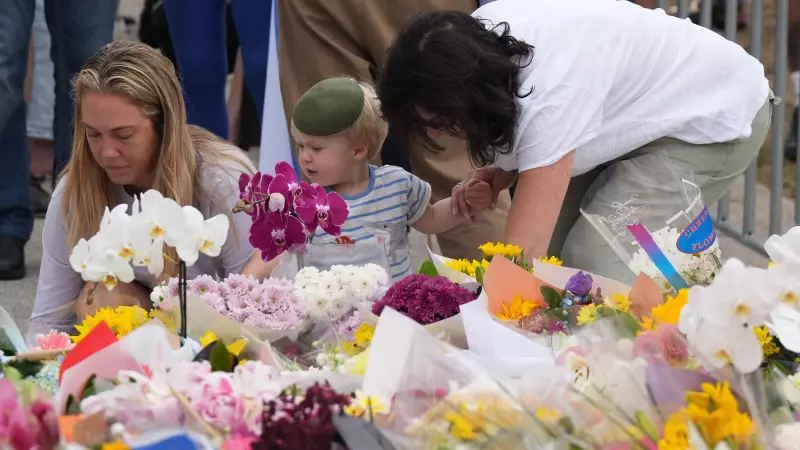
The attack left a devastating toll. Five women and one man lost their lives at the scene. Among the victims was Faraz Tahir, a 30-year-old security guard who was on his first shift at the mall and hailed from Pakistan. The other victims were all women, including a distinguished architect and the mother of a nine-month-old baby, who was also critically injured in the attack. In total, 12 people were hospitalised, with several, including the infant, remaining in serious condition.
Global Echoes and Security Implications
The incident has sent shockwaves through Australia, a country with strict gun and knife laws, where such mass violence is rare. It has also raised immediate concerns about the persistent threat of lone-wolf attacks inspired by global terrorist organisations. The Islamic State group has a history of encouraging its followers to carry out individual attacks using whatever means are available, a tactic that is notoriously difficult for intelligence agencies to pre-empt.
Australian Federal Police Commissioner Reece Kershaw noted that while the attacker acted alone, the inspiration drawn from a prescribed terrorist organisation makes it a matter of national security significance. The investigation is now a joint effort between state and federal forces, including the Australian Security Intelligence Organisation (ASIO). Authorities are meticulously examining Cauchi's background, his online activities, travel history, and associations to build a complete picture of his radicalisation path.
This tragedy in Sydney underscores a grim global reality: the ideology of groups like the Islamic State continues to resonate with disturbed individuals worldwide, prompting acts of unspeakable violence far from traditional conflict zones. As the community mourns, the focus remains on supporting the victims' families and understanding the full scope of the threat that led to this horrific event.