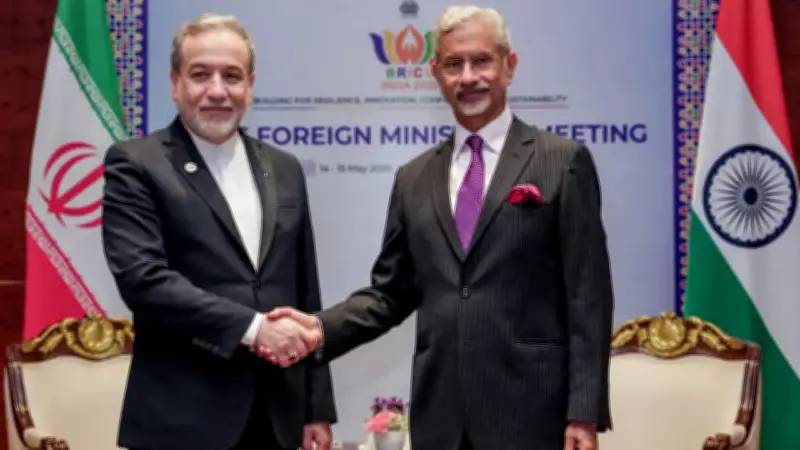
The BRICS foreign ministers' meeting concluded on Friday without a joint statement, as member states could not reconcile differences between the United Arab Emirates and Iran regarding the West Asia conflict. The UAE had pushed for a strong condemnation of Iran's actions, while Tehran sought explicit condemnation of the United States and Israel from the grouping. Consequently, the meeting produced a Chair's statement, an outcome document acknowledging "differing views among some members as regard to the situation in the West Asia/Middle East region".
Previous Meeting Also Ended Without Consensus
A similar deadlock occurred in April during a meeting of deputy foreign ministers and special envoys hosted by India, which also concluded with a Chair's statement for the same reason.
Iranian Foreign Minister Blames UAE
Iranian Foreign Minister Seyed Abbas Araghchi later attributed the deadlock to the UAE, without naming the country directly. "I think everybody knows which country blocked anything against Israel. And that was very unfortunate. The same country that helped the US and Israel attack Iran," Araghchi stated. He added, "As far as we are concerned, they are a direct party to this aggression and should be held responsible." He expressed hope that the UAE would reconsider its position by the time India hosts the BRICS summit later this year, saying, "I hope they understand that Iran is a neighbour. We have to live with each other for centuries to come."

Chair's Statement Highlights Diverse Views
The Chair's statement noted that BRICS members expressed their respective national positions and shared a range of perspectives. "Views articulated by them included the need for an early resolution of the current crisis, the value of dialogue and diplomacy, respect for sovereignty and territorial integrity, upholding international law, the importance of safe and unimpeded flow of maritime commerce through international waterways, and the protection of civilian infrastructure and civilian lives," the statement read. It also mentioned that many members stressed the impact of recent developments on the global economic situation.
Significance of Maritime Commerce Reference
According to official sources, although there was no explicit mention of the Strait of Hormuz, the reference to unimpeded maritime commerce was significant as it reflected India's concerns over potential energy supply disruptions due to a blockade of the strait.
Iranian Reservations on Specific Paragraphs
The statement also revealed that a member had reservations about two paragraphs: one on Palestine and another emphasizing the importance of ensuring navigational rights and freedoms for vessels of "all states in the Red Sea and Bab Al-Mandab Strait, in accordance with international law." While the statement did not name any country, sources speaking on condition of anonymity indicated that Iran had concerns about certain aspects of these paragraphs. The reservations reportedly pertained to language encouraging "enhanced diplomatic efforts" to secure navigational rights in the Red Sea and Bab Al-Mandab Strait, where Tehran-backed Houthis remain active. This included addressing the causes of the conflict and supporting dialogue and Yemen's peace process under the UN.
Palestine Paragraph Details
The paragraph on Palestine stated that members recalled the Gaza Strip is an inseparable part of the Occupied Palestinian Territory and underlined the importance of unifying the West Bank and Gaza Strip under the Palestinian Authority. The ministers reaffirmed the right of the Palestinian people to self-determination, including their right to an independent State of Palestine. "They called on the international community to support the Palestinian Authority in undergoing reforms to fulfil the Palestinians' legitimate aspirations for independence and statehood," the statement concluded.