

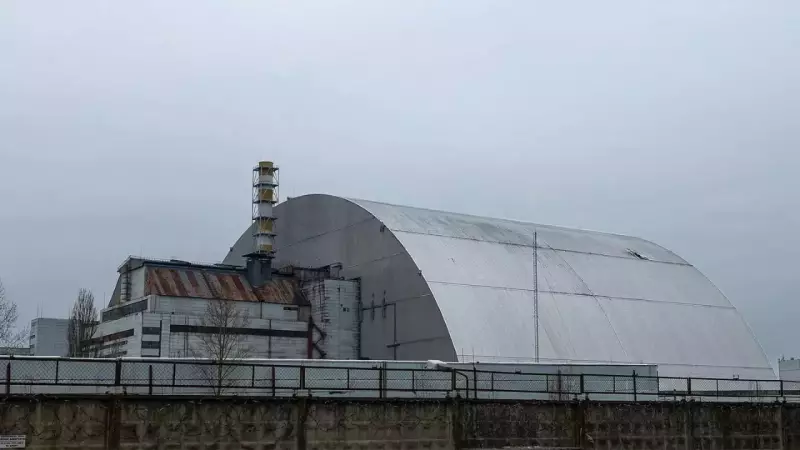
The protective shield built to secure the radioactive ruins of the Chernobyl nuclear disaster site has been critically impaired and can no longer fully perform its vital safety role, the International Atomic Energy Agency (IAEA) has declared. This alarming development follows a drone strike earlier this year that caused significant damage to the giant structure.
Severe Damage to the Giant Confinement Arch
The IAEA, in a statement issued on Friday, confirmed that the New Safe Confinement (NSC) – the monumental steel arch erected over the destroyed reactor number four – sustained "severely damaged" in an attack on February 14. The strike ignited a fire and ripped through the structure's protective cladding. As a direct consequence, the agency stated the NSC has "lost its primary safety functions, including the confinement capability."
Ukrainian authorities have pointed fingers at Russia for executing the attack, a claim that the Kremlin has firmly denied. IAEA Director General Rafael Mariano Grossi emphasized that only "limited temporary repairs" have been completed to date. He stressed that "timely and comprehensive restoration remains essential to prevent further degradation and ensure long-term nuclear safety." The agency did note, however, that the load-bearing structures and monitoring systems of the NSC suffered no permanent harm.

A History of Vulnerability and International Effort
The Chernobyl site has been a persistent flashpoint of international concern throughout the nearly four-year-long war in Ukraine. It gained notoriety early in the conflict when Russian forces seized and occupied the plant area in early 2022, holding it for several weeks before withdrawing.
The compromised NSC is no ordinary structure. Completed in 2019 at a staggering cost of €2.1 billion, it is recognized as the world's largest movable land structure. Designed with a 100-year lifespan, its purpose was to enable the long-term cleanup and containment of the world's most catastrophic nuclear accident. This colossal project was made possible by an unprecedented global collaboration, funded by more than 45 donor nations through the Chernobyl Shelter Fund, managed by the European Bank for Reconstruction and Development.
Legacy of the 1986 Disaster and Ongoing Risks
The need for such a formidable shield stems from the horrific 1986 explosion at the Chernobyl Nuclear Power Plant. The disaster spewed radioactive contamination across vast swathes of Ukraine, Belarus, and Russia. According to the IAEA and the World Health Organization, more than 30 people died immediately, with regions exposed to the fallout continuing to experience elevated rates of cancer and birth defects for decades.
The recent damage to the NSC reintroduces grave risks at a site synonymous with nuclear peril. The IAEA has pledged to continue its support for Ukraine in endeavors to restore full safety functions at Chernobyl. The situation underscores the fragile state of nuclear security in conflict zones and the enduring, deadly legacy of the 1986 catastrophe that the world's largest confinement arch was built to mitigate.






