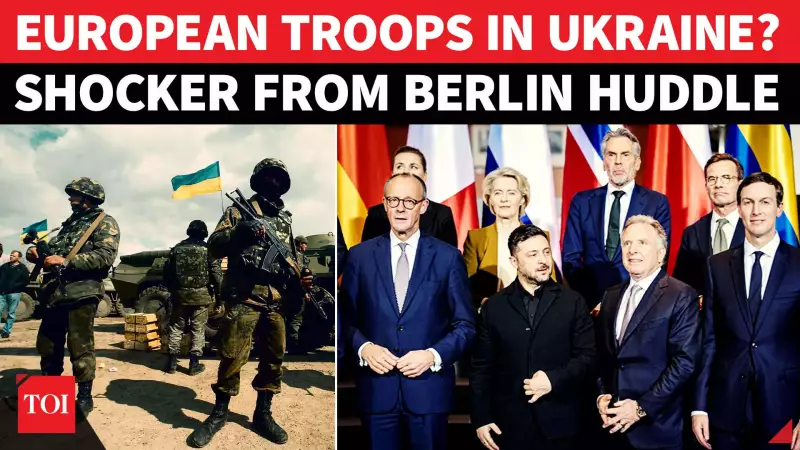
In a dramatic development that could drastically escalate the conflict in Eastern Europe, high-level talks in Berlin have floated the contentious idea of deploying a multinational European military force directly into Ukraine. The proposal, discussed among European leaders, envisions troops from willing nations operating with security guarantees from the United States.
The Berlin Proposal: A Potential Game-Changer
The discussions, held on December 16, 2025, mark a significant shift in the Western approach to the Ukraine war. Until now, support has largely been limited to financial aid, intelligence sharing, and weapons supplies. The new plan, however, openly considers putting European boots on the ground in a non-NATO country actively at war with Russia. This move is seen as a direct response to the prolonged stalemate and recent Russian battlefield advances.
According to the framework debated, the force would not be a formal NATO operation but a coalition of willing European states. The critical element is the proposed US security guarantees, which would aim to deter Russia from targeting participating countries' homelands. However, the plan has immediately exposed deep fissures within Europe. Several nations have expressed strong resistance, fearing an uncontrollable escalation that could spill over into a wider continental war.

Moscow's Stark Warning and European Divisions
The Kremlin's reaction was swift and severe. Russian officials issued a clear warning of immediate and severe retaliation if any foreign troops are deployed in Ukraine. They labelled the proposal a reckless provocation that brings the world closer to a direct confrontation between nuclear powers.
Internally, the European bloc is deeply divided. While some hawkish members, reportedly led by discussions within the German government, argue that more decisive action is needed to prevent a Ukrainian collapse, others are vehemently opposed. Hungary, for instance, has previously shocked allies with declarations accusing certain EU leaders of "inviting WW3". This new proposal is likely to intensify that diplomatic standoff, pitting advocates for robust military intervention against nations prioritizing diplomacy and fearing catastrophic escalation.
Collision Course: War and Diplomacy
The Berlin talks highlight the painful collision between the realities of war and the avenues of diplomacy. With peace initiatives, including those reportedly floated by former US President Donald Trump, failing to gain traction or being rejected by Kyiv, some European capitals are gravitating towards more forceful options. This comes amid reports of Russia intensifying strikes with advanced weaponry like Kinzhal hypersonic missiles on Ukrainian energy and weapons sites.
The proposal also unfolds against a backdrop of shifting global alliances and a perceived change in the American security umbrella. Comments from European leaders like Germany's Friedrich Merz about the end of "Pax Americana" suggest a continent grappling with the need to ensure its own security, even if it means taking unprecedented risks. The next steps from Berlin, other European capitals, and Washington will be crucial in determining whether this plan moves from a shocking proposal to a reality that redraws the lines of the war.