

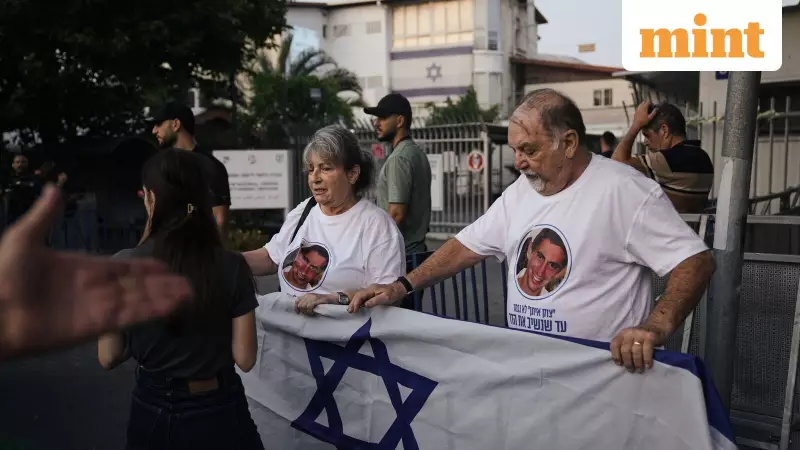
In a significant development within the ongoing Israel-Hamas conflict, the militant group Hamas has returned the remains of an Israeli army officer, Hadar Goldin, which it had held for over a decade. The handover, confirmed by Israeli authorities on Sunday, marks an emotional moment for the nation and brings a painful, 11-year-long chapter to a close for Goldin's family.
A Long-Awaited Return
Hadar Goldin was 23 years old when he was killed in action in Rafah, southern Gaza, during the 2014 Gaza war. Following his death, his body was taken by Hamas, initiating years of agonizing uncertainty for his loved ones and unsuccessful negotiations by Israel to secure its return. The recovery of his remains was finally executed as a component of the current ceasefire agreement between the warring parties.
Forensic authorities in Israel have since confirmed the identity of the returned remains. This act carries profound symbolic value for Israel, representing the recovery of one of its soldiers. The Hostages Families Forum, an advocacy group, stated that "Hadar’s return provides some measure of comfort to a family that has lived with agonizing uncertainty and doubt for over 11 years."

Strategic Significance of the Handover
The return came as a surprise to many in Israel, as some officials anticipated that Hamas would continue to hold onto the remains of deceased soldiers to maintain leverage in future dealings. This handover is being interpreted by some analysts as a signal that Hamas is interested in adhering to the terms of the ceasefire. The agreement stipulates that Hamas return all living hostages and the bodies of deceased hostages in exchange for Israel's release of approximately 2,000 Palestinian prisoners.
To date, as part of the deal struck last month, Hamas has released twenty living Israeli hostages and the bodies of twenty-four individuals who died either during the October 7, 2023, attack on Israel or while in captivity. According to Israeli authorities, the remains of four men killed in the October 7 attack are still held in the Palestinian enclave.
The Mechanics of Identification and Exchange
Hamas claimed on Saturday that it had recovered Goldin's remains in the city of Rafah. This follows Israel's earlier recovery of another soldier from the 2014 war, Oron Shaul, whose body was retrieved in a military operation earlier in the current conflict.
The process of identification has been a massive undertaking for Israel's forensic teams. Specialists, including pathologists, anthropologists, and dentists from the National Center of Forensic Medicine in Tel Aviv, have been working under immense pressure, often late into the night, to quickly identify the remains handed over by Hamas. The urgency is tied directly to the prisoner exchange: for each deceased hostage identified, Israel is required to hand over 15 dead bodies of Palestinian prisoners to Gaza, as mandated by the agreement.
Gershon Baskin, a former hostage negotiator who played a key role in the 2011 Gilad Shalit exchange, commented on the situation, saying, "My assessment is that Hamas is making real efforts to find the remaining hostages. The numbers are really small now. They see no advantage in holding on to deceased hostages. The deal was made already." This perspective suggests that Hamas may be moving toward fulfilling its commitments, potentially paving the way for further diplomatic progress.






