

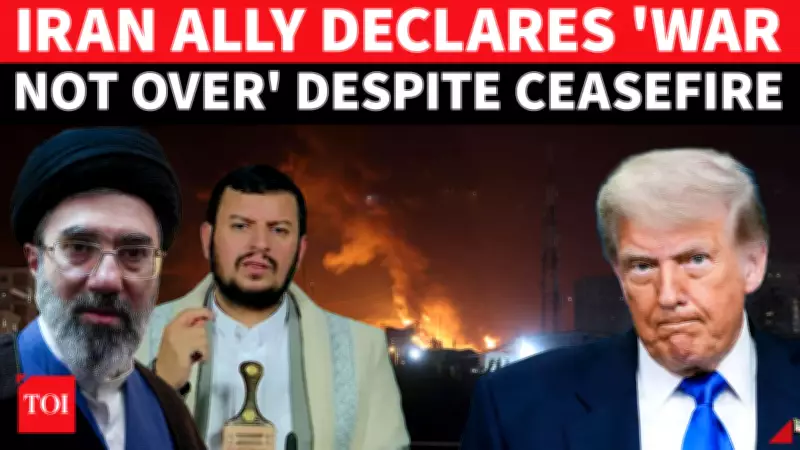
Houthi Chief Defiant as Trump Extends Iran Ceasefire
In a stark declaration that underscores ongoing regional tensions, the leader of Yemen's Houthi rebels has emphatically stated that the war is far from over. This comes despite President Donald Trump's official extension of a ceasefire agreement with Iran, a move intended to de-escalate hostilities but met with immediate skepticism from key militant factions.
The Ceasefire Extension and Its Conditions
President Trump has formally prolonged the ceasefire with Iran, but this extension is not without significant strings attached. The agreement was brokered following urgent diplomatic appeals from Pakistan's leadership, specifically Field Marshal Asim Munir and Prime Minister Shehbaz Sharif. This development provides what officials describe as a final opportunity for Tehran to submit a cohesive and unified proposal addressing the core issues at stake.
However, the situation remains precarious. While a temporary lull in active combat has been observed, the United States Navy continues to enforce a stringent blockade at the strategically vital Strait of Hormuz. This maritime choke point is a critical artery for global oil shipments, and its control by US forces represents a powerful lever in the ongoing geopolitical standoff.

Houthi Leadership's Belligerent Stance
Contradicting any notions of impending peace, senior Houthi officials have been vocal in their rejection of the ceasefire's permanence. The group's chief has been quoted promising that "more fighting is coming," signaling a clear intent to resume or intensify military operations regardless of diplomatic maneuvers between state actors.
This defiant posture highlights the complex, multi-layered nature of the conflict, where non-state actors like the Houthis operate with a degree of autonomy that can undermine broader peace initiatives. Their commitment to continued hostilities casts a long shadow over the ceasefire's potential success.
Regional Reactions and the Path Forward
The extended ceasefire, while a diplomatic achievement on paper, has left the region in a state of anxious anticipation. Analysts and observers are divided on whether this represents a genuine step toward a sustainable peace or merely a temporary pause—a proverbial calm before a more devastating storm.
Key questions remain unanswered:
- Will Iran present a proposal that satisfies the conditions set forth?
- Can international pressure curb the Houthis' militant ambitions?
- How will the persistent US naval presence influence Iran's next moves?
The involvement of Pakistani mediators adds another layer to this intricate diplomatic puzzle. Their successful brokerage of the extension demonstrates the ongoing role of regional powers in attempting to manage a crisis with global implications. Yet, with the Houthi leadership openly spoiling for a fight and military assets remaining on high alert, the prospects for a lasting resolution appear uncertain at best.
The coming days and weeks will be critical. The world watches as this fragile ceasefire is tested, and the people of the region hold their breath, hoping for peace but bracing for the possibility of renewed and intensified conflict.






