

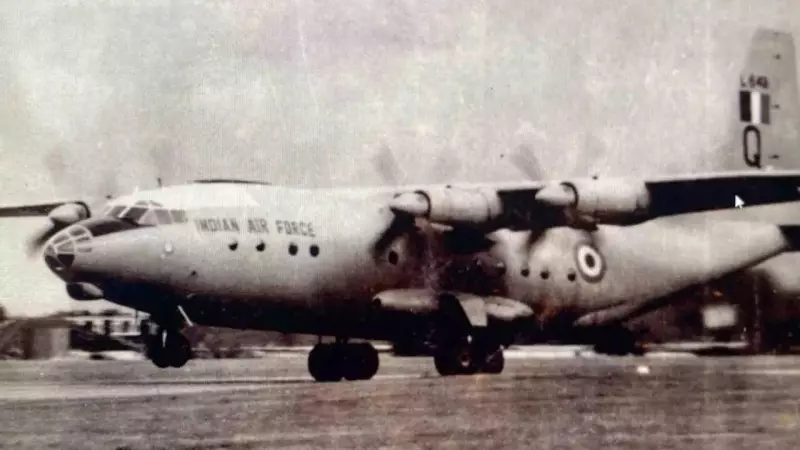
The Indian Air Force (IAF) on Thursday revisited a pivotal chapter in military history, commemorating the decisive air operations conducted on December 5, 1971. This third day of the war proved to be a turning point, with the IAF underscoring how its overwhelming air power critically shaped the conflict's outcome, leading to India's victory and the eventual creation of Bangladesh.
Western Front Onslaught: Crippling Key Defences
In a detailed post on social media platform X, the IAF recounted its strategic brilliance. A landmark strike targeted the Sakesar radar station, a key component of Pakistan's western air defence network. The successful mission effectively blinded these defences for two crucial days, granting the IAF significant operational freedom.
The air force described an environment where it was omnipresent for the enemy. IAF Hunter aircraft executed devastating raids on Drigh Road and Karachi, destroying vital storage hangars. Meanwhile, Canberra bombers maintained relentless pressure, delivering a massive 144,000 pounds of ordnance across four major Pakistani airfields. In total, 132 missions were flown on the western front, with An-12s and Canberras raining devastation on enemy troop concentrations.

Eastern Front Dominance and the March to Dacca
On the eastern front, the situation was even more dominant. With the Pakistan Air Force largely neutralized and grounded, the IAF launched 104 offensive sorties. This unchallenged air supremacy cleared the path for the Indian Army's rapid and decisive advance into East Pakistan. The relentless air campaign was instrumental in accelerating the military campaign, which culminated in the surrender of Pakistani forces and the birth of a new nation.
The Legend of Longewala: Hunters Rewrite History
The IAF's tribute also highlighted the iconic Battle of Longewala, fought between December 4 and 7, 1971, in Rajasthan's desert sector. Here, a heavily outnumbered Indian Army company held its ground against a formidable Pakistani armoured assault. The IAF played a starring role in this defence.
"Four Hunters rewrote history," the IAF stated, recalling how these aircraft shattered the enemy's armoured thrust. In a stunning display of air-to-ground combat, the Hunters left 27 Pakistani tanks destroyed and 10 more damaged. This heroic intervention was pivotal in ensuring the safety of Jaisalmer, proving that air power arrived precisely when it mattered most.
The 1971 India-Pakistan war commenced on December 3 after Pakistan launched pre-emptive air strikes on Indian bases. The conflict concluded decisively on December 16 with Pakistan's unconditional surrender. Over 93,000 Pakistani troops laid down their arms, marking the largest military capitulation since World War II. This defeat not only secured India's victory but also directly led to the emergence of Bangladesh as an independent nation, fulfilling the aspirations of the Bangladesh Liberation War.






