Iran Activates Mountain Missile Cities: Inside Tehran's Underground Second-Strike Fortress
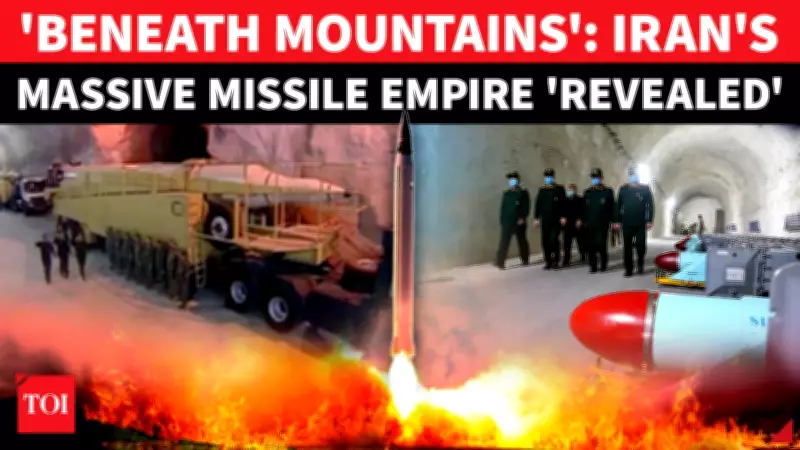
Deep beneath the rugged mountains and expansive deserts of Iran lies one of the most secretive and heavily fortified military infrastructures in the Middle East. Known as "missile cities," these vast underground networks consist of tunnels and bunkers housing thousands of ballistic and cruise missiles. Constructed by the Islamic Revolutionary Guard Corps (IRGC), these facilities are engineered to be virtually invisible to satellite surveillance and resistant to airstrikes, serving as Tehran's ultimate deterrent.
The Subterranean Doctrine of Deterrence
Recent disclosures by Iranian state media have provided glimpses into these hardened complexes, revealing precision-guided weapons such as the Emad, Sejjil, Qadr, and Haj Qassem missiles buried hundreds of meters underground. Iranian military officials emphasize that this subterranean doctrine ensures a swift and overwhelming response capability, even if Iran suffers a first strike. The strategy is designed to keep adversaries uncertain and deter escalation, reinforcing Tehran's defensive posture.
Key features of these missile cities include:

- Storage and Preparation: The facilities store, transport, fuel, and prepare missiles for rapid deployment.
- Hardened Infrastructure: Built to withstand attacks, the complexes are located in remote, mountainous regions to enhance survivability.
- Technological Advancements: The inclusion of advanced missile systems underscores Iran's commitment to maintaining a credible second-strike capability.
This development highlights Iran's ongoing efforts to bolster its military readiness amid regional tensions. By investing in such infrastructure, Tehran aims to project strength and resilience, ensuring that any potential aggressor faces significant retaliation risks. The activation of these missile cities marks a critical step in Iran's defense strategy, potentially reshaping security dynamics in the Middle East.