High-level negotiations in Switzerland seeking a permanent end to the Iran war concluded early Monday, with lower-level technical talks scheduled for the remainder of the week. The United States and Iran agreed to establish a "de-confliction cell" to address the ongoing fighting in Lebanon, according to mediators Pakistan and Qatar.
The statement from the mediating nations indicated that the cell would include the Lebanese government and would "ensure the adherence of the termination of military operations in Lebanon." However, it remains uncertain whether this mechanism will be sufficient to halt hostilities between the Iranian-backed militia Hezbollah and Israel, which occupies Lebanese territory and insists on maintaining operational freedom against militants launching attacks into northern Israel.
Iranian Foreign Minister Praises Mediation Efforts
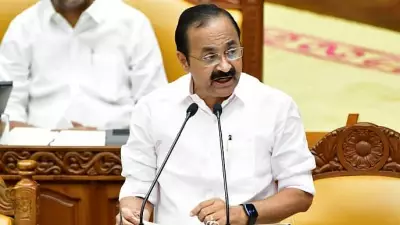
Iran's Foreign Minister Abbas Araghchi early Monday commended Pakistan and Qatar for their mediation, stating on X that they "delivered major progress." He emphasized that the first real test of the understandings reached would be the effectiveness of the de-confliction method in addressing the conflict between Israel and Hezbollah in Lebanon.

Pakistan, Qatar, and Iran have all acknowledged the conclusion of the first round of high-level talks. The United States has not yet commented publicly on the outcome.
Key Sticking Points Remain
Iran has linked the success of the talks to an end to the fighting in Lebanon. Conversely, Israel insists on its continued occupation of Lebanese territory and the need for a free hand to combat Hezbollah, which has launched attacks into northern Israel. The negotiations mark the beginning of a 60-day diplomatic process aimed at reaching a permanent deal to end the Iran war, but the Lebanon conflict remains a major obstacle.
Meanwhile, Iran reiterated that it had again closed the Strait of Hormuz over the weekend, a critical chokepoint for global energy shipments. The United States disputed this claim, asserting that maritime traffic continued as normal.
Tense Start to Negotiations
The talks began tensely on Sunday in Switzerland after Tehran took offense at U.S. President Donald Trump's threats. Trump posted on social media: "Iran must immediately stop their highly paid PROXIES in Lebanon from causing trouble. If they don't, we'll hit Iran very hard again, just like we did last week, only harder!!!"
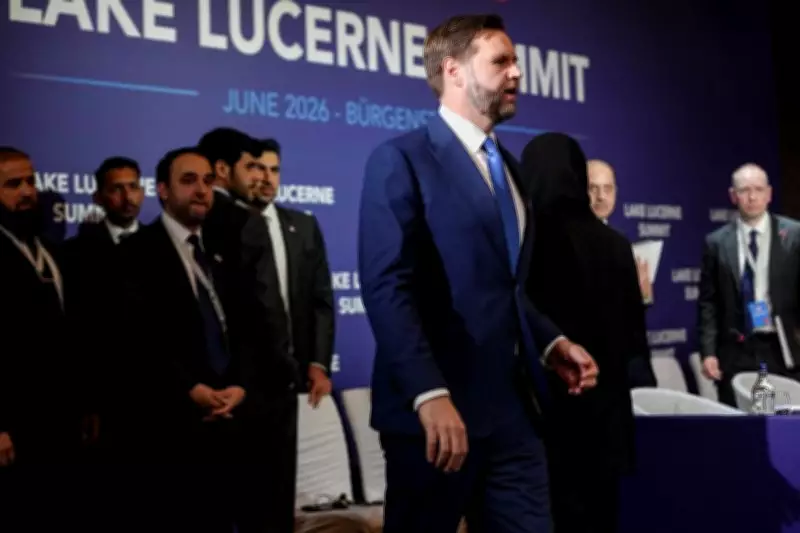
These comments complicated efforts by U.S. Vice President JD Vance and mediators Pakistan and Qatar to maintain Iranian engagement. Iran's lead negotiator, Mohammad Bagher Qalibaf, responded on X: "They would do better to be careful about their statements. Our armed forces are prepared to respond to them in a different manner. They may keep talking, it is we who act."
Despite the tensions, Araghchi later wrote on X, "Tireless Pakistani and Qatari mediation has delivered major progress to end the Lebanon War." He reiterated that the first "real test" would be whether the de-confliction cell succeeds in halting the fighting in Lebanon.
Details of the Negotiations
Vance and U.S. negotiators, including Steve Witkoff and Jared Kushner, met with Qalibaf and Araghchi for approximately 80 minutes, according to Iranian state media. Following the meeting, Pakistan and Qatar announced that lower-level technical talks would continue in Switzerland for the rest of the week. These discussions aim to produce the breakthroughs necessary for high-level officials to return and sign agreements.
A senior U.S. diplomat involved in the talks, speaking on condition of anonymity, said the discussions included clarifying Iran's recent statements about the Strait of Hormuz. Negotiators also addressed "mechanisms" to ensure the strait remains open and that a ceasefire in southern Lebanon is enforced, along with "robust" discussions on the nuclear issue.
Focus on Lebanon and Nuclear Program
Negotiators are operating within a 60-day timeframe to reach an agreement on technical details that carry significant implications for the global economy and security. As the talks began, Vance asked whether they could "change relations in the Middle East permanently" and turn over a new leaf.

The United States wants Iran to commit to negotiations over its nuclear program amid concerns it could be used for military purposes, which Iran denies. Vance also seeks Tehran's commitment to keeping the Strait of Hormuz open. Iran claimed to have closed the strait on Saturday, but the U.S. disputed this, stating that shipping traffic continued on Sunday.
A renewed ceasefire in Lebanon, brokered on Saturday, appeared to be holding. Israel's military announced it would lift movement restrictions for residents near the border with Lebanon on Monday morning. However, neither Israel nor Hezbollah is a signatory to the U.S.-Iran deal. Israeli Prime Minister Benjamin Netanyahu has vowed to keep Israeli forces in southern Lebanon until any threat to Israel is eliminated, while Hezbollah has refused to halt attacks unless Israel commits to withdrawing.