

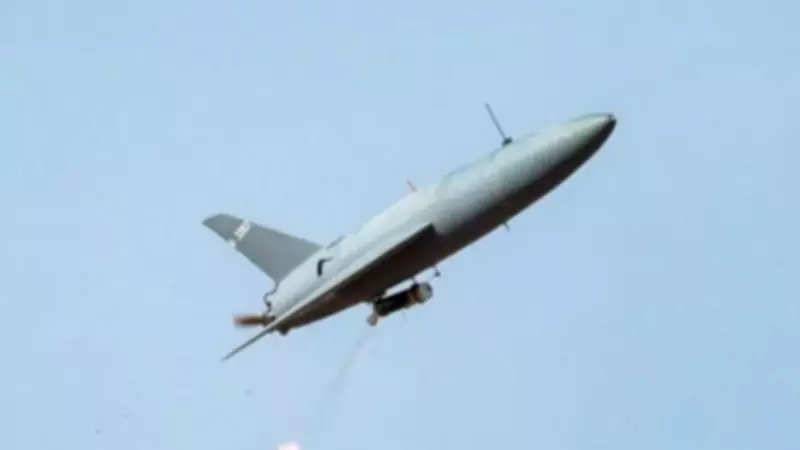
Iran's Arash-2 Kamikaze Drone Targets Ben Gurion Airport in Major Escalation
In a significant escalation of the ongoing Iran-Israel conflict, now entering its fourth week, Iran has asserted that it deployed its long-range "Arash-2" kamikaze drone to strike Israel's Ben Gurion Airport. This key civilian and economic hub represents a strategic target, with Iranian state media framing the attack as part of retaliatory operations. Independent verification of the damage at the airport remains pending as hostilities show no signs of abating, including recent strikes on Tehran's regional energy infrastructure.
Details of the Arash-2 Drone Deployment
According to Iranian Army spokesperson Brigadier General Mohammad Akraminia, as reported by the Mehr news agency, the Arash-2 drones were the primary systems used in this assault. He described them as a more advanced and destructive iteration compared to earlier models like the Kian and Arash-1 drones. This development underscores Iran's growing capabilities in unmanned aerial warfare amid the protracted conflict.
What is the Arash-2 Drone?
The Arash-2 is a long-range loitering munition, commonly known as a kamikaze drone, which was publicly unveiled by Iran in 2022. It serves as an upgraded version of the Arash-1 system, specifically engineered for deep-strike missions. Iranian officials have previously indicated that this drone is capable of targeting major Israeli cities such as Tel Aviv and Haifa, highlighting its strategic importance.

Range and Payload Specifications
Based on reports from Iranian military officials and defense analyses, the Arash-2 drone possesses impressive capabilities:
- Range: Up to 2,000 kilometers, enabling it to reach Israeli territory directly from Iran without the need for forward deployment.
- Warhead: Approximately 260 kilograms, designed for significant destructive impact.
- Mission Scope: Ability to strike long-distance targets across the region, as noted by sources like the Times of Israel.
Technological Features and Capabilities
The drone incorporates several advanced features aimed at enhancing its survivability and accuracy:
- Low Radar Cross-Section: Makes detection by enemy systems difficult.
- Radar Emission Detection: Aids in suppressing air defense systems.
- Imaging Systems: Equipped with optical and thermal imaging for precise targeting.
- High Endurance: Allows for extended mission durations.
Iranian authorities have also emphasized the drone's cost-effectiveness, with relatively low production costs compared to other advanced systems, facilitating sustained operational use.
Launch and Deployment Flexibility
The Arash-2 can be launched from multiple platforms, ensuring versatile deployment options:
- Ground-based launchers
- Containerised systems
- Naval platforms
It utilizes solid-fuel boosters and is designed for flexible operation across various terrains, further bolstering its tactical utility.
Significance of Targeting Ben Gurion Airport
Iranian officials have identified Ben Gurion Airport as a strategic target due to its central role in Israel's connectivity and international trade. Given Israel's constraints in maritime and land access, a substantial portion of its global movement relies on air routes. Any disruption to this airport could have profound economic and logistical repercussions, amplifying the impact of such attacks.
Context of Iran's Drone Program
Iran has significantly expanded its unmanned aerial vehicle program in recent years, drawing accusations from Western nations of supplying drones to allied groups and partners, including Russia. For instance, Ukraine's defense intelligence reports that Tehran has provided hundreds of drones, such as the Shahed-136 and Mohajer-6 models, to Russia. CNN has also highlighted plans involving over 1,000 weapons, including drones and missiles, with Iranian instructors expected to assist in training efforts. This backdrop underscores the broader geopolitical implications of Iran's drone capabilities amid ongoing conflicts.






