

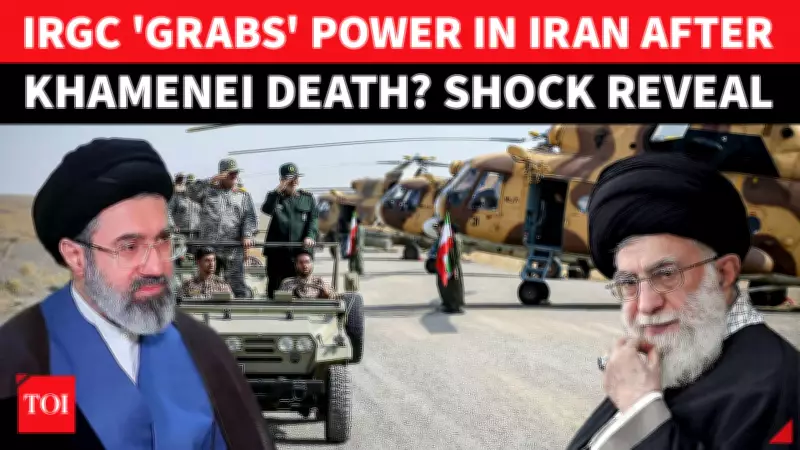
Iran has a new Supreme Leader, but a bombshell report from The New York Times suggests he may not hold the reins of power. Ayatollah Mojtaba Khamenei, who succeeded his father, is reportedly recovering from severe burns and multiple surgeries, leaving him unable to exercise the centralized authority his father once commanded. Instead, a board of Islamic Revolutionary Guard Corps (IRGC) generals has effectively taken over the decision-making process on critical matters ranging from missile strikes to ceasefire negotiations.
Mojtaba's Condition and Secrecy
According to the report, Mojtaba communicates solely through handwritten notes and remains hidden from the public eye. His physical condition has raised questions about the stability of Iran's leadership. The once-unquestioned authority of the Supreme Leader appears to have been replaced by a collective military regency, with IRGC generals now calling the shots behind the scenes.
Implications for Iran's Policies
The power shift has significant implications for Iran's domestic and foreign policies. The IRGC's hardline stance could influence ongoing nuclear talks, regional conflicts, and internal governance. The report highlights that the generals are now responsible for key decisions, including potential military actions and diplomatic engagements.

This development marks a dramatic change from the era of Ayatollah Ali Khamenei, who held centralized control for decades. Observers note that the current situation resembles a military regency rather than a traditional supreme leadership. The secrecy surrounding Mojtaba's condition has fueled speculation about the true extent of his influence.
As Iran faces mounting international pressure and internal challenges, the role of the IRGC in shaping the country's future cannot be overstated. The New York Times report has sparked debates about the legitimacy and effectiveness of Iran's current leadership structure.






