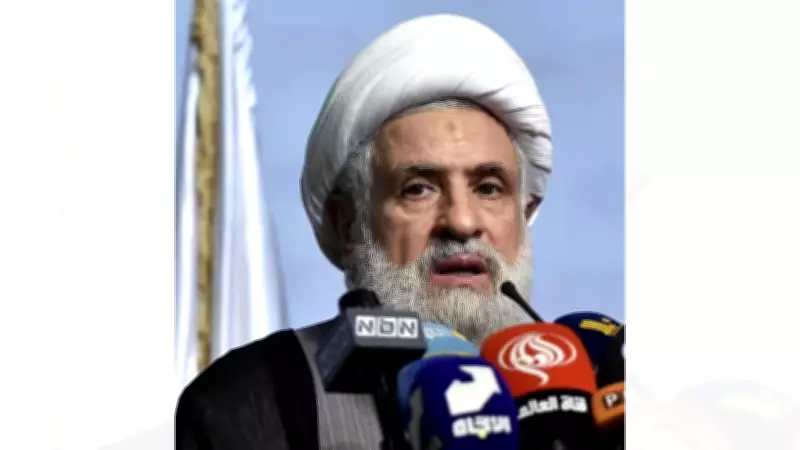
Israel Eliminates Hezbollah Leader's Nephew in Overnight Beirut Strike
Israel announced on Thursday that it had killed the nephew of Hezbollah leader Naim Qassem in an overnight military strike on Beirut. This action occurred as Israeli attacks on Lebanon persisted, despite a recently announced ceasefire in the US-Israeli war with Iran.
Details of the Targeted Strike
The Israeli military stated, "The IDF struck in the Beirut area and eliminated Ali Yusuf Harshi, the personal secretary and nephew of Hezbollah Secretary-General Naim Qassem." They described Harshi as a close associate and personal adviser to Qassem, emphasizing his central role in managing and securing the Hezbollah leader's office.
Escalation in Beirut Amid Ceasefire Announcement
This strike followed intense Israeli attacks on Wednesday that hit commercial and residential areas in central Beirut without warning. According to Lebanese reports, these assaults resulted in at least 182 fatalities and hundreds of injuries, marking the deadliest day in the ongoing Israel-Hezbollah conflict. Israel's military claimed to have targeted over 100 Hezbollah sites within 10 minutes across Beirut, southern Lebanon, and the eastern Bekaa Valley.

The violence erupted hours after a ceasefire was declared in the US-Israeli war with Iran. US President Donald Trump clarified to PBS News Hour that Lebanon was excluded from the deal due to the presence of Hezbollah. When questioned about Israel's latest strikes, he remarked, "That's a separate skirmish." Israel maintained that the agreement does not cover its war with Iran-backed Hezbollah, while Iran asserted otherwise.
Immediate Aftermath and Regional Impact
In the aftermath, black smoke enveloped parts of Beirut as explosions rocked the city, with ambulances rushing to the scene and apartment buildings sustaining damage. Notably, there was no immediate retaliation from Hezbollah against Israel in the initial hours following the attacks.
This escalation underscores the fragile nature of regional tensions, as military actions continue to challenge diplomatic efforts for peace.