

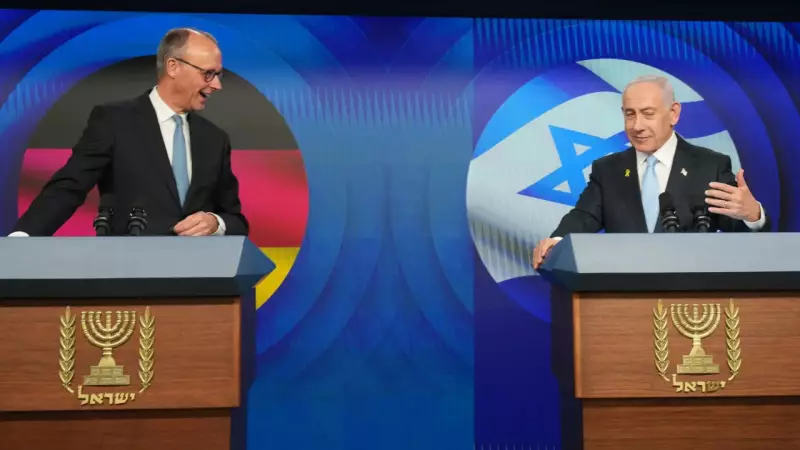
Israeli Prime Minister Benjamin Netanyahu indicated on Sunday that Israel is gearing up to transition into the second, more challenging phase of the United States-sponsored ceasefire plan for Gaza in the near future. He also revealed plans for a high-stakes meeting with US President Donald Trump later this month.
Ceasefire Phases and the Road Ahead
Speaking at a joint press conference in Jerusalem with visiting German Chancellor Friedrich Merz, Netanyahu outlined the progress. The first phase of the agreement, active since October 10, primarily involved the release of captives. Palestinian militants were required to free 47 living and deceased individuals taken during the Hamas-led assault on Israel on October 7, 2023. Currently, only the remains of one Israeli police officer, 24-year-old Ran Gvili, are pending return. The completion of this exchange, which also involves Israel handing over 15 Palestinian bodies, will formally conclude the initial stage of President Trump's 20-point peace roadmap.
"We discussed how to bring an end to the Hamas rule in Gaza. We finished the first part," Netanyahu stated. He added, "And then we very shortly expect to move into the second phase, which is more difficult."

Disarmament and Deradicalisation: The Next Goals
Detailing the upcoming stages, the Israeli Prime Minister described a daunting path forward. The second phase aims at the disarmament of Hamas and the demilitarisation of the Gaza Strip. A proposed third stage would focus on deradicalising the territory. Netanyahu drew parallels to post-war transformations, saying, "But it was done in Germany, it was done in Japan, it's done in the Gulf states, can be done in Gaza too."
Despite the structured plan, the ceasefire remains fragile after more than two months, with both Israeli and Palestinian sides accusing each other of violating the agreed terms.
Diplomatic Moves and International Stance
In a significant diplomatic update, Netanyahu confirmed he is set to meet US President Donald Trump this month to explore "opportunities for peace" in the region, though an exact date was not provided. Trump's broader initiative outlines sequential steps including a truce, Israeli troop withdrawal, establishing a new administrative structure for Gaza, and launching reconstruction in areas devastated by conflict.
The press conference also highlighted Germany's position. Chancellor Merz, who began his first visit to Israel on Saturday, reaffirmed his country's support. However, he noted that criticism of Israel's government policies is "possible and sometimes perhaps even necessary." He was quick to add a crucial caveat, stressing that such criticism must never be used as a pretext for antisemitism. Since taking office in May, Merz has often questioned the intensity of Israel's military campaign in Gaza, reflecting strains in the bilateral relationship due to the conflict.






