

Israeli Airstrikes Claim Over 30 Lives in Gaza, Including Children
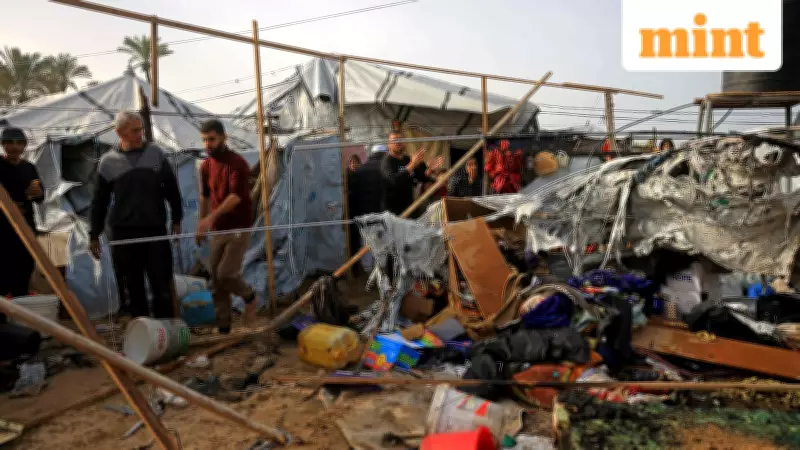
Hospital officials in Gaza reported on Saturday that at least 30 Palestinians were killed in a series of Israeli strikes across the territory. Among the victims were several children, making this one of the deadliest incidents since the October ceasefire came into effect. The attacks occurred just one day after Israel accused Hamas of violating the truce agreement.
Multiple Locations Targeted in Deadly Assault
According to hospital authorities who received the victims, the strikes hit multiple locations throughout Gaza. The attacks included:
- An apartment building in Gaza City
- A tent camp in Khan Younis
- A police station in Gaza City
Shifa Hospital director Mohamed Abu Selmiya confirmed that the police station airstrike alone killed at least 14 people and injured numerous others. Among those killed were two women and six children from two separate families, highlighting the civilian toll of the violence.

Hamas Condemns "Flagrant Violation" of Ceasefire
Hamas immediately responded to the attacks, describing Saturday's strikes as "a renewed flagrant violation" of the ceasefire agreement. The militant group called on the United States and other mediating countries to pressure Israel to halt the military operations immediately.
Senior Hamas official Bassem Naim took to social media platform X to question the legitimacy of international bodies proposed to oversee Gaza, stating: "All available indicators suggest that we are dealing with a 'Board of War', not a 'Board of Peace'."
Rafah Crossing Reopening Amid Escalating Violence
The deadly strikes occurred just one day before the scheduled reopening of the Rafah crossing on the Egypt-Gaza border. This crossing represents Gaza's southernmost access point and has been viewed by Palestinians as a critical lifeline for tens of thousands requiring medical care outside the territory, where much of the health infrastructure has been damaged during the conflict.
All border crossings into Gaza, aside from those with Israel, have been shut for nearly the entire duration of the war. The initially limited reopening of the Rafah crossing would represent the first significant step in the second phase of the US-brokered ceasefire that took effect on October 10.
International Mediators Express Grave Concern
Egypt, one of the key mediators in the ceasefire talks, condemned the Israeli strikes in the "strongest terms" through an official statement. The Egyptian government warned that these attacks pose "a direct threat to the political course" of the truce agreement.
Qatar, another important mediator in the conflict, described the strikes as a "dangerous escalation" and asserted that ongoing Israeli military operations present a "direct threat" to the political process aimed at resolving the conflict.
Mounting Casualty Figures and Historical Context
As of Friday, Gaza's Health Ministry reported that at least 520 Palestinians had been killed by Israeli fire since the ceasefire began. The ministry, which operates under the Hamas-led government, maintains detailed casualty data that UN agencies and independent experts generally regard as credible.
The current conflict began with a Hamas-led attack on southern Israel that resulted in approximately 1,200 deaths, most of them civilians, and the abduction of 251 people. The remains of the last hostage held in Gaza were recovered earlier this week, marking a somber milestone in the prolonged conflict.
Unresolved Challenges in Post-Conflict Gaza
Beyond the immediate violence, significant challenges remain unresolved in the Gaza territory, including:
- Demilitarizing the territory after nearly 20 years of Hamas control
- Establishing a new governing authority to manage reconstruction efforts
- Ensuring humanitarian access through border crossings like Rafah
The timing of these deadly strikes, occurring just before the planned reopening of a critical humanitarian corridor, underscores the fragile nature of the ceasefire and the complex political dynamics at play in the region.






