Israeli Air Defence Systems Illuminate Tel Aviv Skies in Response to Iranian Strikes
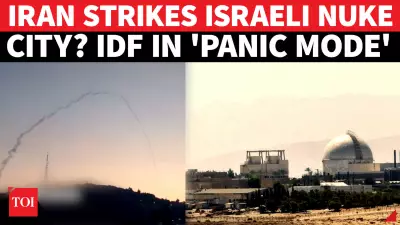
Videos circulating on social media have captured dramatic scenes of Israeli air defence systems engaging incoming projectiles over central Israel, as the country countered a fresh wave of ballistic missile launches from Iran. The footage shows multiple bright streaks criss-crossing the night sky, followed by flashes consistent with mid-air interceptions, highlighting the intense defensive operations amid sharply elevated regional tensions.
Iran's Latest Retaliatory Campaign and Regional Escalation
Iran's Islamic Revolutionary Guard Corps (IRGC) announced what it described as the 78th phase of its retaliatory campaign, dubbed "Operation True Promise 4." According to a statement carried by Iran's state-affiliated Press TV, the IRGC claimed fresh missile and drone strikes targeting Israeli locations, including highly sensitive sites such as Dimona, Tel Aviv, and Eilat, as well as several US-linked military facilities in the region. The IRGC framed this as part of a broader retaliatory response to earlier attacks on Iranian interests, stating it "negotiates with enemies through impact-driven strikes."
These developments occur amid heightened regional tensions, with repeated exchanges raising concerns of a wider conflict. Israel has not publicly confirmed all reported strikes but has maintained that its air defence systems are actively intercepting incoming threats, underscoring the ongoing volatility in the Middle East.

Israel's Multi-Layered Air Defence Network
Israel relies on a sophisticated multi-layered air defence network designed to counter threats ranging from short-range rockets to long-range ballistic missiles. This system integrates various technologies to provide comprehensive protection against aerial assaults.
- Arrow Systems: At the top tier are the Arrow-2 and Arrow-3 systems, developed by Israel with US support specifically to counter Iranian missile threats. While Arrow-2 intercepts incoming missiles within the atmosphere, Arrow-3 engages targets outside the atmosphere, allowing for safer destruction of warheads, including potential non-conventional payloads. The programme is led by Israel Aerospace Industries, with US aerospace major Boeing involved in interceptor production.
- David's Sling: This system forms the middle layer of defence, designed to intercept ballistic missiles fired from ranges of about 100 km to 200 km, as well as aircraft, drones, and cruise missiles. It has been jointly developed by Israel's Rafael Advanced Defense Systems and US-based RTX Corp (formerly Raytheon).
- Iron Dome: Operational since 2011, this short-range system intercepts rockets, mortars, and drones using radar-guided missiles. Developed with US backing, it can determine whether an incoming projectile is likely to hit a populated area, engaging only those that pose a threat while allowing others to fall harmlessly. A naval variant has also been deployed since 2017 to protect maritime assets.
- Iron Beam: Adding a newer layer is Iron Beam, a high-power laser system declared operational in late 2025. Designed to counter smaller threats such as unmanned aerial vehicles and mortars, it uses directed energy to disable targets mid-air and is expected to significantly reduce interception costs compared to missile-based systems.
International Support and Additional Defence Measures
Israel has also been supported by the US-deployed THAAD (Terminal High Altitude Area Defense) system, which is capable of intercepting short-, medium-, and intermediate-range ballistic missiles in their terminal phase. US military assets, including ground-based systems and naval platforms, have previously assisted in intercepting Iranian missiles during periods of escalation.
In addition, Israeli fighter jets and combat helicopters provide an air-to-air layer of defence, using missiles to neutralise drones before they enter Israeli airspace. This multi-faceted approach ensures robust protection against diverse aerial threats, as demonstrated in the recent engagements over Tel Aviv.

The ongoing conflict underscores the critical role of advanced air defence technologies in modern warfare, with Israel's systems serving as a key deterrent against regional adversaries. As tensions persist, the effectiveness of these defences remains a focal point in maintaining regional stability and security.