

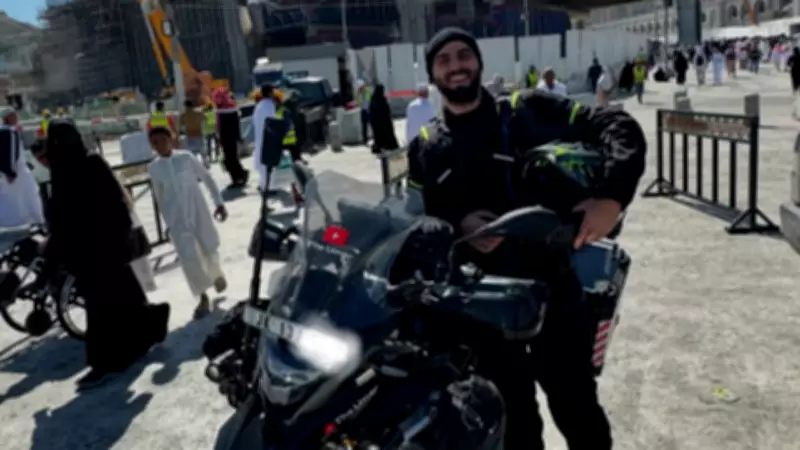
Jammu & Kashmir Travel Vlogger's Harrowing 14-Day Journey Through War-Torn Iran
DEHRADUN: When Umar Iqbal, a 27-year-old travel vlogger from Jammu & Kashmir's Pulwama district, crossed into Iran on February 21, the region was simmering with tension. War had not yet officially broken out, but the atmosphere was thick with apprehension. Strangers greeted him warmly, only to urgently advise him to leave before it was too late.
A Journey Interrupted by Escalating Conflict
Iqbal, a BSc nursing graduate who turned to motorbike travel and vlogging three years ago, had spent the past year riding across the UAE, Saudi Arabia, Jordan, and Iraq. His ambitious plan was to continue overland through Iran into Central Asia. However, as his Iraqi visa neared expiry, geopolitical realities closed in around him.
"I was in Iraq on a one-month visa, and as it was about to expire, I started the process for an Iranian visa," Iqbal told TOI from Herat, Afghanistan, where he arrived on March 7. "But the situation kept getting tense with the military build-up by the US and Israeli forces. The Iranian embassy in Baghdad refused to give me a visa because of the war-like situation."

This refusal created a logistical nightmare. Returning to Jordan meant a grueling 900-1,000 kilometer ride back, Turkey wouldn't grant him a visa from Iraq, and Syria was ruled out due to its ongoing civil war. After what he described as a lengthy enquiry process, including checks of his travel-vlogging accounts, Iranian authorities eventually allowed him entry with a stern warning.
"They told me to be extremely cautious and leave the country as soon as possible because of safety concerns," he recalled.
Witnessing War Firsthand
Iqbal's 12-day Iranian visa would become the backdrop for a 14-day odyssey through a nation descending into conflict. He first stayed in Khorramabad before moving to Qom, where residents already seemed to sense impending change.
"Each person who greeted me also asked me to leave as soon as I could," he said. "There was kindness, but there was also concern for my safety."
According to Iqbal, the war broke out on February 28 while he was in Qom. On March 1, he resumed his journey toward Tehran, though he ultimately avoided entering the city after friends from Jammu & Kashmir living there warned him about the intensity of strikes.
From there, he rode another 400 kilometers toward Damghan. Near Tepe Hissar, he camped for the night and lay awake watching missiles streak overhead. By the time he reached Damghan on March 2, the situation had deteriorated significantly.
Helping Rescue Efforts and Experiencing Iranian Generosity
Iqbal checked into a homestay run by a local family in Damghan. While there, a powerful blast landed just a few hundred meters away. Residents immediately ran toward the site, and Iqbal joined them without hesitation.
"A multi-storied residential building had been damaged," he described. "We rushed there to help rescue people. I also got injured, but that felt insignificant before the love and affection people there showed me despite the war."
As bombing intensified, the family hosting him pleaded with him not to continue his journey. But with his visa running out, he faced a difficult choice. In a remarkable act of generosity, the family arranged a mini-truck to transport his motorbike to Taybad, near the Afghan border—approximately 750 kilometers away.
He and the driver set off at night, reaching Taybad on March 6. The following day, he successfully crossed into Afghanistan, ending his harrowing two-week journey through a war zone.
The Lasting Impression: Humanity Amid Conflict
Reflecting on his experience, Iqbal emphasized that what stayed with him most wasn't the fear or spectacle of war, but rather the extraordinary generosity of ordinary Iranians.
"Over those 14 days, I rode across near-empty highways under missiles streaking overhead, spent a night watching the sky flare above an ancient site, and was injured while helping residents after a strike," he recounted. "Yet what has stayed with me most is not the fear, but the generosity of the Iranians who fed me, sheltered me, worried for me, and finally helped me get out."

His journey stands as a testament to human resilience and compassion even in the most dire circumstances of international conflict.





