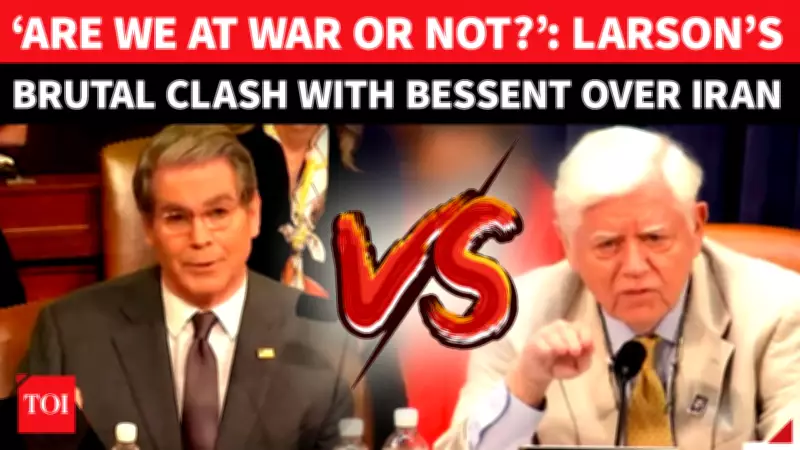
Tempers flared on Capitol Hill as Congressman John Larson launched a blistering attack on Treasury Secretary Scott Bessent, demanding direct answers about the economic impact of the ongoing Iran war on American households. In a tense exchange, Larson pressed Bessent on skyrocketing gas prices, asking bluntly: “Are we at war or not?” The question came as Americans continue to feel the pinch at the pump, with fuel costs soaring amid the conflict.
Larson Demands Accountability
Representative Larson did not mince words as he grilled Bessent during a heated committee hearing. “Simple question, answer it,” Larson said, his voice rising. He accused the Treasury Secretary of dodging the real issue—how the war in Iran is driving up everyday costs for ordinary citizens. “You have a responsibility to explain to the American people why they are paying more at the pump,” Larson added.
The exchange quickly escalated into a broader political confrontation over inflation and the true cost of military engagement. Larson argued that the administration has failed to be transparent about the economic fallout, leaving families struggling to make ends meet. “We are at war, but you refuse to talk about the price we are paying,” he said.

Bessent’s Evasive Response
Secretary Bessent remained tight-lipped throughout the interrogation, refusing to directly address Larson’s pointed questions. Instead, he offered vague reassurances about economic stability and avoided any specific mention of the Iran war’s impact on fuel prices. This only fueled Larson’s frustration, leading to a dramatic showdown that underscored the deepening rift between lawmakers and the administration over the conflict.
The hearing highlighted growing concerns among both Democrats and Republicans about the economic strain of prolonged military operations. With gas prices hitting record highs, many are calling for greater accountability from top officials. Larson’s outburst has since gone viral, with clips circulating widely on social media.
Broader Implications
The clash between Larson and Bessent is the latest sign of political turbulence surrounding the Iran war. Critics argue that the administration has downplayed the economic consequences, while supporters insist that national security priorities justify the costs. However, for millions of Americans, the immediate concern remains the rising cost of living. As one observer noted, “This isn’t just about politics—it’s about people’s wallets.”
The incident has also reignited debates about congressional oversight and the need for transparent communication from the executive branch. Lawmakers from both sides of the aisle have called for more detailed briefings on the war’s economic impact, though partisan divisions remain deep.