

The international order was jolted by an unprecedented military operation that saw a sitting head of state forcibly taken from his own country. In the early hours of January 3, 2026, US forces launched Operation Absolute Resolve, a large-scale strike and special forces raid in Caracas, Venezuela. The target was President Nicolas Maduro and his wife, Cilia Flores.
The Precedent: Operation Absolute Resolve
After months of planning, the operation began with precision strikes on Venezuelan air defenses and key military sites. This cleared a path for elite units, including the Army's Delta Force, to breach Maduro's compound at Fuerte Tiuna. Under heavy fire, American commandos seized the couple, flew them by helicopter to the USS Iwo Jima, and transported them to the United States. They arrived at Stewart Air National Guard Base near New York before being moved into federal custody.
While Washington framed the action as a law enforcement move against a leader accused of drug trafficking, global leaders and legal experts immediately raised alarms. They questioned the blatant violation of sovereignty and the legality under international law. The operation, ordered by then-President Donald Trump, who declared the US would temporarily "run" Venezuela, has irrevocably shifted global strategic assumptions.

The Unthinkable Question: A 'Maduro' on Zelenskyy?
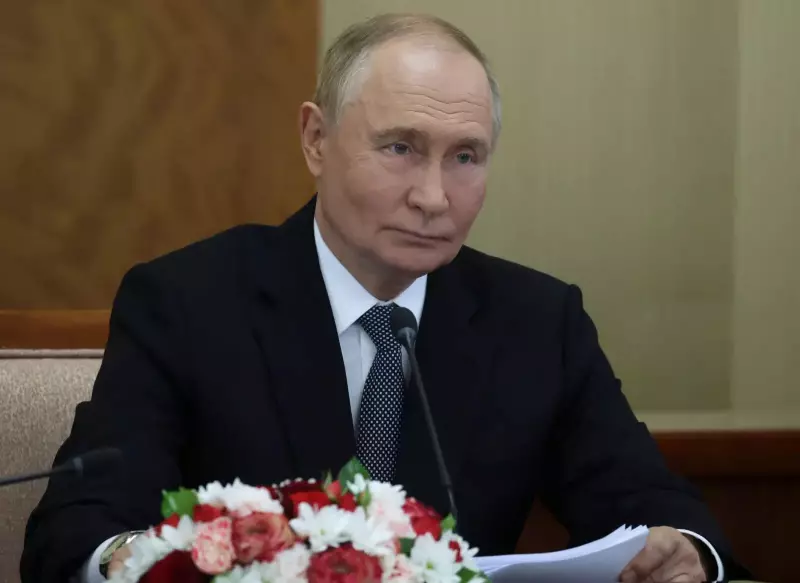
The dramatic capture of Maduro has sent shockwaves through diplomatic and security circles worldwide. One of the most urgent questions now being debated, particularly in Europe, is whether Russian President Vladimir Putin could attempt a similar operation against Ukrainian President Volodymyr Zelenskyy.
The precedent matters because it lowers a psychological barrier. An action once considered unthinkable—the extraterritorial seizure of a leader—now appears conceivable to some planners. Russia has already pursued softer methods to remove Zelenskyy, including assassination plots, missile strikes near Kyiv, and sustained disinformation campaigns painting him as illegitimate. None have succeeded.
Why Ukraine is Not Venezuela
However, a closer analysis reveals that Ukraine presents a set of challenges almost entirely opposite to those in Venezuela, making a successful 'Maduro-style' operation highly unlikely.
1. Fortified Warnings and Access: Zelenskyy operates from a fortified, wartime capital. His movements are tightly controlled by layered Ukrainian security, bolstered by constant intelligence sharing from Western partners like the US and NATO. Multiple past plots have been foiled, creating a culture of permanent, high alert.
2. The Extraction Nightmare: Any Russian attempt to insert forces deep into Kyiv would face immediate detection. Ukraine's integrated air defenses, combined with NATO surveillance, make a clean in-and-out exfiltration scenario a near impossibility. A failed attempt would be a catastrophic public relations disaster for Moscow.
3. No Political Vacuum: Even in the unlikely event of Zelenskyy's capture, Ukraine would not collapse. Constitutional successors would assume power, the military chain of command would remain intact, and popular resistance would likely intensify. Unlike Venezuela, Ukraine is a society fully mobilized for an existential war.
4. The Legitimacy Factor: Maduro's international standing was weak. Zelenskyy's is robust. A direct Russian move against him would almost certainly harden Western resolve, triggering more advanced weapons shipments and fewer restrictions on their use, the opposite of Putin's strategic goal.
The Grim Calculus for Russia
For Putin, the potential downsides of such a gamble are severe and likely outweigh any perceived gains.

- Failure: An exposed plot proves Russian desperation, strengthening Ukrainian unity and Western support.
- Partial Success: Zelenskyy is harmed or captured, but Ukraine fights on with a martyr, leading to fewer constraints on Ukrainian escalation.
- "Success": Zelenskyy is removed and a puppet installed, but the authority is instantly rejected, forcing Russia into a deeper, costlier occupation of hostile territory.
In every scenario, the operation would accelerate outcomes Moscow seeks to avoid: tighter Western alignment, more powerful weapons in Ukrainian hands, and a war narrative solidified as authoritarian aggression versus national self-defense.
Bottom Line: Precedent vs. Practicality
The Maduro seizure has undoubtedly altered strategic imaginations globally. Security services for leaders everywhere are now forced to plan for scenarios once dismissed as taboo. Zelenskyy's protection will tighten further.
However, for Russia, the lesson is likely one of caution, not imitation. The US executed its operation from a position of overwhelming global reach, geographic distance, and relative insulation from immediate retaliation. Russia, fighting a grinding war on its own border, enjoys none of those advantages. Putin could try a 'Maduro' on Zelenskyy, but living with the devastating consequences is another matter entirely.





