

A major geopolitical storm is brewing across Europe and the United States, with critical developments unfolding on the Ukraine war front, European Union policy, and even American immigration. The situation involves stark warnings from a key EU leader, a potential shift in Ukraine's stance, and significant policy proposals from US Republicans.
Orban's Stark Warning to the EU Over Russian Assets
Hungarian Prime Minister Viktor Orban has issued a severe caution to the European Union, framing a specific financial strategy as a potential act of war. The warning centers on the EU's plan to utilize over €190 billion in frozen Russian assets, primarily central bank reserves immobilized after the 2022 invasion of Ukraine. Orban characterized any move to seize or use these funds for Ukraine's reconstruction as a "declaration of war" against Russia, arguing it dangerously escalates the conflict beyond Ukraine's borders.
This position highlights a deep fracture within the EU, where Hungary has consistently opposed sweeping sanctions and military aid to Ukraine. Orban's government maintains that such actions directly involve the bloc in the war and could provoke severe retaliation from Moscow.

Ukraine's Peace Signals and Putin's Firm Stance
Amidst this, a potential diplomatic opening has emerged from Kyiv. Ukrainian President Volodymyr Zelensky has reportedly indicated a readiness for a peace deal, with sources suggesting he "quickly wants a deal." This comes as a direct reply to recent statements from the Kremlin, where Russian President Vladimir Putin reiterated his commitment to Russia's military objectives.
Putin made it clear that if negotiations fail, Russia will pursue its mission in Ukraine by military means. This creates a tense backdrop for any potential talks, with Ukraine likely seeking security guarantees and the restoration of its territorial integrity, conditions Russia has previously rejected.
International Ripples: From Italy to the USA
The geopolitical tremors are being felt beyond the immediate Russia-Ukraine theater. In a significant break from some European allies, Italian Prime Minister Giorgia Meloni has refused to send troops to Ukraine. This decision follows direct warnings from Russia against NATO ground involvement. Italy's stance underscores the lack of consensus in Europe on the level of direct military support to provide.
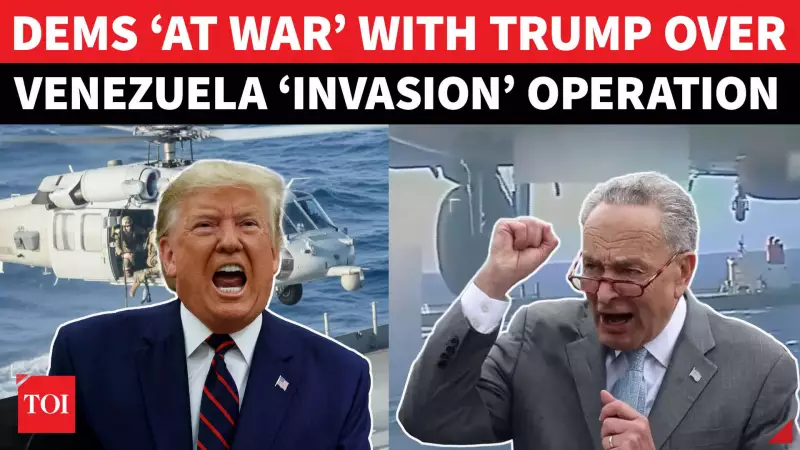
Meanwhile, in the United States, domestic politics are intersecting with global affairs. Former President Donald Trump commented on the Venezuela situation, noting US naval movements involving the USS Gerald R. Ford carrier group, while Republican lawmakers are pushing a dramatic immigration reform. Following Trump's shifted position, GOP senators have proposed a "total ban" on the H-1B visa programme, which is crucial for skilled foreign workers, including many Indians. This move, if enacted, would mark a seismic shift in US immigration policy and impact global talent mobility.
Further adding to the political climate, figures like Candace Owens made shocking declarations after a meeting, and Senator Ted Cruz publicly criticized the FCC chair over a controversy involving late-night host Jimmy Kimmel, showcasing the highly charged atmosphere in US politics.
Consequences and the Road Ahead
The convergence of these events paints a picture of a world at a precarious juncture. The EU faces internal dissent over how to financially pressure Russia. The Ukraine conflict shows faint signs of a possible diplomatic track, but one overshadowed by the threat of intensified warfare. NATO unity is being tested, as seen with Italy's stance. Simultaneously, US foreign policy and immigration decisions, influenced by the upcoming election cycle, have direct global repercussions.
For India, the proposed H-1B visa ban is of particular concern, given the large number of Indian professionals who utilize this pathway. The developments underscore how geopolitical conflicts in Eastern Europe can indirectly influence economic and immigration policies worldwide, creating a complex web of cause and effect that nations must navigate in the coming months.






