Pakistan Launches Retaliatory Airstrikes on Afghanistan in Operation Ghazab Lil Haq
In a dramatic escalation of cross-border tensions, Pakistan conducted multiple airstrikes and bombings on Taliban-ruled Afghanistan during the intervening night of Thursday and Friday. Islamabad officially designated this military offensive as "Operation Ghazab Lil Haq", targeting major Afghan cities including the capital Kabul and the southern hub Kandahar. Pakistani authorities asserted that the operation successfully destroyed key military facilities and infrastructure belonging to the Taliban government.
Immediate Trigger and Conflicting Casualty Claims
The retaliatory action came mere hours after what Pakistan described as "unprovoked firing" from across the border, as reported by Dawn newspaper. Afghanistan swiftly condemned the military strikes as "cowardly" and stated that there were no casualties on its side. In stark contrast, Pakistan lauded the operation as "effective" and claimed that 133 Afghans were killed during the overnight assault.
Pakistan's Prime Minister Shehbaz Sharif issued a strong statement following the airstrikes, declaring that the country's armed forces possess full capability to "crush any aggression". According to a post shared on the Pakistani government's official X account, Sharif emphasized, "Our forces have the full capability to crush any aggressive ambitions. The entire nation stands shoulder to shoulder with the Pakistan armed forces."

Border Conflict and Historical Context
Earlier on Thursday, Taliban forces had attacked Pakistani troops deployed along the contentious Durand Line, the border separating the two nations. The Taliban characterized this as retaliation for earlier deadly strikes by Pakistan. The Durand Line remains a persistent source of friction, as Afghanistan has never formally recognized this colonial-era boundary.
Relations between these Islamic neighbors have deteriorated significantly in recent months, with key land border crossings largely remaining shut during periods of heightened tensions between the power centers in Islamabad and Kabul.

Key Developments from the Conflict Zone
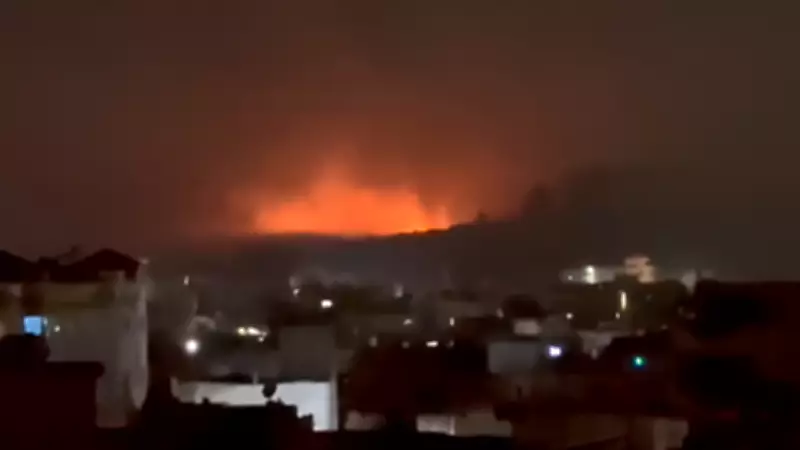
- Urban Impact: At least three explosions were reported in Kabul, with residents hearing jets overhead and multiple loud blasts echoing across the city, followed by gunfire that continued for over two hours. In Kandahar, where Supreme Leader Hibatullah Akhundzada is based, residents reported hearing jets flying overhead.
- Official Statements: Taliban government spokesman Zabihullah Mujahid confirmed the Pakistani airstrikes but maintained there were no casualties. Hours earlier, Mujahid had announced "large-scale offensive operations" at the border in response to repeated violations by the Pakistani military.
- Military Casualties: The Afghan defense ministry reported eight soldiers killed in land offensive operations. Pakistan's information minister Ataullah Tarar stated that two Pakistani soldiers were killed and three others wounded during the clashes.
- Civilian Impact: An Afghan official reported several civilians wounded near the Torkham border crossing at a camp housing people returning from Pakistan. "A mortar shell has hit the camp and unfortunately seven of our refugees have been wounded, and the condition of one woman is serious," said Qureshi Badlun, information chief in Nangarhar province.
- Escalating Rhetoric: Mosharraf Ali Zaidi, spokesman for Pakistan's Prime Minister Shehbaz Sharif, claimed, "a total of 133 Afghan Taliban are confirmed killed, more than 200 wounded. Many more casualties estimated in strikes in Kabul, Paktia and Kandahar military targets."
- Prisoner Claims: Mujahid told AFP that several Pakistani soldiers had been "caught alive", a claim vehemently denied by the prime minister's office in Islamabad.
- Recent Precedent: This latest military operation follows Pakistani strikes on Nangarhar and Paktika provinces overnight into Sunday, which the UN mission in Afghanistan said killed at least 13 civilians. The Taliban government said at least 18 people were killed in those strikes and rejected Pakistan's claim that the operation had left more than 80 militants dead.
- Cross-Border Exchanges: Both sides reported cross-border firing on Tuesday, though no casualties were reported from those incidents.
- International Mediation: After repeated violations of an initial ceasefire, Saudi Arabia intervened earlier this month, mediating the release of three Pakistani soldiers captured by Afghanistan in October.
- Border Status: Although the border has largely remained closed since October, Afghan returnees have been permitted to cross at designated points, creating vulnerable populations in border areas.
The situation remains volatile as both nations continue to exchange fire and accusations, with Pakistan's information minister Ataullah Tarar praising Islamabad's response as "strong and effective" following the Taliban's attacks. On X, Tarar wrote that Pakistan was mounting a "strong and effective response" to what he described as an unprovoked attack from Afghanistan, adding that Islamabad would continue to act decisively to protect its territorial integrity and national security interests.