Afghanistan Reports Dozens Killed in Pakistani Airstrikes on Border Provinces
Afghanistan announced on Sunday that dozens of people were killed and wounded after Pakistan conducted airstrikes in eastern border provinces, marking one of the deadliest recent escalations between the two neighboring nations. Government spokesperson Zabihullah Mujahid stated in a social media post that the attacks targeted civilian areas, resulting in significant casualties.
Civilian Casualties and Targeted Locations
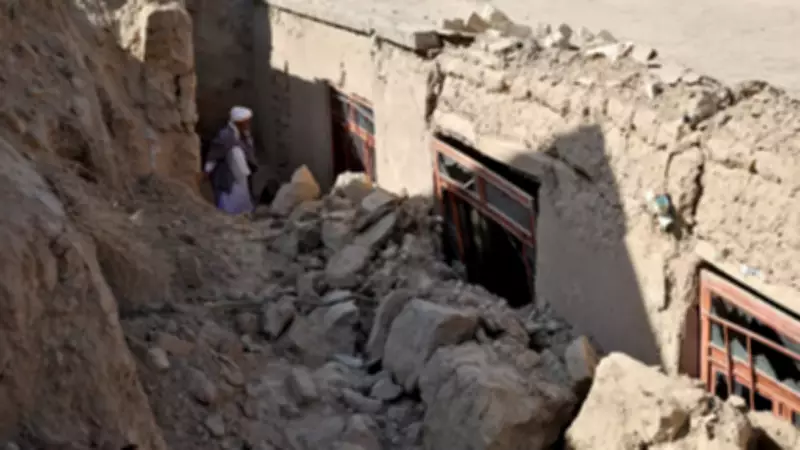
According to Mujahid, the airstrikes occurred overnight in Nangarhar and Paktika provinces, affecting numerous civilians, including women and children. Afghan media outlet Tolo News provided detailed reports, indicating that a civilian house in the Behsud district of Nangarhar was hit, leaving 23 family members buried under rubble, with only four rescued so far.
Additionally, the broadcaster reported that a religious seminary in the Bermal district of Paktika was struck, along with multiple airstrikes in the Khogyani district of Nangarhar. Pakistan confirmed conducting strikes in these areas since Saturday, specifically targeting districts such as Bermal, Argun, Khogyani, Bahsod, and Ghani Khel.

Pakistan's Justification for the Strikes
Islamabad defended the cross-border operations, asserting they were aimed at militant groups responsible for recent suicide attacks inside Pakistan. Pakistani media cited the Ministry of Information, which claimed that seven camps and hideouts of Fitna al Khwarij (FAK), its affiliates, and Daesh Khorasan Province (DKP) were precisely targeted.
The ministry emphasized that the action was a direct response to suicide attacks in Islamabad, Bajaur, and Bannu during the holy month of Ramzan. These incidents included a vehicle bombing in Bajaur that killed 11 soldiers and a child, and a convoy attack in Bannu that resulted in the deaths of two soldiers, including a lieutenant colonel.
Escalating Tensions and Diplomatic Fallout
Following the violence, Pakistan's military issued a stern warning, stating it would not exercise any restraint and would continue operations against those responsible, regardless of their location. Information Minister Attaullah Tarar presented what he called conclusive evidence linking recent attacks, such as a suicide bombing at a Shiite mosque in Islamabad that killed 31 worshippers, to Tehrik-e-Taliban Pakistan militants based in Afghanistan.
Tarar accused Afghanistan's Taliban rulers of failing to take verifiable steps to prevent militant groups from using Afghan territory for attacks on Pakistan. In a formal statement, Pakistan called on the interim Afghan government to honor commitments under the Doha Agreement and prevent its soil from being used against Pakistan, urging international pressure to enforce this.
Historical Context and Ongoing Disputes
Relations between Pakistan and Afghanistan have been strained since October, when deadly border clashes resulted in casualties among soldiers, civilians, and suspected militants on both sides. This recent escalation follows explosions in Kabul that Afghan officials attributed to Pakistan, further complicating diplomatic efforts.
Pakistan's Foreign Office reiterated its stance, reserving the right to target Afghanistan to protect its citizens, as cross-border tensions rise. Spokesperson Tahir Andrabi emphasized that all options remain on the table until Afghan territory is no longer used for terrorism against Pakistan.
The situation underscores the fragile security dynamics in the region, with both nations facing internal and external pressures that threaten to destabilize the border area further.