

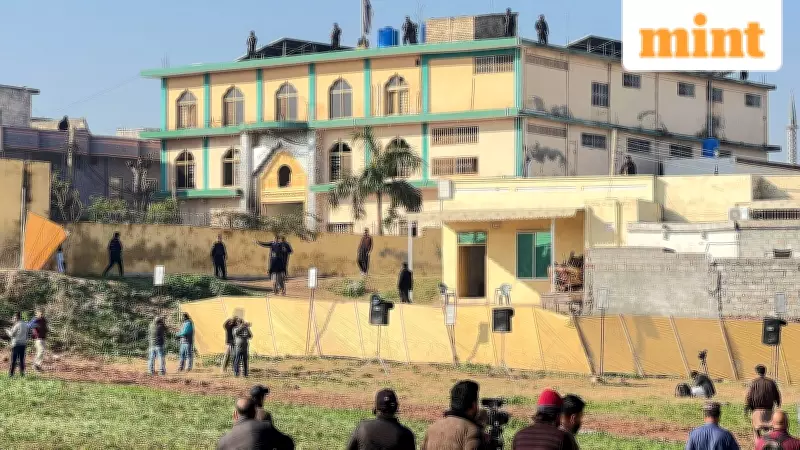
Pakistan Arrests Suspects in Deadly Mosque Bombing as Islamic State Claims Responsibility
Pakistani counter-terrorism forces have conducted multiple raids, resulting in the detention of four individuals linked to a devastating suicide attack at a Shiite mosque on the outskirts of the capital, Islamabad. Interior Minister Mohsin Naqvi confirmed the arrests on Saturday, revealing that one of those detained is believed to be the attack's coordinator.
Islamic State Claims Responsibility for Sectarian Attack
The announcement followed a statement from a regional branch of the Islamic State, which identified itself as Islamic State in Pakistan. The group claimed responsibility for the bombing through a bulletin on its Amaq News Agency, describing Pakistani Shiites as a "human reservoir" that supplies fighters to Shiite paramilitary groups opposing IS forces in Syria. The IS faction declared Shiites as legitimate targets in its ongoing sectarian campaign.
According to the IS report, the attacker first launched an armed assault on security personnel at the mosque's main entrance before detonating his suicide vest upon reaching the sanctuary's interior portal. The explosion on Friday killed 31 people and injured 169 others, making it the deadliest incident in Islamabad since the 2008 Marriott Hotel suicide attack that claimed 63 lives and left over 250 injured.

Security Concerns and Government Response
Addressing growing public concerns about security failures, Interior Minister Naqvi attempted to reassure citizens, stating: "If one blast happens, 99 others are being foiled as well." However, the attack has raised serious questions about Pakistan's counter-terrorism capabilities, particularly following a similar suicide bombing near a capital courthouse in November that killed 12 people.
Defense Minister Khawaja Mohammad Asif added to the concerns on Friday, suggesting that local militants operating from Afghan territory might be capable of striking at the heart of Pakistan's capital. These comments prompted a strong rebuttal from Afghanistan's Taliban administration, which has repeatedly denied providing sanctuary to insurgent groups.
Funeral Services and International Condemnation
Earlier on Saturday, more than 2,000 devastated mourners gathered as the caskets of victims were transported to the same mosque for memorial services. Approximately twelve victims were honored in ceremonies attended by Shiite dignitaries and high-ranking state officials, while burial rites for other casualties were scheduled to take place in their respective ancestral cities.
The atrocity prompted widespread condemnation from the international community, with formal statements of denunciation issued by the United States, Russia, and the European Union. Global leaders expressed solidarity with Pakistan while calling for enhanced counter-terrorism cooperation.
Historical Context of Sectarian Violence
Islamic State, a Sunni extremist organization, has historically targeted Pakistan's Shiite minority in apparent attempts to ignite sectarian conflict within the predominantly Sunni nation. In 2022, the group claimed responsibility for a suicide blast at a Shiite house of worship in Peshawar that killed at least 56 people and wounded 194 others.
The latest attack underscores the persistent threat of terrorism in Pakistan and highlights the complex geopolitical dynamics involving neighboring Afghanistan. Pakistan has repeatedly accused Afghanistan, where the Taliban resumed control in August 2021, of providing sanctuary to insurgents including the Pakistani Taliban—claims that Kabul continues to reject.






